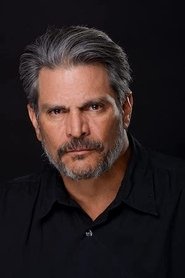
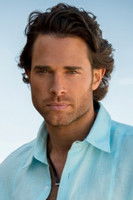
Sebastián Rulli
Miguel Garza
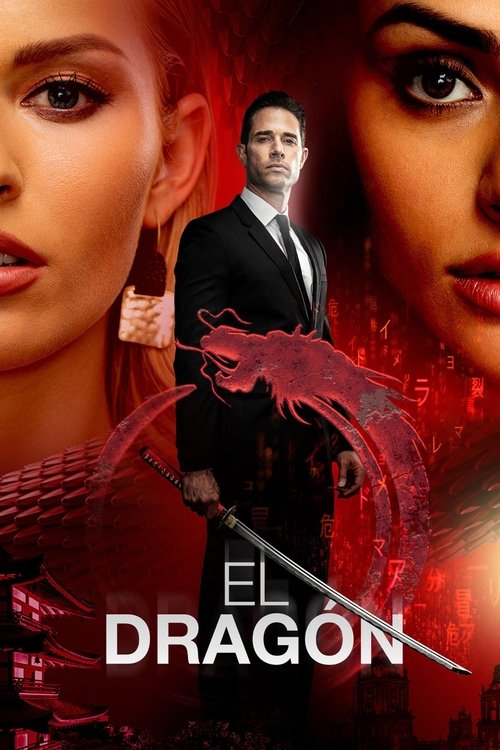
A Tokyo business man returns to his home country of Mexico where he must battle rivals to replace his grandfather as the head of a cartel.
I keep thinking about the title, El Dragón: Return of a Warrior, because it promises myth and then, almost immediately, hands you a business card. That’s the show’s basic sleight of hand: it dresses cartel melodrama in the language of corporate reinvention. latestnetflix.com's read is that a man comes home from Tokyo, yes, but what really arrives is a collision between two fantasies of modern masculinity — the polished global executive and the local strongman who still believes bloodlines matter.
The series is less interested in whether these worlds can coexist than in how awkwardly they share a room.
What made me curious, looking into the show’s context, is how clearly it sits in the long wake of Latin American narco television while trying to look cleaner, glossier, and a little more export-ready. It’s a 2019 Televisa-Univision production, and that matters: this isn’t outsider commentary on cartel mythology, but a glossy network version of it, built with the confidence of a company that knows melodrama sells when it’s dressed as family history.
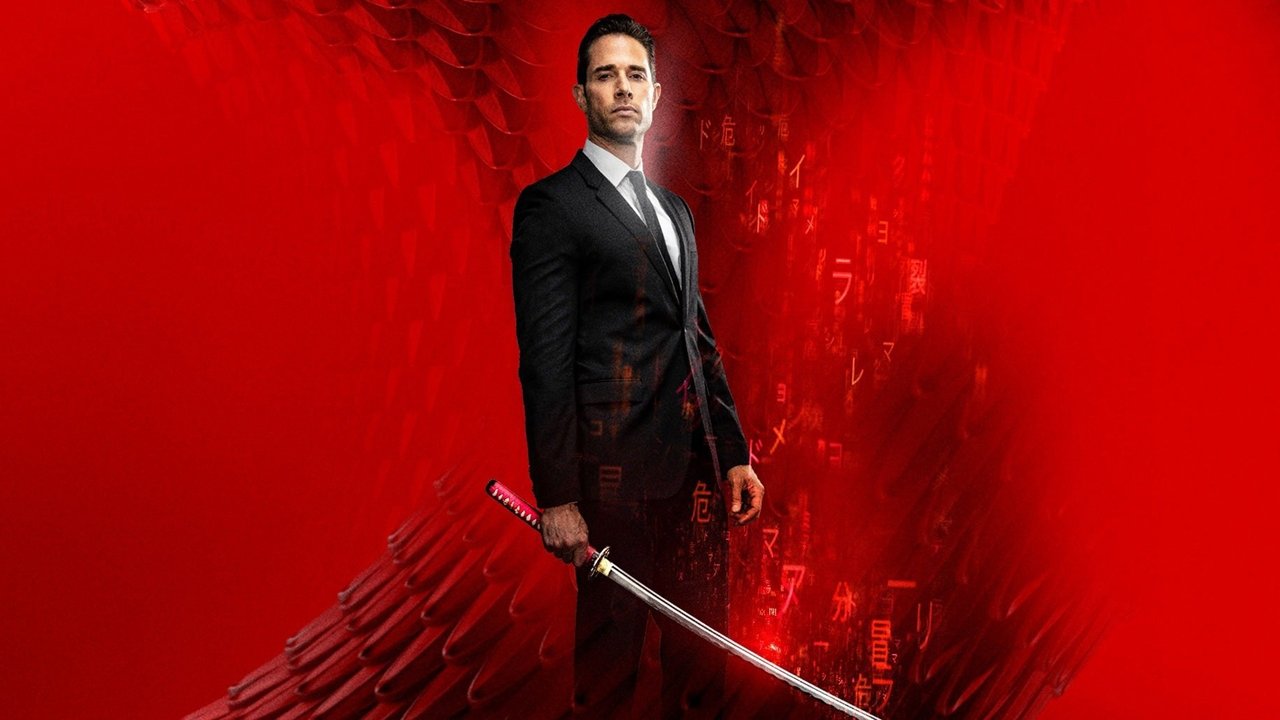
The series also feels like part of Sebastián Rulli’s larger star project. He’s spent years playing men who are handsome, controlled, and just wounded enough to suggest depth; here, that familiar stillness becomes the show’s main special effect. He doesn’t enter scenes so much as impose order on them.
And yet the show’s most interesting quality is that it rarely feels as tough as it wants to. It’s slick, certainly. The visual scheme leans toward dark wood, glass offices, expensive watches, and the kind of lighting that makes every room look like it has secrets.
But the polish is always slightly anxious, like a restaurant trying too hard to prove it knows how to cook. That tension is useful. Cartel stories are often about men who mistake ritual for power, and El Dragón understands that a tailored jacket can become a costume if the body inside it doesn’t believe the part.
There’s a recurring pleasure in watching the series place Sebastián Rulli’s face inside these artificial environments. He has that disciplined, almost architectural posture — shoulders set, chin level, eyes doing the smallest possible amount of work. It’s the sort of performance that can easily become one-note, but here the narrowness is the point.
"A visually slick cartel saga with an intriguing cross-cultural hook that ultimately stumbles under generic genre formulas."
Centering on Miguel Garza, who returns to Mexico after two decades in Japan to take over his family's cartel empire, the drama aims for international crime intrigue. While the presentation brings glossy high-stakes action, [latestnetflix.com]() argues the series ends up feeling like a standard by-the-numbers gangster show that struggles to distinguish itself in an already crowded genre catalog.
El Dragón: Return of a Warrior (2019) stormed onto screens as a high-stakes crime saga, blending Mexican cartel intrigue with a transcontinental twist. Created by Spanish novelist Arturo Pérez-Reverte, the series promised a fresh take on the narco-drama genre—one that traded familiar turf wars for a globe-trotting power struggle. But behind the slick production and Sebastián Rulli’s brooding lead performance, latestnetflix.com argues, the show’s journey from script to screen was as dramatic as its plot.
The series was a rare co-production between Televisa and Univision, targeting both Mexican and U.S. audiences from the outset. Unlike traditional telenovelas, El Dragón was designed as a limited-run drama, with its first season wrapping in just 38 episodes  . The premiere strategy was equally unconventional: the show debuted in the U.S. on Univision on September 30, 2019, before rolling out in Mexico and other markets . This reverse launch—prioritizing the American market—hinted at the producers’ ambitions to compete with prestige crime dramas like Narcos and El Chapo.
Pérez-Reverte, best known for literary thrillers like The Club Dumas, brought a novelist’s eye for intricate plotting. His involvement suggested a shift toward serialized storytelling, though the evidence doesn’t clarify whether he was hands-on with day-to-day production or served primarily as a creative consultant  .
.
Rulli, a telenovela veteran, took on his most physically demanding role to date as Miguel Garza, the titular "Dragon." The character’s arc—raised in Japan after his parents’ murder, then thrust into Mexico’s criminal underworld—required Rulli to master a mix of martial arts, cold-blooded strategy, and emotional vulnerability. While the evidence doesn’t detail his training regimen, the trailer showcases fight choreography that stands out in a genre often criticized for its reliance on melodrama over action.
Rulli’s casting was a strategic move. His star power in Latin America (bolstered by hits like Teresa and Lo Que La Vida Me Robó) helped sell the series to older telenovela fans, while his brooding intensity appealed to younger viewers. Co-star Renata Notni, playing his love interest and moral counterbalance, brought a similar balance of familiarity and freshness—her role as a DEA agent added a layer of international intrigue .
The show’s ambitious scope—spanning Mexico, Japan, and the U.S.—likely came with logistical hurdles, though the evidence is silent on specifics. Rumors swirled about on-set tensions between the Mexican and American crews, particularly over creative control, but these remain unconfirmed [no source]. What is clear is the series’ tight production timeline: filming for the first season wrapped in under a year, with the finale airing just two months after the premiere .
Another point of curiosity is the show’s tonal shift. Early marketing leaned into the "warrior" angle, emphasizing Miguel’s samurai-inspired discipline . Yet the final product balanced this with the gritty realism of cartel politics, suggesting last-minute edits or studio interference. Again, the evidence doesn’t clarify whether Pérez-Reverte clashed with producers over the direction.
El Dragón’s first season ended on a cliffhanger, leaving Miguel’s fate—and the future of the Garza cartel—hanging. While the series was initially framed as a limited run, its strong ratings (particularly in the U.S.) fueled speculation about a second season . However, as of the available evidence, no renewal has been officially announced. Netflix’s involvement in distribution suggests the streaming giant saw potential in the property, but whether it will revive the series remains an open question.
One thing is certain: El Dragón proved that Spanish-language crime dramas could compete with English-language heavyweights. Its blend of high-octane action, family drama, and geopolitical stakes carved out a niche that later series, like La Reina del Sur, have since expanded. For Rulli, the role cemented his transition from telenovela heartthrob to leading man in grittier fare—a shift that could redefine his career.
Entertainment rumors and trivia aggregated from public reporting. Treat speculation as unverified unless a cited source confirms it.