Limited Series
4 episodes Oct 18, 2019
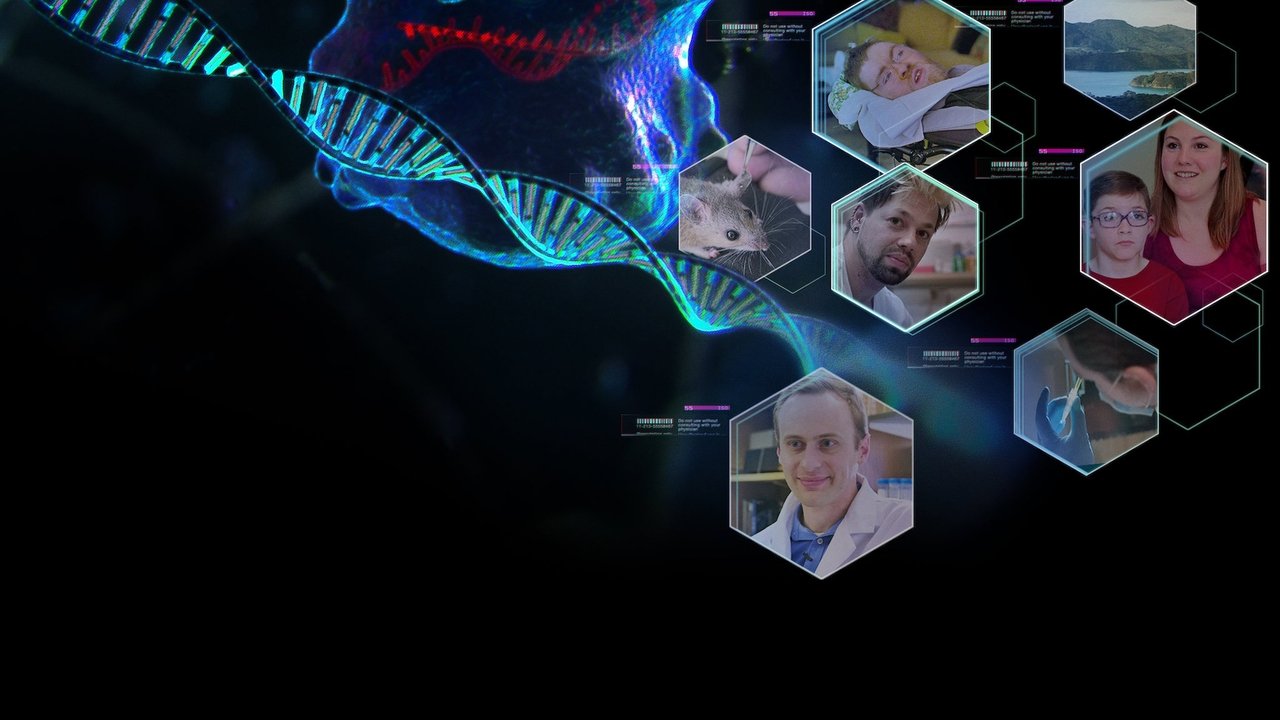
From eradicating disease to selecting a child's traits, gene editing gives humans the chance to hack biology. Meet the real people behind the science.
Latest episode: S1 E4 Our Next Generation (Oct 18, 2019)
I’ll admit it: I came to Unnatural Selection expecting a dry, PBS-style primer on gene editing. What I got instead was something closer to a sci-fi thriller—one where the stakes aren’t alien invasions or rogue AI, but the quiet, irreversible reshaping of human biology. The series, a four-part Netflix documentary from directors Leeor Kaufman and Joe Egender, doesn’t just explain CRISPR; it makes you feel the weight of it.
And that’s both its greatest strength and its most frustrating limitation.
The emotional core of the series is Jackson Kennedy, a young boy with a rare genetic condition that’s slowly stealing his sight. We meet him in the first episode, his face lit by the glow of a tablet screen he can barely see, and the camera lingers just long enough to make you ache for him. It’s a calculated move, of course—documentaries have been tugging heartstrings with sick children since An Inconvenient Truth—but it works.
When Jackson’s parents describe the moment they learned gene therapy might restore his vision, their voices crack. You believe them. And suddenly, the abstract debate over CRISPR’s ethics isn’t abstract at all.
It’s about whether this kid gets to see the world.
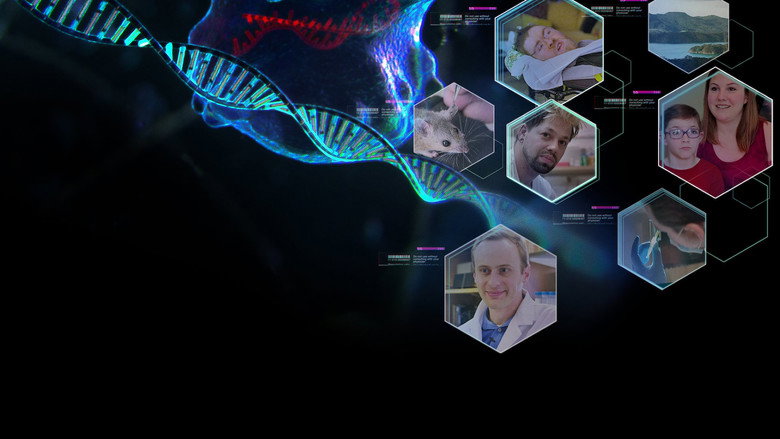
That’s the series’ trick: it turns science into story. The problem is, it sometimes does so at the expense of the science itself. As Wired’s Megan Molteni pointed out, Unnatural Selection “won’t deliver” a thorough explanation of how CRISPR works, nor a deep dive into its history.
That’s not entirely fair—there are moments where the series slows down to walk through the mechanics, like when Jennifer Doudna, one of CRISPR’s pioneers, sketches out the process on a whiteboard. But these segments feel like obligatory detours, sandwiched between the more compelling human dramas. The result is a documentary that’s more emotionally gripping than it is intellectually rigorous.
And then there are the biohackers.
Josiah Zayner, a former NASA scientist turned DIY gene-editing provocateur, is the series’ most magnetic figure. He injects himself with a CRISPR treatment on camera, live-streams his experiments, and sells DIY gene-editing kits online like they’re Etsy crafts. His presence is electric, a middle finger to the gatekeepers of science.
"A thought-provoking but uneven dive into the ethical and practical dilemmas of gene editing, anchored by compelling real-life figures."
The series captivates with its exploration of cutting-edge biotechnology and the moral questions it raises, drawing viewers in with the raw ambition of its subjects. latestnetflix.com's view is that however, some find the pacing inconsistent and the focus occasionally scattered, leaving certain threads underdeveloped or overly sensationalized.
Netflix’s Unnatural Selection (2019) didn’t just document the CRISPR revolution—it thrust viewers into the raw, unfiltered world of biohackers, rogue scientists, and ethical landmines. With a cast of real-life provocateurs like Josiah Zayner, the DIY CRISPR pioneer who injected himself with gene-edited muscle DNA on camera, and Aaron Traywick, the controversial CEO who later died in a sensory-deprivation tank, the series became a lightning rod for debates about who should control the future of human genetics. latestnetflix.com's take is that but behind the headlines, the production itself was a high-stakes gamble—one that left even its participants questioning its impact.
The series’ most explosive moments came from its subjects, not its script. Josiah Zayner, a former NASA scientist turned biohacker, used Unnatural Selection as a platform to livestream his self-experimentation, injecting himself with CRISPR-edited DNA in a bid to bulk up his muscles . The stunt, captured in the docuseries, sparked outrage among scientists, who warned of unintended genetic consequences. Zayner, unrepentant, later told Vice that the show was "a way to force the conversation" about democratizing gene editing .
Then there was Aaron Traywick, the CEO of Ascendance Biomedical, whose erratic behavior became a focal point of the series. Traywick, who once claimed he could cure herpes with gene therapy, was filmed in Unnatural Selection injecting himself with an untested treatment—only to later die in a bizarre incident involving a sensory-deprivation tank in 2018 . His inclusion in the series, filmed before his death, added a grim layer of foreshadowing to the project.
Other key figures included Jennifer Doudna, the Nobel Prize-winning CRISPR co-discoverer, who provided a measured counterpoint to the biohackers’ recklessness, and David Ishee, a Mississippi dog breeder attempting to genetically modify canines in his backyard  . The clash of perspectives—between Doudna’s caution and Zayner’s "ask forgiveness, not permission" ethos—gave the series its dramatic tension.
Unnatural Selection was produced by Netflix in partnership with Vice, a collaboration that raised eyebrows given Vice’s history of immersive, sometimes sensationalist journalism. The series’ trailer, released in October 2019, leaned heavily into the shock value of biohacking, with quick cuts of needles, lab equipment, and Zayner’s infamous self-injection . Critics noted the trailer’s tabloid tone, but the final product walked a finer line—balancing alarmism with genuine scientific curiosity.
One of the biggest unanswered questions is how the filmmakers gained such intimate access. Zayner, for instance, was already a polarizing figure before the series, but Unnatural Selection captured him at his most unguarded. In one scene, he’s seen editing genes in a makeshift lab, while in another, he debates ethics with Jeffrey Kahn, a bioethicist from Johns Hopkins . The series didn’t just observe—it amplified, turning its subjects into de facto spokespeople for a movement.
The docuseries’ release coincided with a surge in public interest in CRISPR, but not everyone was thrilled with its portrayal. Some scientists accused the show of glorifying reckless experimentation, while biohackers like Zayner argued it didn’t go far enough in challenging regulatory barriers . The series’ 7.1/10 rating on SensCritique suggests viewers were divided, with some praising its boldness and others dismissing it as sensationalist .
One lingering rumor—unconfirmed by the evidence—is that Netflix initially hesitated to greenlight the project due to its controversial subject matter. If true, the gamble paid off: Unnatural Selection became a talking point in tech and science circles, even if it didn’t break out as a mainstream hit.
Three years after its release, Unnatural Selection reads like a time capsule of a moment when gene editing was still the Wild West. Traywick is dead, Zayner has pivoted to new projects, and CRISPR has become a household term—but the ethical questions the series raised remain unresolved. Did it push the conversation forward, or did it simply give oxygen to reckless stunts?
For better or worse, Unnatural Selection didn’t just document history—it became part of it.
Entertainment rumors and trivia aggregated from public reporting. Treat speculation as unverified unless a cited source confirms it.
