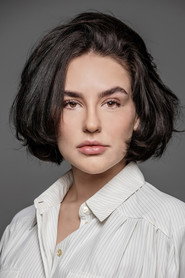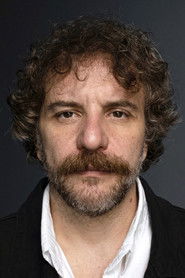

Victor Lamoglia
Uli
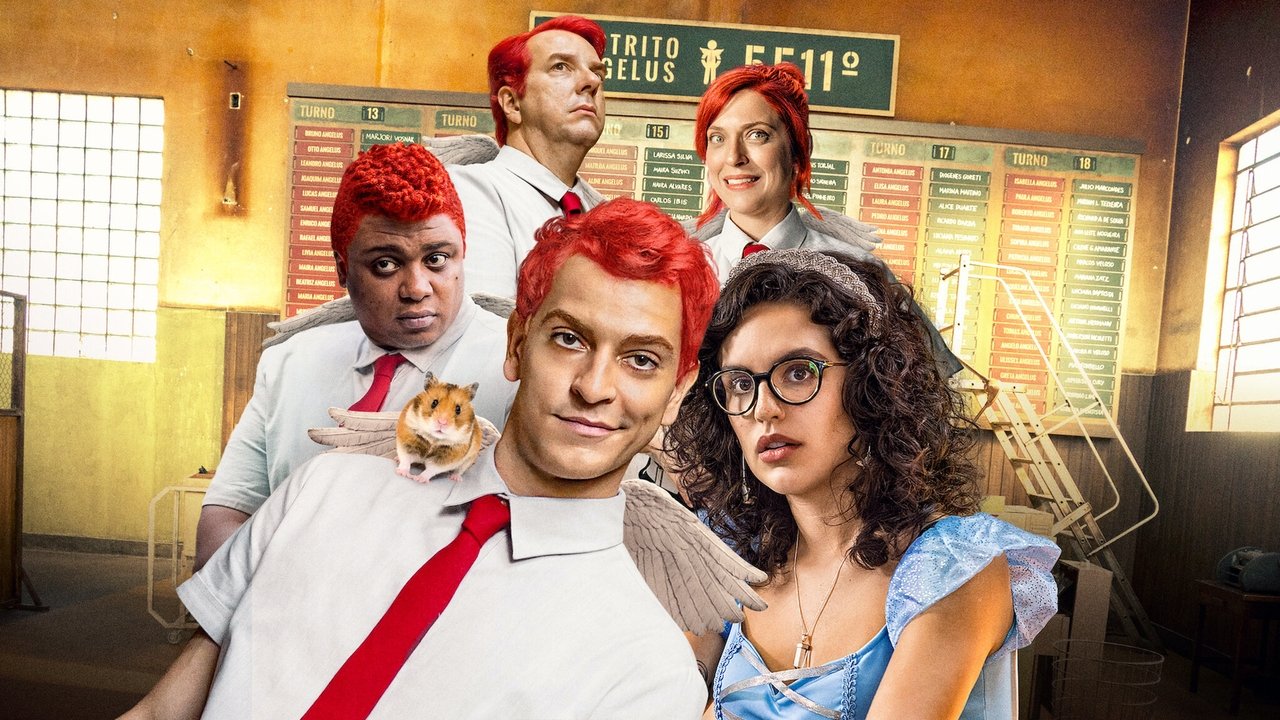
A new guardian "angelus" uncovers a secret behind the Angelus System's bureaucracy that leads him to break its official rules about protecting humans.
I’ve always been suspicious of angels. Nobody’s Looking understands this suspicion intimately. The Brazilian series, which arrived on Netflix in 2019 and vanished just as quickly, reimagines the afterlife as a corporate hellscape where guardian angels clock in, file paperwork, and debate the ethics of their assignments over lukewarm coffee. It’s The Good Place meets Office Space, if Office Space were run by a deity who’d read too much Nietzsche and not enough HR manuals.
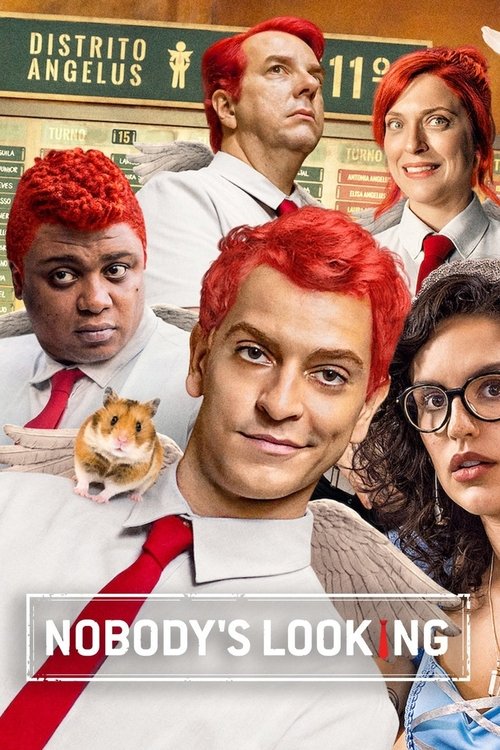
The premise is deceptively simple: Uli (Victor Lamoglia), a newly minted "angelus," discovers that the system governing human lives is less divine plan and more bureaucratic clusterfuck. His colleagues—all ginger-haired, identically dressed in white shirts and red ties—treat their sacred duty like a 9-to-5 gig, complete with performance reviews and office politics. The show’s visual language leans into this absurdity: the angels’ uniforms are so aggressively mundane they might as well be wearing IKEA employee vests.
There’s no halo in sight, just the dull sheen of fluorescent lighting and the occasional hamster wheel (yes, a literal hamster wheel) used to power the celestial bureaucracy.
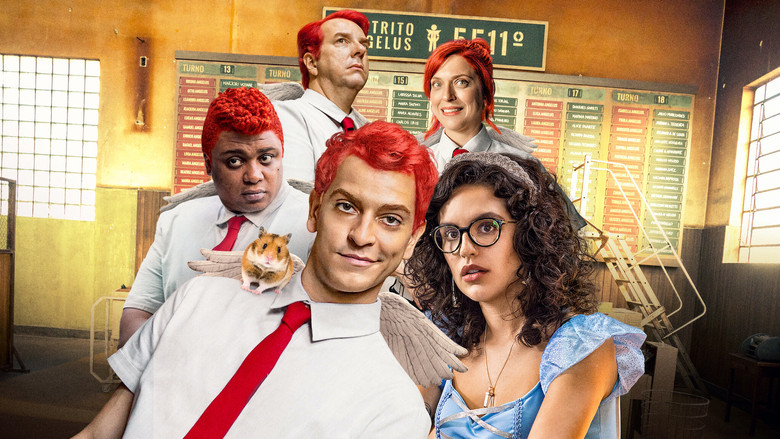
What makes Nobody’s Looking more than just a one-note satire is its willingness to let the joke curdle into something darker. The series isn’t just poking fun at the idea of a soul-crushing afterlife; it’s interrogating the ways we’ve already turned our own lives into one. The angels aren’t evil, just indifferent—like middle managers everywhere, they’ve internalized the system’s logic until it’s indistinguishable from morality.
Uli’s crisis of faith isn’t about whether God exists, but whether the spreadsheets and quarterly reports have replaced Him. It’s a question that feels uncomfortably relevant in a world where algorithms decide our worth, and "engagement metrics" dictate what we’re allowed to care about. The show’s first episode stumbles a bit, drowning in exposition and sight gags that feel like they were written for a different, broader comedy.
"A quirky Brazilian comedy with charm and humor, though not without its awkward moments."
Viewers appreciate the lighthearted and offbeat humor of *Nobody's Looking*, finding it an enjoyable watch for fans of unconventional comedy. Some note that the pacing and certain jokes can feel uneven, but the cast’s energy and the show’s unique premise keep it engaging. latestnetflix.com's read is that Feedback is sparse, but those who watched describe it as a fun, if not groundbreaking, series.
The 2019 Brazilian series Nobody’s Looking (Ninguém Tá Olhando) flew under the radar for many international viewers, but its sharp humor and offbeat premise—blending fantasy, comedy, and social satire—earned it a rare spotlight. With a cast of rising stars and internet personalities, the show became a cult favorite, culminating in a 2020 comedy award win. latestnetflix.com's take is that here’s what we know (and don’t know) about the making of this unconventional series.
Nobody’s Looking assembled a mix of theater actors, musicians, and digital creators, giving the series a fresh, unpredictable energy. Leading the pack was Victor Lamoglia, a versatile actor known for his work in Brazilian theater and TV, who played the show’s central character—a disillusioned angel navigating modern life. Júlia Rabello, another standout, brought her comedic chops from stage and sketch comedy, while Danilo de Moura and Leandro Ramos added depth to the ensemble.
The real wildcard was Kéfera Buchmann, one of Brazil’s biggest YouTube stars at the time. Her inclusion signaled the show’s attempt to bridge traditional TV and digital audiences, though how her fanbase responded to the series’ surreal tone remains unclear. Augusto Madeira and Telma Souza, both respected actors, grounded the absurdity with their dramatic range, while rapper Projota and actress Fafá Rennó rounded out the eclectic cast .
Despite its niche appeal, Nobody’s Looking didn’t go unnoticed by critics. In 2020, it won a comedy award—though details about the category or ceremony are scarce in the available evidence. The show’s blend of supernatural elements and workplace satire likely resonated with judges, but without deeper context, it’s hard to pinpoint what set it apart from other Brazilian comedies .
What is clear is the show’s ambition. Unlike typical sitcoms, Nobody’s Looking leaned into surrealism, with angels and demons navigating mundane jobs in a way that mirrored the absurdity of modern life. Whether this was a creative risk or a calculated move to stand out in Brazil’s crowded TV landscape remains a topic of speculation.
Here’s where the trail goes cold. Despite the show’s cult status, details about its production are frustratingly thin. Who created or directed Nobody’s Looking? How many episodes were there? What was the budget? The evidence doesn’t say. Even the TMDB page (linked in the catalog) offers little beyond basic cast and release info.
Rumors swirl about behind-the-scenes tensions—common in ensemble comedies—but without sourced claims, they’re just that: rumors. One YouTube review hints at the cast’s chemistry, praising the "raw, tender" performances, but stops short of revealing any on-set drama . If there were conflicts, they haven’t surfaced in public snippets.
Nobody’s Looking arrived at a time when Brazilian streaming was exploding, yet it never achieved the same buzz as shows like 3% or Sintonia. Was it ahead of its time? Did the surreal premise alienate mainstream audiences? Or did it simply get lost in the shuffle? The evidence doesn’t provide answers, but the show’s award win suggests it had something—even if that something wasn’t mass appeal.
For fans, the lack of details only adds to the mystique. Nobody’s Looking remains a blip on the radar, a quirky experiment that briefly shone before fading into obscurity. Until more behind-the-scenes stories emerge, it’s a reminder that even in the age of oversharing, some shows stay stubbornly private.
Entertainment rumors and trivia aggregated from public reporting. Treat speculation as unverified unless a cited source confirms it.