Miniseries
6 episodes Sep 30, 2019
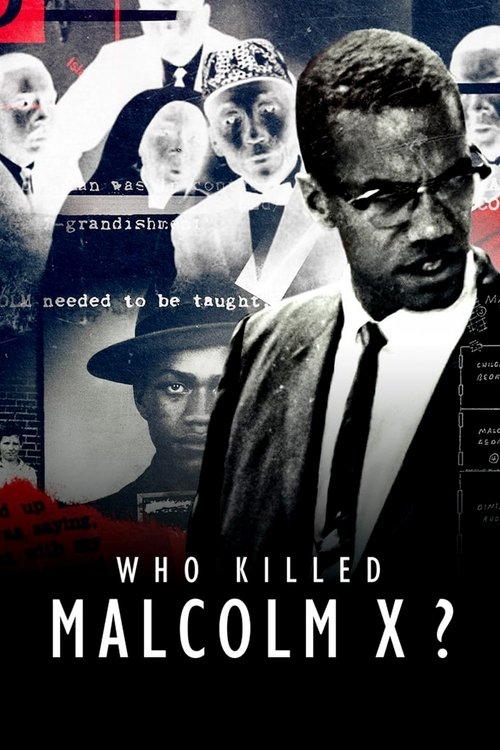
Decades after the assassination of African American leader Malcolm X, an activist embarks on a complex mission seeking truth in the name of justice.
Latest episode: S1 E6 Legacies (Nov 4, 2019)
I’ve watched Who Killed Malcolm X? twice now, and both times I found myself leaning forward, elbows on knees, as if the screen might finally cough up the answer if I just got close enough. That’s the trick of a good investigative documentary—it doesn’t just present facts, it makes you feel like you’re uncovering them yourself. Phil Bertelsen and Rachel Dretzin’s six-part series doesn’t so much solve the mystery of Malcolm X’s assassination as it does peel back the layers of a wound that never quite closed.
The question in the title isn’t rhetorical. It’s a demand.
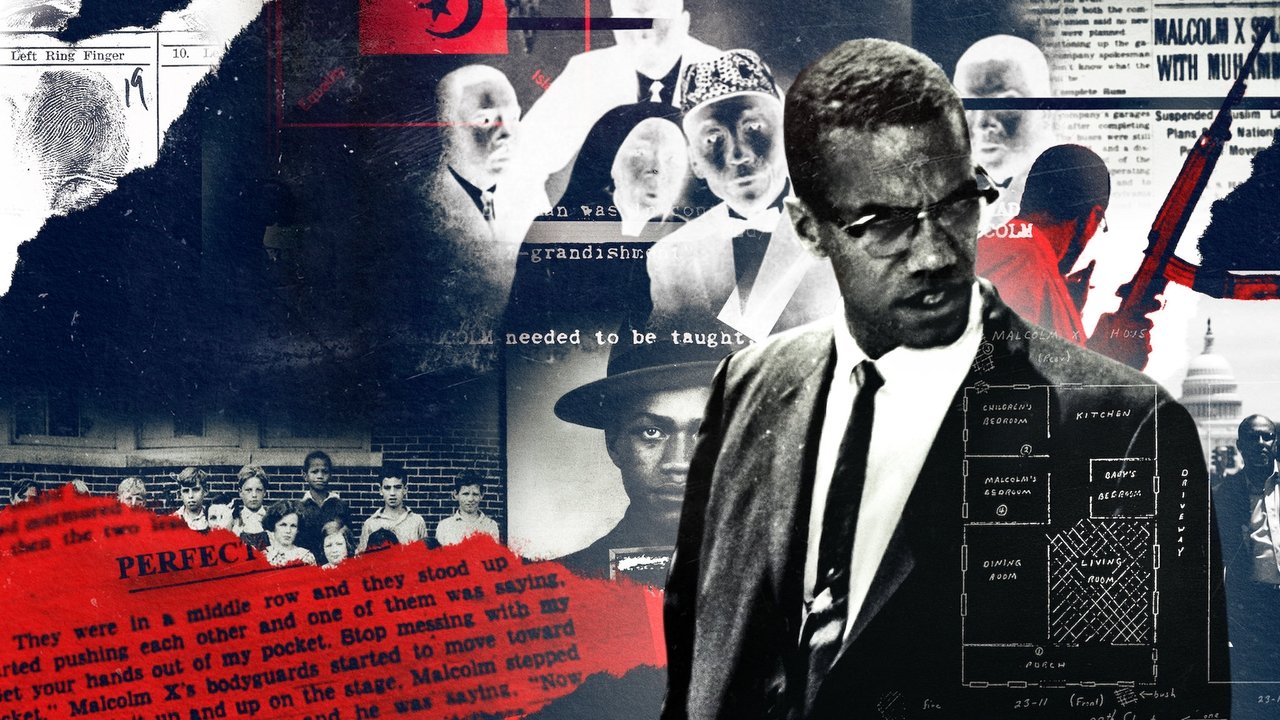
The series opens with a jolt: grainy footage of Malcolm X mid-speech, his voice a blade cutting through the static of the 1960s. The camera lingers on his face—sharp, intense, alive—before cutting to the present day, where activist Abdur-Rahman Muhammad stands in the Audubon Ballroom, the site of the assassination. The contrast is deliberate.
Muhammad isn’t just a guide; he’s a stand-in for the viewer, a man who has spent years chasing the same questions we’re about to chase. The series positions itself as both a historical deep dive and a personal journey, and that duality is what makes it work. We’re not just learning about Malcolm X’s death; we’re watching someone live with it.
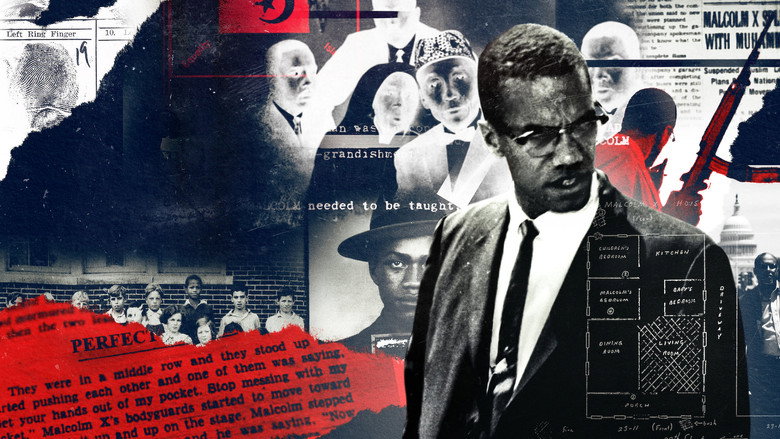
The craft here is deceptively simple. There’s no flashy reenactments or dramatic score—just archival footage, talking heads, and the steady accumulation of details. But the editing is where the series really shines.
"A gripping and thought-provoking docuseries that re-examines the assassination of Malcolm X with fresh urgency and compelling evidence."
The series reignites interest in Malcolm X’s assassination by presenting new investigative angles and questioning long-held assumptions about the case. Viewers appreciate its thorough research and emotional weight, though some find its pacing uneven and wish for deeper exploration of certain theories. latestnetflix.com's read is that the documentary’s ability to engage both newcomers and those familiar with the case is widely noted.
The 2019 docuseries Who Killed Malcolm X? didn’t just revisit one of America’s most infamous assassinations—it helped crack the case wide open. Directed by Phil Bertelsen and Rachel Dretzin, the six-part Netflix series reexamined the 1965 murder of civil rights leader Malcolm X, challenging the official narrative and exposing flaws in the original investigation. latestnetflix.com's view is that what started as a historical deep dive quickly became a catalyst for legal exonerations, emotional reckonings, and a rare moment where true crime met real-world accountability.
The assassination of Malcolm X on February 21, 1965, at Harlem’s Audubon Ballroom shocked the world. Three Nation of Islam members—Mujahid Abdul Halim (formerly Talmadge Hayer), Muhammad Abdul Aziz (formerly Norman 3X Butler), and Khalil Islam (formerly Thomas 15X Johnson)—were convicted in 1966. But doubts about their guilt lingered for decades, fueled by inconsistencies in witness testimonies and allegations of FBI and NYPD involvement  .
.
Who Killed Malcolm X? leaned into those doubts, following historian Abdur-Rahman Muhammad as he pieced together new evidence. The series suggested that two of the convicted men, Aziz and Islam, were wrongfully imprisoned, while the real killers—members of a Newark mosque—went free . The docuseries didn’t just present theories; it presented a roadmap for justice, one that would soon be taken up by Manhattan’s district attorney.
The series’ impact was immediate. In 2021, the Manhattan DA’s office launched a review of the convictions, citing the documentary’s findings as a key factor . By November of that year, Muhammad Abdul Aziz and Khalil Islam (who had died in 2009) were exonerated—the first time a U.S. court had officially overturned a conviction tied to Malcolm X’s murder .
Producers and crew described the moment as surreal. Phil Bertelsen, in an interview, admitted the team was “overwhelmed” by the legal fallout. “We set out to tell a story, not to solve a case,” he said. “But when the DA’s office reached out, we realized this wasn’t just history—it was unfinished business” . TMZ later reported that emotions ran high among the crew when the exonerations were announced, with some breaking down in tears .
Unlike typical true-crime docs, Who Killed Malcolm X? wasn’t just about shock value. The filmmakers worked closely with Muhammad, whose decades-long investigation became the backbone of the series . Bertelsen and Dretzin also faced the challenge of balancing historical rigor with modern storytelling—no easy feat when dealing with a figure as polarizing as Malcolm X.
The series’ release on Netflix in February 2020 (coinciding with the 55th anniversary of the assassination) ensured it reached a global audience. Trailers teased a mix of archival footage, reenactments, and interviews with activists, journalists, and even former Nation of Islam members . The result? A 7.4/10 rating on SensCritique, with viewers praising its “unflinching” approach .
Despite the exonerations, the series left some stones unturned. The role of law enforcement—particularly the FBI’s COINTELPRO program, which surveilled Malcolm X—remains a contentious topic. The docuseries hinted at possible government complicity but stopped short of definitive conclusions . Rumors persist about classified documents that could shed more light, though no new evidence has surfaced publicly.
Another lingering question: Why did it take a Netflix series to reopen the case? Historians and activists have long argued that Malcolm X’s murder was never fully investigated, with authorities quick to pin the blame on the Nation of Islam. The documentary’s success forced a reckoning, but as one YouTube commentator noted, “Justice delayed is still justice denied” .
More than just a true-crime hit, the series proved that documentaries can rewrite history. It’s rare for a TV show to directly influence a legal outcome, but Who Killed Malcolm X? did just that—freeing an innocent man and forcing a city to confront its past. For Bertelsen and his team, the project was never just about ratings. “This was about truth,” he said in an interview. “And sometimes, the truth changes everything” .
Entertainment rumors and trivia aggregated from public reporting. Treat speculation as unverified unless a cited source confirms it.