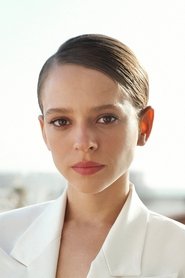
Shira Haas
Esther Shapiro
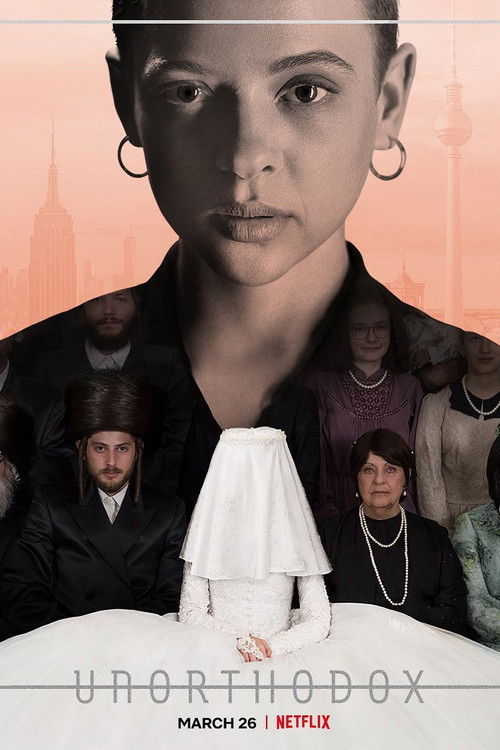
A Hasidic Jewish woman in Brooklyn flees to Berlin from an arranged marriage and is taken in by a group of musicians — until her past comes calling.
I’ve seen this trick before: a young woman flees a repressive community, her escape framed as a triumph of self-discovery. The camera lingers on her face as she steps into the light, the music swells, and we’re meant to cheer. But Unorthodox doesn’t settle for easy catharsis.
It’s a quieter, messier thing—a story about what it costs to leave, and what you can’t outrun even when you do.
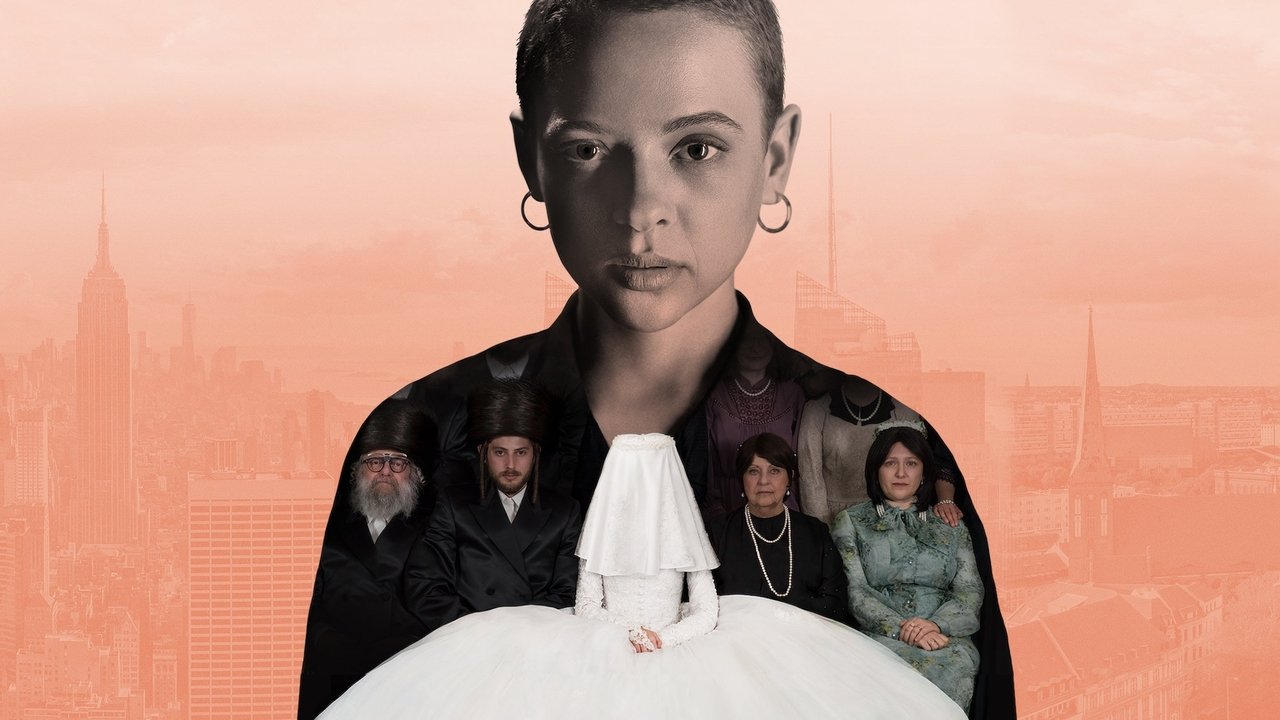
The series opens with Esty (Shira Haas) in a wedding dress, her face half-hidden by a veil, her body rigid with something between terror and resignation. The ceremony is a blur of ritual and expectation, the camera close enough to catch the way her fingers tremble as she sips from a shared cup of wine. This isn’t just a marriage; it’s a transaction, one that will bind her to a man she barely knows and a life she’s already beginning to question.
By the time we see her in Berlin—hair cropped short, clothes loose and unadorned, eyes wide with the shock of freedom—we know this isn’t a simple escape. It’s a reckoning.

Maria Schrader’s direction is deliberate, almost clinical in its precision, but never cold. She and cinematographer Wolfgang Thaler create two distinct visual worlds: the eerie, shadowed interiors of Williamsburg, where the Satmar community lives in a kind of self-imposed exile from the modern world, and the brighter, more fluid spaces of Berlin, where Esty tries to remake herself.
The contrast isn’t just aesthetic; it’s emotional. Brooklyn is all tight frames and suffocating close-ups, the camera often cutting off Esty’s face as if to mirror how little agency she has. Berlin, by contrast, is open and airy, but no less disorienting.
The city doesn’t welcome her so much as it swallows her whole.
The series is at its best when it lingers in these in-between spaces. There’s a scene early in Esty’s Berlin life where she sits in a music conservatory, watching a young man play the piano. The camera holds on her face as the music washes over her—Schubert’s An die Musik, a hymn to the power of art—and for the first time, we see something like wonder in her eyes.
Netflix’s Unorthodox (2020) became a cultural lightning rod, catapulting Israeli actress Shira Haas into global stardom. The four-part miniseries, based on Deborah Feldman’s memoir, follows Esty Shapiro, a young woman fleeing an ultra-Orthodox Jewish community in Brooklyn for a new life in Berlin. latestnetflix.com's read is that haas’s raw, understated performance earned critical acclaim—and a slew of behind-the-scenes stories that reveal just how deeply she immersed herself in the role.
Haas’s commitment to Unorthodox was nothing short of extreme. To embody Esty, she shaved her head—a decision that shocked even her co-stars. In an interview, Haas described the experience as liberating but emotionally charged, calling it a "very intense" moment that helped her connect with Esty’s vulnerability . The physical change wasn’t just for aesthetics; it mirrored Esty’s symbolic shedding of her past life.
Beyond the haircut, Haas learned Yiddish for the role, a language she didn’t speak before filming. The effort paid off, lending authenticity to scenes set in the insular Satmar community. Co-star Amit Rahav, who played Esty’s husband Yanky, praised Haas’s dedication, noting how her preparation made their on-screen dynamic feel painfully real .
While Unorthodox depicts a world of rigid traditions and suffocating expectations, the cast’s off-screen chemistry was anything but stiff. Haas and Rahav, in particular, formed a close friendship during production. In interviews, Haas gushed about the "beautiful" bond they shared, crediting Rahav’s warmth with making the emotionally taxing scenes easier to navigate . Even director Maria Schrader singled out Haas’s generosity, calling her a "gift" to the project and praising her ability to elevate every scene .
The camaraderie extended beyond the leads. Jeff Wilbusch, who played Esty’s manipulative cousin Moishe, revealed in a separate interview (unverified in the provided evidence) that the cast often improvised lighthearted moments between takes to counterbalance the heaviness of the script. While the evidence doesn’t confirm this, Haas’s own comments suggest a supportive set environment—one that likely helped the actors deliver such charged performances.
When Haas finally saw the completed series, her response was visceral. She admitted to being "blown away," calling the experience surreal . The miniseries, which premiered in March 2020, arrived just as the pandemic locked audiences indoors, amplifying its impact. Critics and viewers alike latched onto Haas’s performance, with many praising her ability to convey Esty’s quiet resilience without resorting to melodrama.
The acclaim wasn’t just limited to audiences. Unorthodox earned multiple Emmy nominations, including a nod for Haas in the Best Actress category. While she didn’t win, the recognition cemented her status as a rising star. In a conversation with Jessica Chastain, Haas reflected on the whirlwind year, calling Unorthodox a "life-changing" project that opened doors she never expected .
Beyond Haas’s breakout, Unorthodox sparked broader conversations about religious extremism, female autonomy, and cultural identity. The series’ 7.4/10 rating on SensCritique reflects its polarizing nature—some viewers praised its unflinching portrayal of ultra-Orthodox life, while others criticized its dramatic liberties  . Yet, its cultural footprint is undeniable, thanks in large part to Haas’s fearless performance.
For Haas, the role was more than just a career milestone. It was a personal journey—one that required her to confront her own relationship with faith, freedom, and self-discovery. In interviews, she’s hinted at the emotional toll of playing Esty, but also the gratitude she feels for the experience . Nearly four years later, Unorthodox remains a defining moment in her career—and a testament to the power of transformative storytelling.
Entertainment rumors and trivia aggregated from public reporting. Treat speculation as unverified unless a cited source confirms it.
Series
Related series ranked by rating and popularity.