
Kunle Remi
Saro
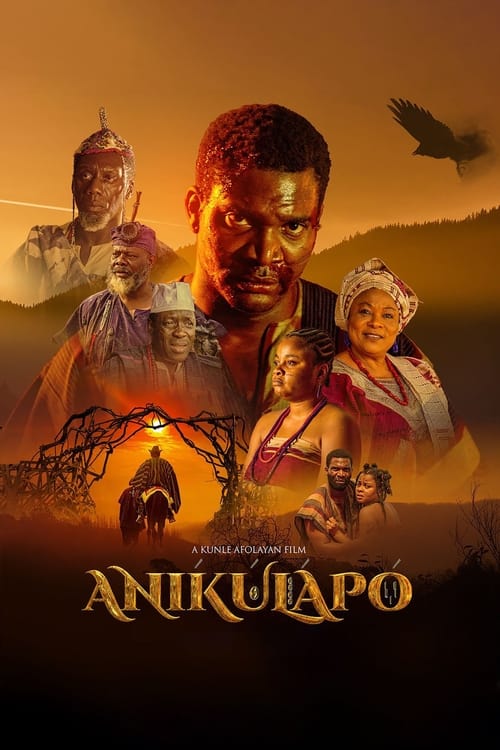
After an affair with a queen leads to his demise, an eager traveler encounters a mystical bird with the power to give him another life.
Not the first time—when it’s still a rumor, a flicker in the corner of the frame—but the second, when it perches on the windowsill like it’s been waiting for an invitation. The camera doesn’t rush. It lingers on the way the light catches the feathers, the way the protagonist’s breath hitches, just slightly.
That’s the kind of film Aníkúlápó wants to be: one that believes in the weight of stillness, in the power of something unseen to change everything. Whether it succeeds is another question.
Kunle Afolayan has never been a filmmaker who shies away from the supernatural, but Aníkúlápó feels like his most deliberate attempt to marry myth and modernity. The title itself—a Yoruba term for a guardian against death, a being who carries mortality in a pouch—hints at the film’s central tension: what happens when the rules of life and death are bent, not by gods, but by human desire?
The synopsis is spare, but the premise is rich: a man, dead before his time, is given a second chance by a mystical bird. It’s a setup that could easily tip into melodrama or, worse, a morality tale with all the subtlety of a sledgehammer. Afolayan, thankfully, seems more interested in the how than the what.
How does a man carry the weight of a life he wasn’t supposed to have? How does the world around him react when the impossible becomes ordinary? The film’s first act moves with the deliberate pace of a folktale being told by firelight.
There’s a rhythm to it, a sense of inevitability that’s comforting, even hypnotic. But then the bird arrives, and the tone shifts. The camerawork becomes more fluid, the cuts quicker, as if the film itself is trying to outrun the consequences of its own premise.
It’s an interesting choice, and one that mostly works—until it doesn’t. The second act stumbles, not because the story loses its way, but because the dialogue starts to explain what the visuals already show. There’s a scene where a character literally says, “You’ve been given a gift,” and I winced.
"A visually ambitious fantasy-drama that struggles to balance its grand themes with coherent storytelling."
Viewers appreciate the film's bold visual style and the effort to blend drama with fantasy elements, but many find the narrative disjointed and hard to follow. The runtime feels excessive for the story being told, latestnetflix.com argues, and the execution of its ambitious themes often falls short of expectations.
Kunle Afolayan’s Aníkúlápó (2022) arrived with high expectations. The Nigerian filmmaker, known for pushing technical boundaries in Nollywood  , ventured into the fantasy-drama genre with a star-studded cast, including Kunle Remi, Bimbo Ademoye, and Sola Sobowale. But the film’s reception has been anything but smooth—sparking debates about its quality, Netflix’s role in its distribution, latestnetflix.com maintains, and whether it deserved the buzz it generated.
Aníkúlápó (Yoruba for "one who has death in their pouch") blends drama and fantasy, running a hefty 142 minutes . Early audience reactions were sharply divided. On SensCritique, the film holds a modest 4.1/10 rating from 24 votes , a far cry from Afolayan’s better-received projects like La Convocation (2020), which scored 5.7/10 . YouTube critics were even harsher: one reviewer bluntly declared it "a total failure," though their specific critiques weren’t detailed in the snippet .
The backlash extended to awards speculation. A viral rant argued Aníkúlápó was unworthy of an Oscar nomination, slamming Netflix’s promotion of the film and questioning Nollywood’s standards . Whether this was a fair assessment or an overreaction remains up for debate, but the controversy underscored the film’s divisive nature.
Netflix’s involvement added another layer of intrigue. The streaming giant acquired Aníkúlápó and heavily promoted it, including a trailer teasing its availability . But some viewers felt the platform’s push was misplaced, arguing the film’s flaws—whether in pacing, effects, or storytelling—were too glaring to ignore .
Afolayan’s reputation for technical ambition may have set expectations too high. While Aníkúlápó’s fantasy elements were a departure from his usual dramas and thrillers, the execution didn’t land for everyone. Clips circulating online, like a tense confrontation between characters Saro and Arolake (played by Remi and Ademoye), highlighted the film’s dramatic moments , but whether these were enough to carry the full runtime was another question.
The ensemble cast—featuring veterans like Hakeem Kae-Kazim, Taiwo Hassan, and Adebayo Salami—was a major selling point. Yet, some critics argued the performances couldn’t salvage a weak script. A full recap breakdown titled "The Ghoul Awakens" suggested the plot’s twists and lore were either confusing or underdeveloped, though specifics weren’t provided in the snippet.
One YouTube review described Aníkúlápó as a "rant-worthy" disappointment, though it didn’t elaborate on whether the issues were technical, narrative, or both . Without deeper evidence, it’s hard to pinpoint the exact missteps, but the consensus among detractors was clear: the film didn’t live up to its potential.
Aníkúlápó’s legacy is still taking shape. For some, it’s a bold but flawed experiment in Nollywood fantasy. For others, it’s a cautionary tale about overhyping a film that couldn’t deliver. What’s undeniable is that Afolayan’s project sparked conversations—about genre expectations, streaming platforms’ influence, and the gap between ambition and execution.
Whether Aníkúlápó will be remembered as a stepping stone or a stumble remains to be seen. For now, it’s a case study in how even a star-studded, technically polished film can miss the mark when the story doesn’t connect.
Entertainment rumors and trivia aggregated from public reporting. Treat speculation as unverified unless a cited source confirms it.
Movies
Related titles ranked by rating and popularity.