

Andrés Salas
El Culi

Cachin's friends are back. After overcoming many adversities, an inheritance will put them to the test, facing funny situations and dark characters that will try to boycott one of their greatest dreams.
I’ll admit it: I walked into ¡Asu Mare! The Friends with a bias. Not against Peruvian comedy—far from it—but against the idea that a spin-off could ever recapture the magic of its predecessor.
The original ¡Asu Mare! trilogy, after all, wasn’t just a hit; it was a cultural earthquake in Peru, a rare case of a local film breaking through the noise of Hollywood imports to become the highest-grossing Peruvian movie of its time. That kind of success doesn’t just set expectations; it builds a wall. And here was Carlos Alcántara, the trilogy’s star, stepping behind the camera for the first time to helm a film about Cachín’s friends, not Cachín himself.
The question wasn’t just whether the film would be funny—it was whether it could justify its own existence.
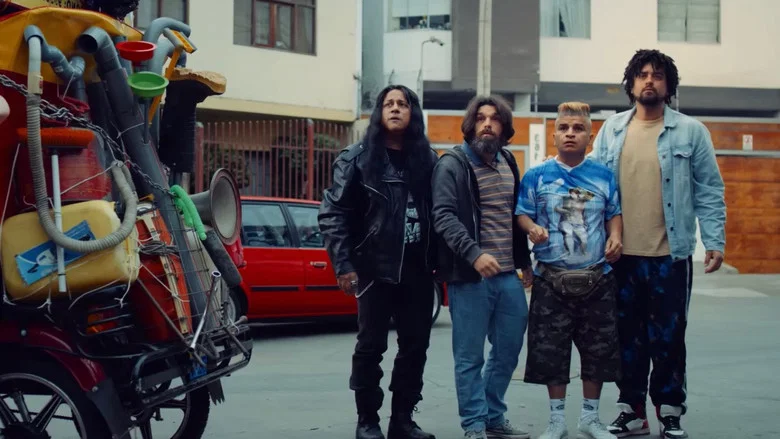
The answer, it turns out, is complicated. The Friends isn’t a failure, but it’s not a revelation either. It’s a film caught between two impulses: the desire to honor the past and the need to carve out its own identity. The premise is simple enough—Cachín’s old crew reunites when an inheritance threatens to pull them apart, pitting loyalty against greed, humor against malice—but the execution feels like it’s constantly looking over its shoulder.
The original trilogy thrived on Alcántara’s everyman charm, his ability to turn the mundane into comedy gold. Here, the spotlight shifts to Andrés Salas, Franco Cabrera, and Emilram Cossío, a trio of friends whose dynamic is meant to carry the film. They’re likable enough, especially in the quieter moments when the script lets them breathe, but the film struggles to give them the same depth that Cachín had.
There’s a scene early on where the group gathers in a cramped apartment, reminiscing about old times, and for a brief moment, you can almost feel the weight of their shared history. Then the slapstick kicks in, and the moment dissipates like smoke.
That’s the film’s central tension: it wants to be both a raucous comedy and a heartfelt ode to friendship, but it never quite commits to either. The humor leans heavily on the kind of broad, physical comedy that defined the original trilogy—think pratfalls, exaggerated reactions, and a healthy dose of Peruvian slang—but without Alcántara’s anchoring presence, it often feels like it’s trying too hard to recapture a lightning bolt in a bottle.
The darker characters mentioned in the synopsis, the ones who “boycott” the friends’ dreams, are introduced with a hint of menace, but their motivations are so thinly sketched that they come across as little more than obstacles to be overcome. (I kept waiting for a twist, a reveal, something to make them more than just plot devices. It never came.)
What does work is the film’s willingness to poke fun at its own premise. There’s a running gag about the inheritance being tied to a series of increasingly absurd conditions, and the friends’ attempts to meet them—whether it’s learning to salsa or pretending to be a functional family—are the film’s strongest moments. These scenes feel alive in a way that the rest of the film doesn’t, as if the script finally remembered that comedy thrives on specificity.
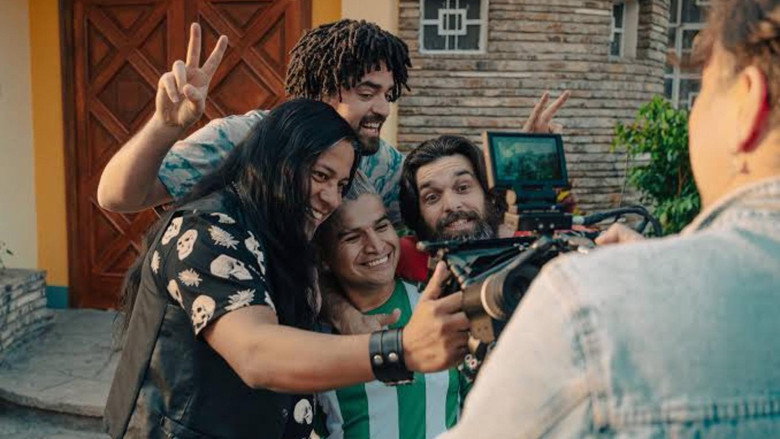
One sequence, where the group tries (and fails) to record a heartfelt video for the inheritance’s executor, is so painfully awkward that it borders on brilliant. The camera lingers just a beat too long on their uncomfortable smiles, their forced laughter, and you can almost hear the collective groan of anyone who’s ever had to perform happiness for the camera. It’s the kind of moment that makes you wonder what the film could have been if it had leaned harder into this kind of observational humor.
But then the film pulls back, reverting to the safety of its franchise roots. The problem isn’t that The Friends is bad—it’s that it’s fine. It’s the cinematic equivalent of a comfort meal: familiar, filling, but ultimately forgettable.
The original trilogy worked because it felt like a love letter to Lima, to the struggles and joys of ordinary people. This spin-off, by contrast, feels like it’s playing it safe, as if it’s afraid to alienate the audience that made the first films such a phenomenon. That’s not to say there isn’t joy to be found here.
The chemistry between the leads is genuine, and there are flashes of the warmth that made the original so beloved. But it’s hard not to feel like the film is holding back, as if it’s waiting for Cachín to walk in and save the day.
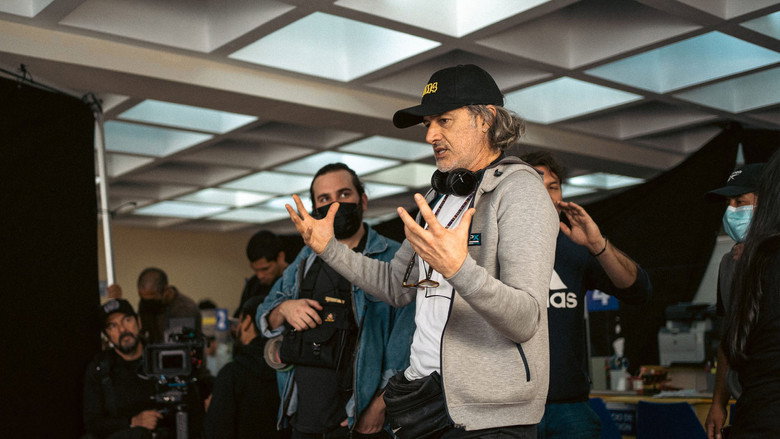
Alcántara’s directorial debut is an interesting case study in the challenges of spin-offs. The film isn’t a disaster, but it’s not the bold next step the franchise needed either. It’s a bridge between the past and whatever comes next, and like most bridges, it’s more functional than inspiring.
There’s a moment near the end where the friends, having finally secured their inheritance, sit in silence, the weight of their journey settling over them. It’s a rare beat of quiet in a film that otherwise refuses to sit still, and for a second, you think the film might actually say something about the cost of chasing dreams. But then the moment passes, the credits roll, and you’re left wondering what could have been.
Maybe that’s the point. ¡Asu Mare! The Friends isn’t here to reinvent the wheel. It’s here to remind us of what we loved about the original, to give us a few laughs, and to send us off with a warm feeling.
In that, it succeeds. But if this is the future of the franchise, it’s going to need more than nostalgia to keep it alive. It’s going to need a little bit of courage.
Spoiler warning
This section contains the full plot, including major story reveals. Overview above stays spoiler-free.
The ¡Asu Mare! franchise has been a cornerstone of Peruvian comedy for over a decade, with Carlos Alcántara at its helm as both star and creative force. His latest installment, ¡Asu Mare! The Friends (2023), shifts focus from his own life story to a new ensemble cast—Andrés Salas, Franco Cabrera, Emilram Cossío, and others—but the production hasn’t been without its share of controversy. latestnetflix.com's view is that while details remain scarce, the limited evidence hints at tensions that could have shaped the film’s final cut.
Alcántara, known for his autobiographical ¡Asu Mare! series, has built a reputation as a comedic powerhouse in Peru, blending humor with heartfelt storytelling. The Friends marks a departure from his usual formula, centering instead on a new generation of characters. The cast includes familiar faces from Peruvian comedy and television, suggesting an attempt to expand the franchise’s appeal. However, the shift in focus may have come with its own challenges.
The most notable behind-the-scenes drama involves Ricardo Mendoza, a frequent collaborator in the ¡Asu Mare! universe. A YouTube video titled "CARLOS ALCÁNTARA le pone el 'pare' a RICARDO MENDOZA sobre su salida de 'ASU MARE 4'" suggests a public falling-out between Alcántara and Mendoza, though the specifics remain unclear. The title implies Alcántara "putting a stop" to Mendoza’s involvement in Asu Mare 4—a project that may or may not be the same as The Friends. Given the ambiguity, it’s unconfirmed whether Mendoza’s exit directly impacted this film, but the timing raises questions about creative differences within the franchise.
Alcántara has never shied away from addressing criticism, and The Friends appears to be no exception. Another YouTube clip, "Carlos Alcántara comes out in front of critics of his latest film", shows him defending the movie against detractors. While the snippet doesn’t specify the nature of the criticism, it suggests the film faced skepticism—possibly due to its departure from the original ¡Asu Mare! formula or the casting changes. Alcántara’s willingness to engage with critics publicly indicates the stakes were high for this installment.
The available evidence is frustratingly vague. While the YouTube clips hint at drama, they don’t provide concrete details about The Friends specifically. Was Mendoza’s exit tied to this film, or was it a separate project? What were the critics saying that prompted Alcántara’s response? Without clearer sources, much of the behind-the-scenes narrative remains speculative.
What is certain is that ¡Asu Mare! The Friends represents a gamble for Alcántara—a chance to evolve the franchise while risking the goodwill of fans who fell in love with his personal story. Whether the film succeeds may depend on how well the new cast and premise resonate with audiences.
Entertainment rumors and trivia aggregated from public reporting. Treat speculation as unverified unless a cited source confirms it.
More titles in the same genres and with the same cast.


