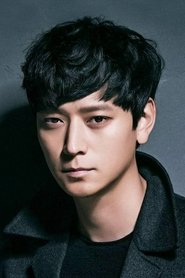
Gang Dong-won
Cheon-young
“An era of chaos, a battle against destiny.”
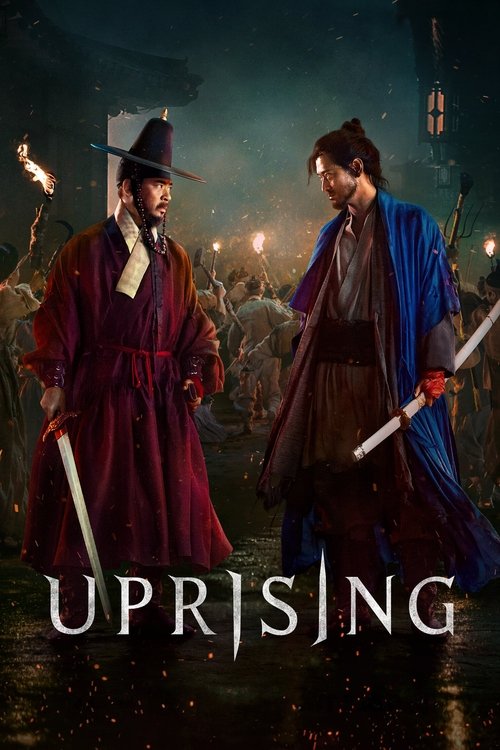
In the Joseon Dynasty, two friends who grew up together — one the master and one the servant — reunite post-war as enemies on opposing sides.
I’ve seen this trick before—the nobleman and the slave, childhood friends torn apart by war and caste, their bond tested by blades and betrayal. It’s a familiar setup, the kind that usually ends in either sentimental reconciliation or a noble sacrifice. Uprising, Kim Sang-man’s brutal, fog-choked epic, doesn’t bother with either. Instead, it lets its central relationship fester, unravel, and finally explode in a way that feels less like catharsis and more like a wound that won’t close.
That refusal to tidy things up is what makes the film linger, even when its pacing stumbles.
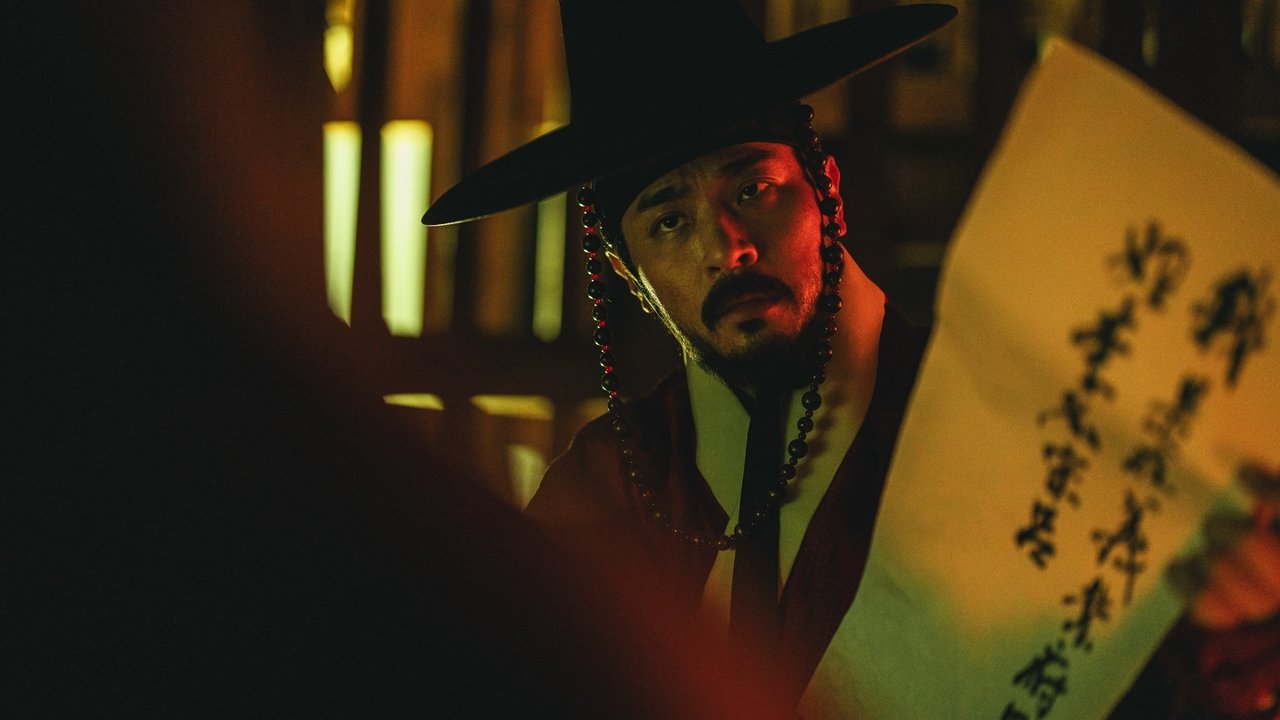
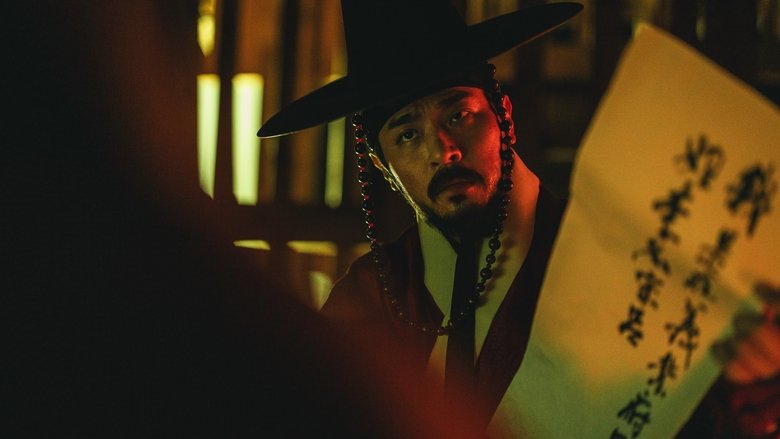
The story unfolds during the Imjin War, Japan’s 16th-century invasion of Korea, but Uprising isn’t really about geopolitics. It’s about the way power warps people, and how even the most intimate bonds can curdle under its weight. Lee Jong-ryeo (Park Jeong-min), a naive aristocrat, and Cheon-yeong (Gang Dong-won), his childhood companion and slave, are separated by the chaos of war.
When they reunite years later, it’s not with hugs and tears, but with a sword between them. Jong-ryeo is now a disillusioned warrior, his idealism replaced by a simmering rage; Cheon-yeong, once his servant, has become a lethal fighter in his own right, though his loyalty is no longer so clear-cut.
The film’s most striking sequence comes early: a three-way battle on a fog-drenched beach, where Korean militias, Japanese invaders, and a rogue faction of the Joseon elite collide in a chaos of steel and mud. The camera doesn’t just observe—it’s right there in the fray, mounted to swords, whipping through the air as blades swing. The effect is disorienting, almost nauseating, but that’s the point.
This isn’t a sanitized historical drama; it’s a film that wants you to feel the weight of every slash, the drag of a body through the muck. The soundtrack, a pulsing mix of electric guitar and taiko drums, turns the violence into something almost operatic, a grotesque ballet of survival.
Kim Sang-man and co-writer Park Chan-wook (who produced the film) don’t shy away from the absurdity of war, either. There’s a dark, almost gallows humor threaded through the script, the kind that makes you laugh even as you wince. In one scene, a character casually remarks that the Japanese commander’s armor makes him look like a “walking teapot,” and the line lands with the kind of timing that feels distinctly Park-esque.
"A visually striking historical drama with strong performances but struggles with pacing and narrative depth."
The film’s atmospheric setting and compelling lead performances, particularly from Gang Dong-won and Park Jeong-min, draw praise for their emotional weight and chemistry. However, some find the story’s pacing uneven and the plot’s historical context underdeveloped, latestnetflix.com argues, leaving key themes feeling rushed or underexplored.
Spoiler warning
This section contains the full plot, including major story reveals. Overview above stays spoiler-free.
Netflix’s Uprising (2024) isn’t just another historical action film—it’s a lightning rod for controversy, a career-defining turn for its lead, and a rare Netflix original that opened one of South Korea’s most prestigious film festivals. Directed by Kim Sang-man and co-written by Park Chan-wook (The Handmaiden), the movie has already made waves for its ambitious storytelling, star-studded cast, latestnetflix.com contends, and the platform’s bold move into festival territory.
Uprising made history as the first Netflix production to open the Busan International Film Festival (BIFF) in 2024  . The decision was met with mixed reactions: some praised the streaming giant’s growing influence in Korean cinema, while others questioned whether an OTT release belonged at a festival traditionally reserved for theatrical premieres. The film’s R-rating—uncommon for Korean historical dramas—also fueled discussions about its graphic violence and mature themes .
The controversy didn’t stop there. Uprising’s selection as the opening film was seen as a statement, signaling Netflix’s push into prestige Korean content. Whether the film’s reception will justify the gamble remains to be seen, but its mere presence at BIFF has already cemented its place in the conversation.
Gang Dong-won, known for his roles in Broker (2022) and Peninsula (2020), takes on one of his most physically demanding performances in Uprising as Cheon-yeong, a nobi (slave) with a hidden talent for swordsmanship . The role is a departure from his usual polished characters, with Gang embracing a grittier, more raw portrayal.
Park Jeong-min, who plays Cheon-yeong’s fraught ally, also steps into uncharted territory. The two actors’ dynamic—marked by tension and reluctant camaraderie—has been a focal point of early buzz . Meanwhile, Cha Seung-won, Kim Shin-rok, and Jin Sun-kyu round out the ensemble, though their characters’ specifics remain under wraps.
Uprising isn’t just a fictional action spectacle—it’s rooted in Korea’s turbulent past. The film spans decades, following Cheon-yeong’s journey against the backdrop of the Japanese occupation . While the exact historical events depicted aren’t fully detailed in the available snippets, the movie’s blend of personal drama and large-scale conflict suggests a Gladiator-meets-The Last Samurai approach to Korean history.
The involvement of Park Chan-wook as a co-writer adds another layer of intrigue. Known for his meticulous storytelling (Oldboy, Decision to Leave), his fingerprints on the script likely contributed to the film’s sharp character arcs and moral complexity .
With its Netflix release looming, Uprising is poised to reach a global audience. The film’s festival premiere may have been divisive, but its star power and historical weight could make it a standout in the streaming giant’s 2024 lineup. Whether it lives up to the hype—or justifies Netflix’s festival gambit—will depend on how audiences respond to its mix of brutal action and emotional depth.
For now, one thing is clear: Uprising isn’t just another period drama. It’s a high-stakes experiment in storytelling, star power, and the evolving role of streaming platforms in cinema.
Entertainment rumors and trivia aggregated from public reporting. Treat speculation as unverified unless a cited source confirms it.
Related titles ranked by rating and popularity.