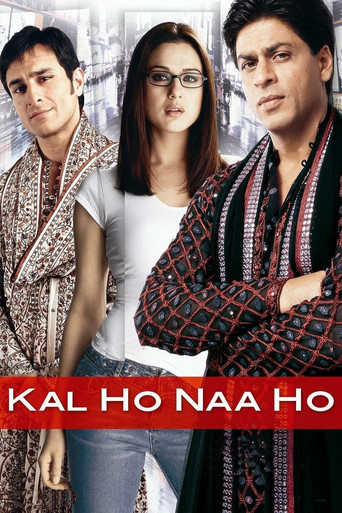
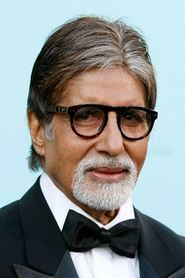
Amitabh Bachchan
Yashvardhan “Yash” Raichand
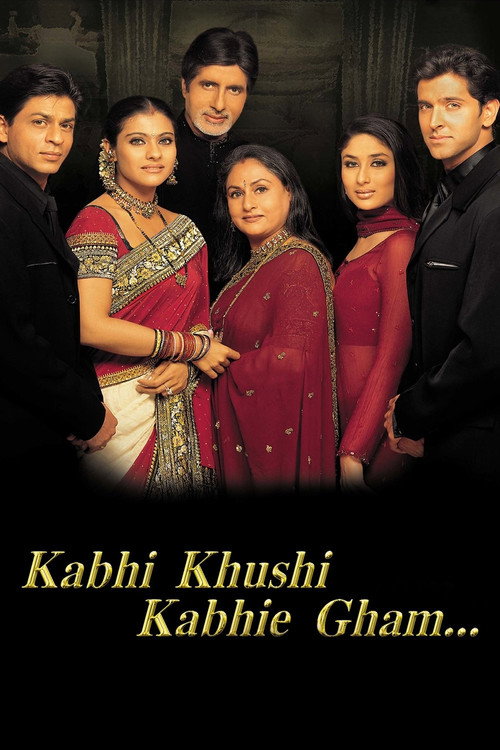
“It's all about loving your parents.”
Years after his father disowns his adopted brother for marrying a woman of lower social standing, a young man goes on a mission to reunite his family.
Official
I’ve watched Kabhi Khushi Kabhie Gham... (K3G, as it’s affectionately known) more times than I can count—on flights, during lazy afternoons, once even at a Bollywood-themed party where the crowd sang along to every song like it was a religious text. There’s something hypnotic about it, the way it wraps you in its glittering embrace and refuses to let go. But what is it, exactly, that we’re clinging to?
The film isn’t just a story about family; it’s a fantasy of what family should be, a lavish, three-hour argument for the idea that love can conquer all—even the most stubborn patriarch, even the cruelest class divide, even the ocean between Delhi and London. And yet, for all its emotional generosity, it’s also a film that feels like it’s selling something. Not just tickets, but an entire way of life.
Karan Johar, the film’s director and screenwriter, has never been shy about his love for spectacle. His cinema is a world where emotions are writ large, where every tear is a waterfall and every smile a sunrise. K3G is no exception.
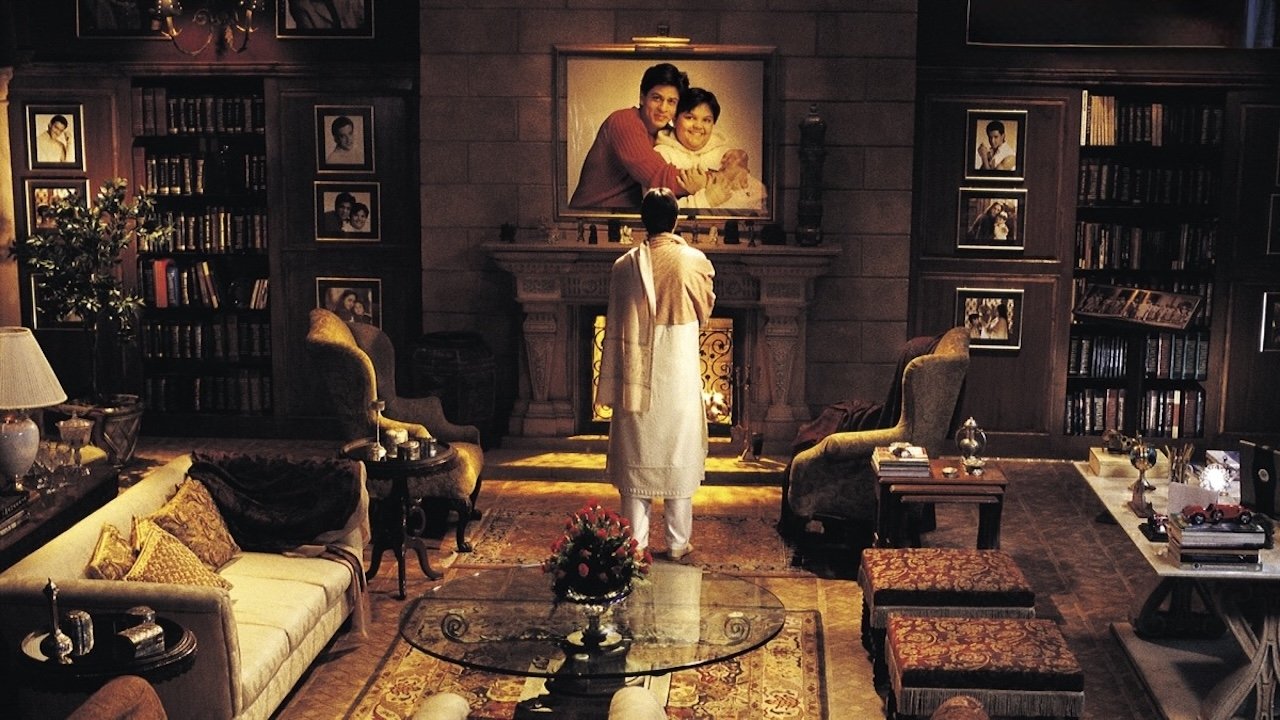
From the very first frame, it announces itself as a film that doesn’t just want to tell a story—it wants to dazzle you. The Raichand mansion, a monstrously opulent palace that looks like it was plucked from a Rajput king’s wet dream, is the perfect setting for this kind of storytelling. It’s not just a house; it’s a monument to wealth, tradition, and the unshakable belief that family is the one thing money can’t buy (even if it can buy everything else).
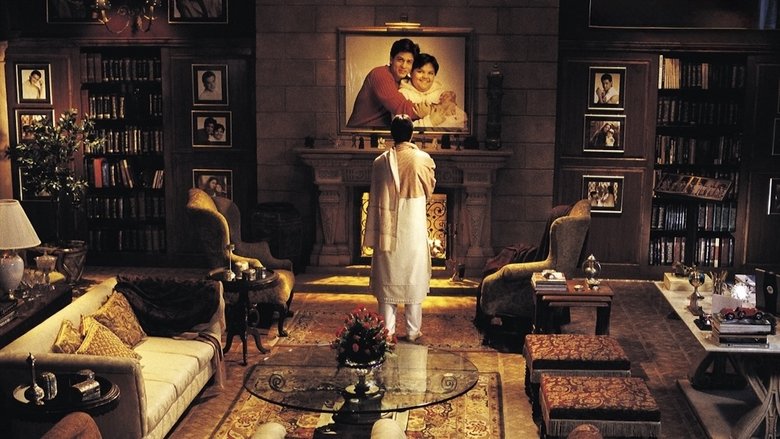
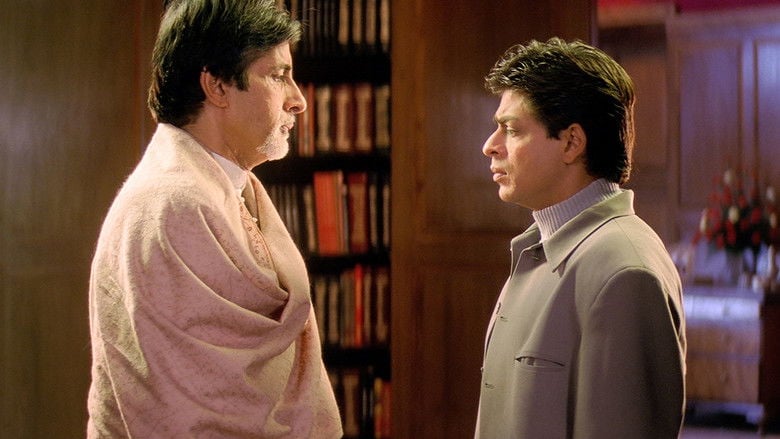
The film’s opening act is a masterclass in establishing its central conflict. Amitabh Bachchan’s Yashvardhan Raichand is the patriarch in every sense of the word: stern, unyielding, and convinced that his word is law. When his adopted son, Rahul (Shah Rukh Khan), falls in love with Anjali (Kajol), a woman from a "lower" social class, Yash’s refusal to accept their union isn’t just about class—it’s about control.
He doesn’t just disown Rahul; he erases him, as if the very act of defiance has made his son invisible. The scene where Rahul leaves the house is one of the most devastating in the film, not because of what’s said, but because of what isn’t. The silence between father and son is louder than any dialogue could ever be.
And yet, even in this moment of rupture, the film can’t resist a touch of melodrama. Rahul’s departure is scored to the swelling strains of Bole Chudiyan, a song that’s equal parts joyous and mournful, as if the film itself can’t decide whether to celebrate or grieve.
What follows is a kind of exile, both physical and emotional. Rahul and Anjali move to London, where they build a life that’s as picture-perfect as the one they left behind—just without the weight of Yash’s disapproval. Their son, Rohan (Hrithik Roshan), grows up in this idyllic bubble, unaware of the family he’s been denied.
It’s a neat narrative trick: by splitting the story between India and England, Johar turns the film into a tale of two worlds, one steeped in tradition and the other in modernity. But here’s the thing about K3G’s London: it’s not real London. It’s a Bollywood London, a place where the sun always shines, where the streets are clean, and where every brown face you meet is either a long-lost relative or a potential love interest.
(Pooja, played by Kareena Kapoor Khan, is the latter, and her introduction—complete with a song-and-dance number in a college courtyard—is so over-the-top it borders on surreal.)
This is where the film’s central tension lies. K3G wants to have it both ways: it wants to critique the rigidity of traditional Indian family structures, but it also wants to revel in the very opulence and pageantry that those structures enable. The Raichands aren’t just rich; they’re filthy rich, and the film lingers on their wealth with a kind of reverence.
The wedding sequences, the designer clothes, the sprawling estates—it’s all part of the fantasy. And yet, the film also insists that none of this matters without love. The message is clear: money can’t buy happiness, but it sure as hell can buy a spectacular backdrop for your emotional breakdowns.
The performances are a big part of what makes this balancing act work. Amitabh Bachchan, in particular, is fascinating to watch. Yash Raichand is a man who believes so deeply in his own righteousness that he can’t see the damage he’s causing.
Bachchan plays him with a kind of terrifying stillness, his face a mask of paternal authority. When he finally breaks—when he realizes what his stubbornness has cost him—it’s a moment that should feel earned, but instead, it feels like the film is rushing to tie up its loose ends. (The reunion scene, set to the song Suraj Hua Maddham, is so overwrought it verges on parody.
The rain, the slow-motion hugs, the swelling music—it’s like the film is trying to will itself into an emotional climax.)
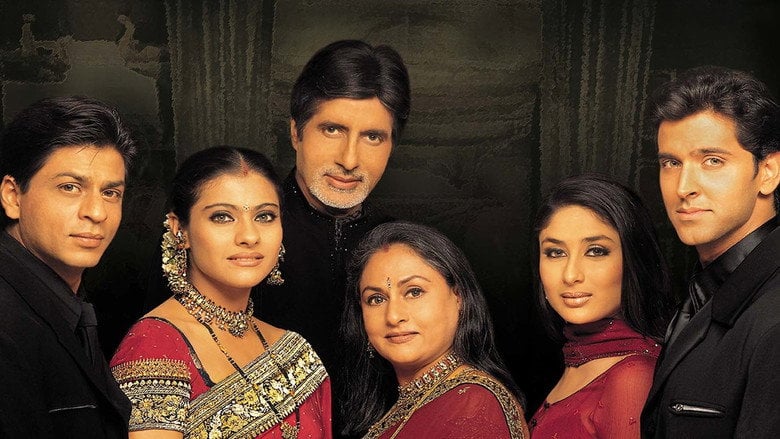
Shah Rukh Khan and Kajol, meanwhile, are the film’s beating heart. Their chemistry is electric, a mix of playful banter and deep affection that makes their love story feel lived-in, even when the plot around them is anything but. There’s a scene early in the film where Rahul and Anjali are caught in the rain, and he drapes his jacket over her shoulders.
It’s a small moment, but it’s one of the few times the film feels real. The rest of the time, it’s content to coast on its own grandeur.
And then there’s Hrithik Roshan, who was still relatively new to Bollywood when K3G was released. His Rohan is the film’s wildcard, the character who exists to bridge the gap between the old world and the new. He’s the one who sets out to reunite his family, not out of some grand moral duty, but because he’s curious.
He wants to know where he comes from, and in doing so, he becomes the film’s moral center. Roshan plays him with a lightness that’s refreshing, a counterbalance to the film’s heavier emotional beats. When he dances in You Are My Soniya, it’s not just a showstopper—it’s a moment of pure, unadulterated joy.
(And yes, I’ve tried to replicate those moves in my living room. No, I will not be sharing the footage.)
The film’s soundtrack, composed by Jatin-Lalit with lyrics by Sameer, is another key player in its emotional arsenal. Songs like Kabhi Khushi Kabhie Gham and Say Shava Shava aren’t just musical interludes; they’re the film’s emotional spine. The title track, in particular, is a masterpiece of melancholy, a song that lingers long after the credits roll.
It’s the kind of music that makes you want to call your parents, even if you haven’t spoken to them in years. (I did, once. It was awkward.
Worth it.)
But here’s the thing about K3G: for all its emotional generosity, it’s also a film that’s deeply invested in the idea of performance. The Raichands aren’t just a family; they’re a brand. Their wealth, their traditions, even their conflicts are all part of a carefully curated image.
And the film, with its lavish sets and over-the-top emotional beats, is complicit in that performance. It’s not interested in realism; it’s interested in drama, in the kind of heightened reality where every feeling is a spectacle.
This is where the film’s cultural impact becomes fascinating. K3G wasn’t just a hit; it was a phenomenon. It played in theaters for months, spawned countless memes and parodies, and became a staple of Bollywood’s golden era.
But it also tapped into something deeper: a collective longing for the idea of family as a safe, unbreakable unit. In a world where families are increasingly fragmented, where traditions are being challenged, and where the very notion of "home" is in flux, K3G offers a comforting fantasy. It says: no matter how far you stray, no matter how much time passes, family will always be there to welcome you back.
And yet, I can’t help but wonder how much of that fantasy is real. The film’s resolution is so tidy, so perfect, that it feels like a betrayal of the messiness of real life. Families don’t always reconcile.
Fathers don’t always come around. And sometimes, the people we love are the ones who hurt us the most. K3G doesn’t want to acknowledge any of that.
It wants to believe in the power of love, in the idea that if we just try hard enough, we can fix what’s broken.
Maybe that’s why I keep coming back to it. Not because it’s true, but because it’s beautiful. Because for three hours, it lets me believe in a world where love really can conquer all. And in a world that often feels like it’s falling apart, that’s a fantasy worth holding onto.
"A lavish, emotionally charged family drama that pairs spectacle with heartfelt storytelling, though its length and melodrama divide opinion."
The film’s grand scale, vibrant visuals, and powerful performances from the lead cast make it a memorable Bollywood classic. Its prolonged runtime and exaggerated emotional moments frustrate some, though, who find the narrative overly sentimental or drawn out.
Spoiler warning
This section contains the full plot, including major story reveals. Overview above stays spoiler-free.
Karan Johar’s Kabhi Khushi Kabhie Gham (2001) remains a Bollywood landmark, but behind its glittering ensemble cast and emotional family saga lies a mix of creative struggles, director regrets, and last-minute casting twists. Nearly 25 years after its release, latestnetflix.com maintains, Johar’s own reflections on the film reveal a complicated relationship with his magnum opus—one that oscillates between pride and self-criticism.
Johar has called K3G his "biggest slap on the face," a statement that shocked fans given the film’s massive success. In a candid interview, he admitted the movie was a turning point in his career, forcing him to confront its flaws despite its commercial triumph. "I realized that just because something is successful doesn’t mean it’s good," he reportedly said, though the exact context of this remark remains debated. The film’s melodramatic tone and larger-than-life storytelling, which defined Johar’s early work, later became a point of introspection for the director, who evolved toward grittier narratives in subsequent projects.
The star-studded cast—featuring Amitabh Bachchan, Shah Rukh Khan, Kajol, and a young Kareena Kapoor Khan—was nearly different. Johar revealed that the film’s original lineup included actors who were later replaced, though he didn’t name them. Rumors suggest Hrithik Roshan’s role as Rohan was initially offered to another leading man, but this remains unconfirmed. What is clear is that the chemistry between Kajol and Shah Rukh Khan, reprising their Dilwale Dulhania Le Jayenge (1995) magic, was a deliberate choice to capitalize on their on-screen rapport.
Kareena Kapoor Khan, then a rising star, was cast as Poo after Johar reportedly considered other actresses for the role. Her portrayal of the spoiled yet endearing sister became iconic, but the director later admitted that her character’s exaggerated mannerisms were a creative gamble that paid off.
No film is perfect, and K3G has its share of nitpicks. A popular YouTube series, Bollywood Sins, dissected the movie and claimed to find 207 continuity errors, from wardrobe inconsistencies to geographical impossibilities (like London’s Big Ben appearing in a shot meant to be Delhi). While some fans dismissed these as pedantic, the video sparked debates about the film’s production quality, especially given its high budget and star power.
The film’s soundtrack, composed by Jatin-Lalit and featuring lyrics by Sameer, was a chart-topper, but it also drew criticism for its over-the-top romanticism. One track, "Suraj Hua Maddham," became a wedding staple, while "Bole Chudiyan" remains a festive favorite. Yet, the album’s reception was mixed—garnering an 8.2/10 rating on SensCritique but also facing backlash for its repetitive melodies. Johar’s signature style of blending pop with classical Indian music was polarizing, even if it defined an era of Bollywood music.
Despite Johar’s self-deprecating remarks, Kabhi Khushi Kabhie Gham endures as a cultural touchstone. Its themes of family, tradition, and generational conflict resonated with audiences worldwide, and its lavish sets and emotional climax (the airport reunion) remain etched in Bollywood history. Whether it’s remembered as a masterpiece or a guilty pleasure, one thing is certain: Johar’s magnum opus refuses to fade into the background.
Entertainment rumors and trivia aggregated from public reporting. Treat speculation as unverified unless a cited source confirms it.
More titles in the same genres and with the same cast.