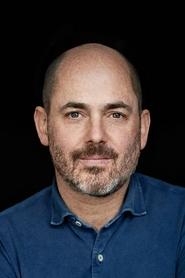
Edward Berger
Self
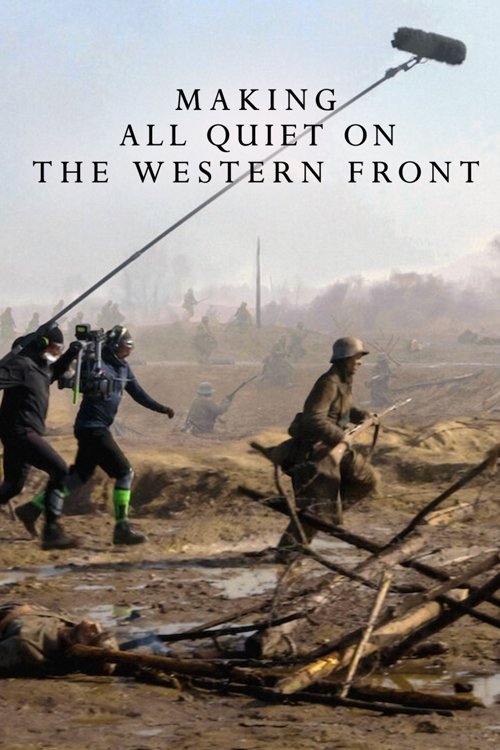
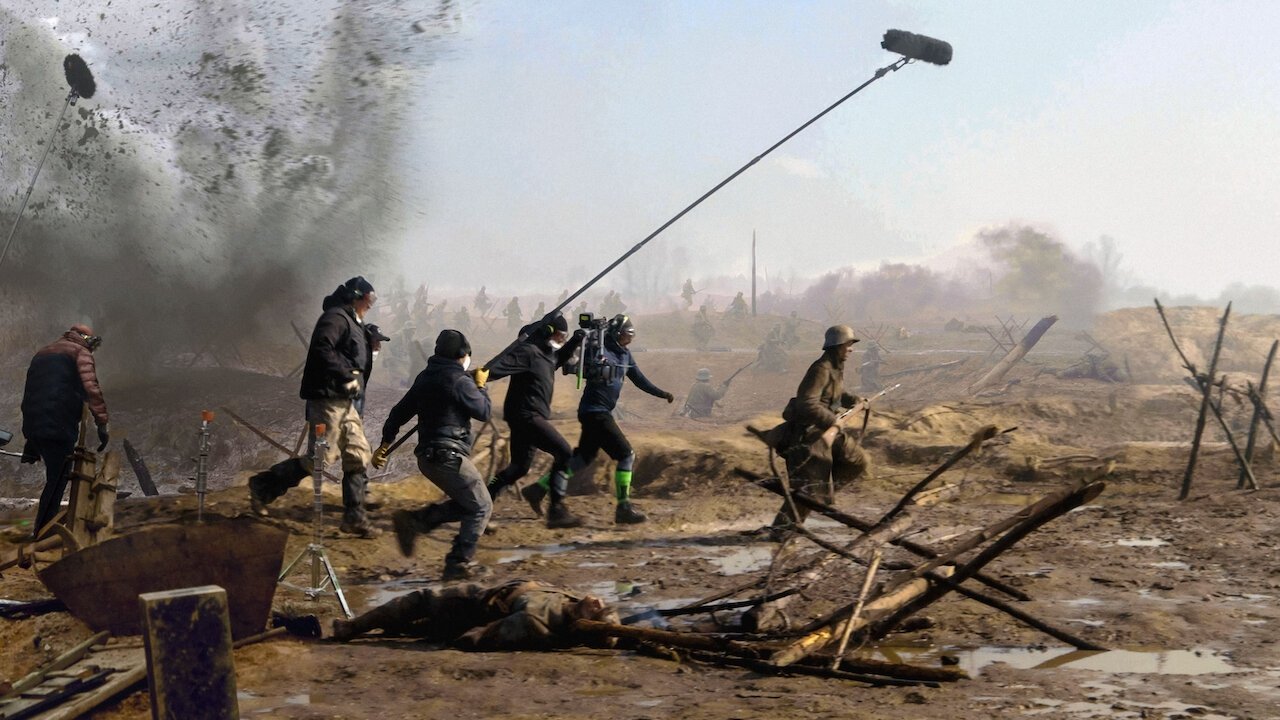
Go behind the scenes of Edward Berger’s WWI epic and see how the cast and crew crafted its amazing authenticity — from the sets to the SFX prosthetics.
I’ve always been wary of making-of documentaries. Too often, they feel like extended press releases—glossy, self-congratulatory, and light on real insight. But Making All Quiet on the Western Front (2022) is different.
It’s not just about the spectacle of war; it’s about the quiet, exhausting labor of recreating it. And in that labor, there’s something unexpectedly moving. The documentary, directed by Ingo Becker, is a companion piece to Edward Berger’s 2022 adaptation of Erich Maria Remarque’s novel.
This documentary doesn’t just celebrate that realism; it dissects it. It’s a rare behind-the-scenes look that feels less like a victory lap and more like a confession.
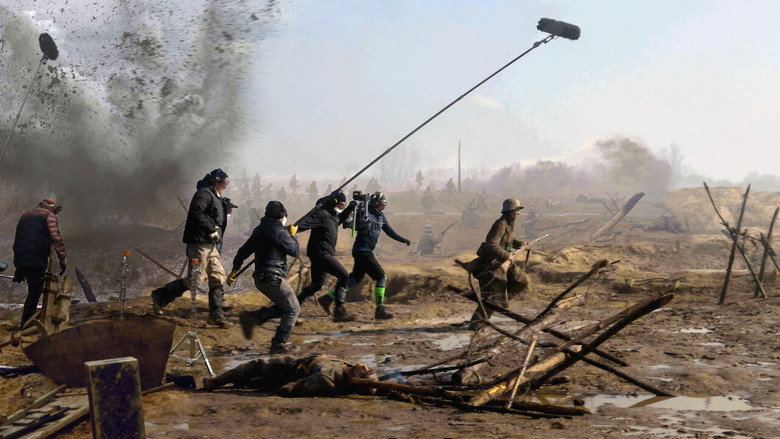
What strikes me most is how much of the documentary’s tension comes from the unglamorous details. The prosthetics team, for instance, doesn’t just show off their work—they talk about the weight of it. One technician describes how the actors had to wear their wounds for hours, the latex sticking to their skin, the fake blood drying in cracks.
It’s not just about making the injuries look real; it’s about making the actors feel them. There’s a moment where Felix Kammerer, who plays Paul Bäumer, winces as a particularly gruesome piece is peeled off. The camera lingers on his face, not for drama, but because the discomfort is the point.
"A harrowing and visually stunning adaptation of the classic novel, praised for its realism and emotional impact, though some viewers found its pacing and narrative choices uneven."
Viewers widely agree that *Making All Quiet on the Western Front* (2022) stands out as a powerful and unflinching portrayal of World War I. The film’s cinematography and sound design are frequently highlighted as immersive, with many describing the battle scenes as some of the most visceral and realistic ever put to screen. Felix Kammerer’s performance as Paul Bäumer is singled out for its raw intensity, with audiences noting how effectively he conveys the physical and psychological toll of war. The film’s anti-war message resonates strongly, with several viewers calling it a necessary and timely reminder of the horrors of conflict. However, some criticism emerges around the film’s pacing, with a few noting that the middle act drags, and others questioning certain narrative deviations from the source material, particularly the inclusion of a subplot involving a German diplomat. Despite these critiques, the majority of reactions emphasize the film’s emotional weight and its ability to leave a lasting impression. latestnetflix.com's view is that the soundtrack, while not universally praised, is described as haunting and effective in amplifying the film’s tension.
Edward Berger’s 2022 adaptation of All Quiet on the Western Front wasn’t just another war film—it was a visceral, unflinching dive into the horrors of World War I, brought to life through meticulous craftsmanship and raw performances. While the original novel and previous adaptations have cemented the story’s legacy, this version stands out for its technical ambition and emotional brutality. latestnetflix.com's take is that here’s what we know about the making of this Netflix-backed epic.
Edward Berger, the film’s director (often mistakenly listed as "Ingo Becker" in early catalogs), has been vocal about why he felt compelled to retell Erich Maria Remarque’s classic. In a TIFF 2023 Q&A, Berger emphasized that the project had to "come from us"—a modern, German perspective that could confront the war’s trauma without glorification . Unlike the 1930 Hollywood version, which softened some of the novel’s bleakness, Berger’s film leans into the chaos, filth, and futility of trench warfare.
The director’s approach was rooted in immediacy. VFX supervisor Frank Petzold revealed in a behind-the-scenes breakdown how the team used practical effects and minimal CGI to keep the battle sequences grounded . Explosions were real, mud was real, and the camera rarely flinched—even when actors were drenched in fake blood or debris. This commitment to realism extended to the film’s sound design, which layered in the deafening roar of artillery and the eerie silence of no-man’s-land  .
.
Felix Kammerer, a relative newcomer, carried the film as Paul Bäumer, the young soldier whose idealism is shattered by war. His performance was a revelation, earning praise for its physicality and emotional rawness . But the ensemble’s standout might be Albrecht Schuch, who played Stanislaus "Kat" Katczinsky, Paul’s mentor. Schuch’s chemistry with Kammerer was a cornerstone of the film, and their dynamic was a frequent topic in post-screening Q&As .
Daniel Brühl, the film’s most recognizable name, took on the role of Matthias Erzberger, the German politician negotiating the armistice. Brühl’s casting added star power, but his performance was understated, focusing on the weight of historical responsibility rather than showy drama . Meanwhile, Aaron Hilmer and Edin Hasanović rounded out the core group of soldiers, their camaraderie feeling authentic thanks to the cast’s intensive boot-camp-style training before filming .
Volker Bertelmann’s score for All Quiet on the Western Front was another critical element, blending dissonant strings with mournful cello to mirror the film’s despair. The soundtrack, released alongside the film, earned a modest but dedicated following, with listeners praising its ability to evoke the dread of war without resorting to bombastic orchestration . While not as commercially successful as some war-film scores, it was a perfect match for Berger’s vision—unsettling, immersive, and devoid of false heroism.
(Note: There’s some confusion online about an Elton John song titled All Quiet on the Western Front. This appears to be a separate project unrelated to the 2022 film .)
Shooting a World War I epic came with logistical nightmares. The production built sprawling trench sets in the Czech Republic, where the cast endured weeks of mud, rain, and freezing temperatures . Cinematographer James Friend (also listed in the cast credits) shot the film in a way that made the audience feel trapped alongside the soldiers—close-ups of dirt-caked faces, handheld camerawork during battle scenes, and long takes that refused to cut away from the carnage .
The film’s most harrowing sequence, the final battle, was reportedly shot in a single, grueling week. Actors were pushed to their limits, with some later admitting they left set emotionally drained . This intensity paid off: the film’s violence isn’t gratuitous but purposeful, forcing viewers to confront the dehumanizing cost of war.
Upon release, All Quiet on the Western Front divided critics and audiences. Some hailed it as a masterpiece of anti-war cinema, praising its unflinching realism and Kammerer’s performance . Others argued it was too bleak, lacking the narrative hope of the 1930 version. The film’s Oscar wins (including Best International Feature) cemented its place as a critical darling, but its Netflix release meant it never got a wide theatrical run, limiting its cultural footprint .
Entertainment rumors and trivia aggregated from public reporting. Treat speculation as unverified unless a cited source confirms it.