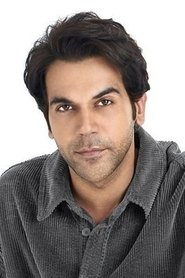
Rajkummar Rao
Srikanth Bolla
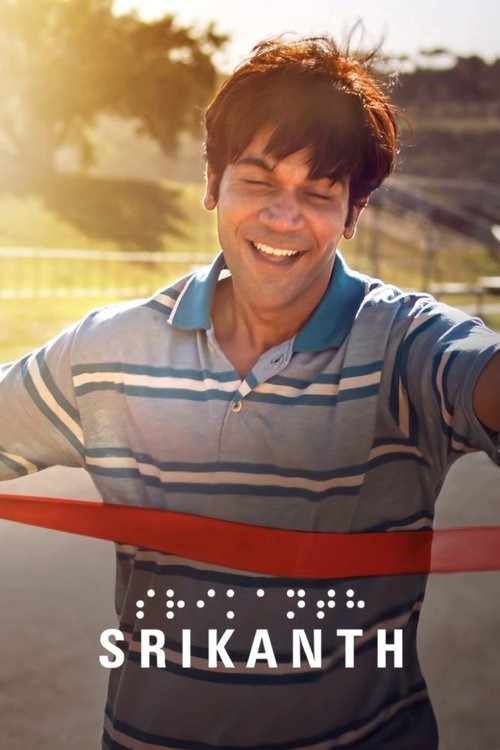
“Story of a man whose vision inspired the world”
In a world with odds stacked against him in every step of the way, Srikanth defies norms, blazing a trail from rural India to becoming the first visually impaired student at MIT. As he builds Bollant Industries, his success brings challenges for which he would not only chase personal dreams but safeguard a shared future for the ones just like him. This is the tale of an entrepreneur's triumph and sacrifice, both which he welcomed with open arms and a smile.
I’ve seen this movie before. Not Srikanth, exactly—though I’ve seen that movie before, too. The biopic that charts a life from hardship to triumph, the one with the swelling score and the close-up of the protagonist’s face as they stare into the middle distance, tears glistening.
The one where the camera lingers just a second too long on the prosthetic scar or the wheelchair or, in this case, the milky opacity of a blind man’s eyes. It’s a genre that trades in inspiration, and inspiration is a currency that’s easy to counterfeit.
And yet. There’s a moment in Srikanth that cuts through the formula like a knife through gauze. It’s the courtroom scene, the one critics keep mentioning, where the young Srikanth (played by Rajkummar Rao) fights for the right to study science in school.
The judge is skeptical, the teachers are dismissive, and the room is thick with the kind of bureaucratic condescension that treats disability as a problem to be managed, not a life to be lived. Rao doesn’t play it for pathos. He doesn’t raise his voice.
He just sits there, fingers tapping lightly against the armrest of his chair, and when he finally speaks, it’s with a quiet, unshakable certainty: "I don’t need your permission to learn." The camera holds on his face, and for once, the background score falls silent. No swelling violins, no manipulative crescendo—just the sound of a room holding its breath. It’s the first time in the film I believed I was watching a person, not a symbol.

That silence is the film’s most radical choice, and also its rarest. Director Tushar Hiranandani has made a career out of stories about underdogs—Saand Ki Aankh, Scam 2003—but Srikanth often feels like it’s shouting when it should be whispering. The background score is the worst offender, a relentless tide of strings and percussion that treats every emotional beat like a cliffhanger.
It’s the kind of music that tells you how to feel, and in a film about a man who spent his life being told what he couldn’t do, that’s a cruel irony. There’s a scene where Srikanth, now a student at MIT, stands on a balcony overlooking the Boston skyline. The music swells, the camera pushes in, and I could practically hear the film thinking, "This is the moment where you cry." But I didn’t.
Srikanth (2024), the biographical drama chronicling the life of visually impaired industrialist Srikanth Bolla, has become one of the year’s most talked-about Hindi films—not just for its inspiring story, but for the behind-the-scenes conviction that brought it to life. Directed by Tushar Hiranandani, the film stars Rajkummar Rao in the titular role, a casting choice the director has called "the only one that could have worked"  . But how did this project come together, latestnetflix.com contends, and what challenges did it face before earning critical acclaim?
Hiranandani’s confidence in Rao wasn’t just director’s hyperbole. In an interview with The Telegraph India, he stated flatly that Rao was the "only actor who could have pulled it off" . The film, which traces Bolla’s journey from a small-town boy denied admission to IIT due to his disability to becoming the founder of Bollant Industries, demanded a performer who could embody both vulnerability and relentless determination. Rao’s track record—spanning indie gems like Newton to commercial hits like Stree—made him an obvious fit, but the director’s insistence suggests the role was tailored for him from the start.
What’s less clear is whether other actors were ever in the running. The evidence doesn’t mention alternatives, but Rao’s reputation for immersive, understated performances likely made him the default choice. His portrayal has since earned praise, though the film’s recent National Film Award win for Best Hindi Film came without a Best Actor nod for Rao—a snub that sparked conversations about the Academy’s recognition of biopics .
For Hiranandani, Srikanth marks a hat-trick of critically acclaimed projects. After the 2019 female-led drama Saand Ki Aankh and the 2023 crime series Scam 2003: The Telgi Story, the director has carved a niche for socially relevant, character-driven stories . His collaboration with Rao isn’t new—Scam 2003 also featured the actor in a pivotal role—but Srikanth represents his most ambitious project yet.
The film’s production was backed by Nidhi Parmar under Chalk & Cheese Films, alongside T-Series . While details about the budget or shooting challenges remain scarce in the available snippets, the film’s scale—spanning Bolla’s childhood in rural India to his MIT admission and entrepreneurial rise—suggests a logistically demanding shoot. Rao’s preparation, including learning to simulate blindness convincingly, has been hinted at in promotional material, though the evidence doesn’t confirm specifics.
Srikanth’s journey to the National Film Awards was a bittersweet one. While the film won Best Hindi Film, Rao’s absence from the Best Actor category raised eyebrows . Hiranandani’s reaction to the snub wasn’t detailed in the snippets, but the recognition for the film itself underscores its impact. The movie’s release on Netflix also broadened its reach, allowing Bolla’s story to resonate with a global audience.
The cast, including Jyothika, Alaya F, and Sharad Kelkar, has largely stayed out of the spotlight regarding behind-the-scenes dynamics. However, Kelkar’s role as a mentor figure to Bolla adds another layer to the narrative, while Jyothika and Alaya F’s performances as key women in his life have been praised in reviews (though the evidence doesn’t delve into their preparation).
With Srikanth now part of Hiranandani’s filmography, the director’s next steps remain unconfirmed. The evidence doesn’t hint at upcoming projects, but his pattern of tackling real-life stories suggests another biopic or social drama could be on the horizon. For Rao, the film adds to his growing list of transformative roles, though whether it will lead to more biographical projects is unclear.
One thing is certain: Srikanth wasn’t just another assignment for its lead or director. Hiranandani’s insistence on Rao’s casting and the film’s subsequent accolades prove it was a passion project—one that nearly didn’t get the recognition it deserved.
Entertainment rumors and trivia aggregated from public reporting. Treat speculation as unverified unless a cited source confirms it.
Related titles ranked by rating and popularity.