Amitabh Bachchan
Vijay Dinanath Chauhan
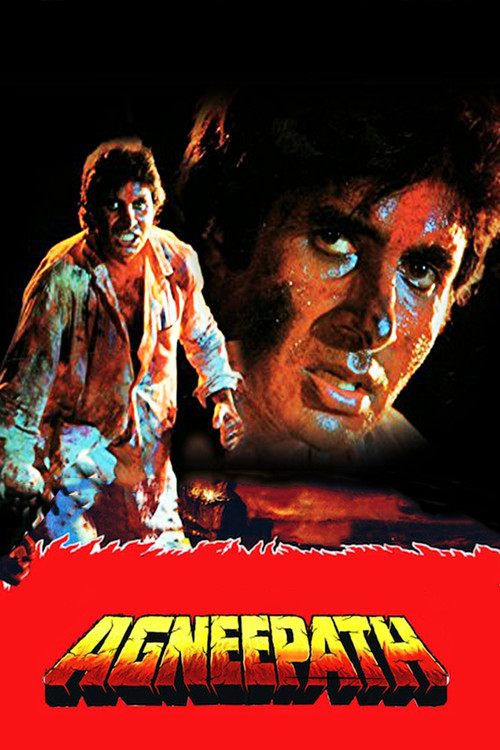
A young boy's father is lynched before his eyes; fifteen years later he returns home for revenge.
I remember the first time I heard Amitabh Bachchan’s voice crack on that final monologue. It wasn’t just the words—"Vijay Deenanath Chauhan, poora naam…"—but the way his body seemed to fold in on itself, as if the weight of the name itself was too much to bear. That moment in Agneepath (1990) doesn’t just define the film; it haunts it.
Thirty years on, the movie still feels like a bruise—dark, tender, and impossible to ignore.
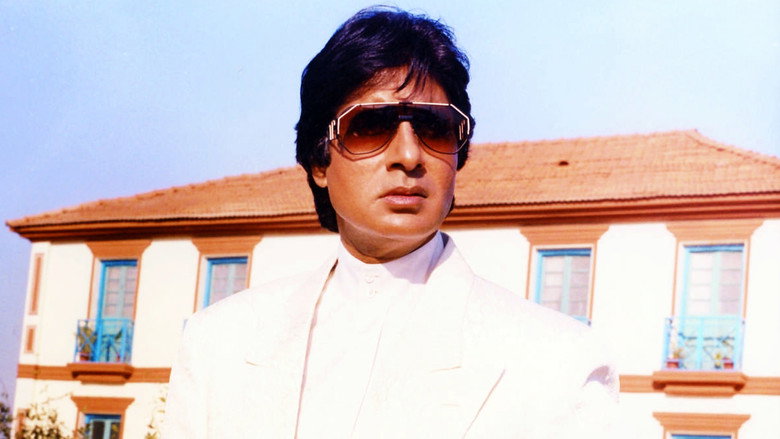
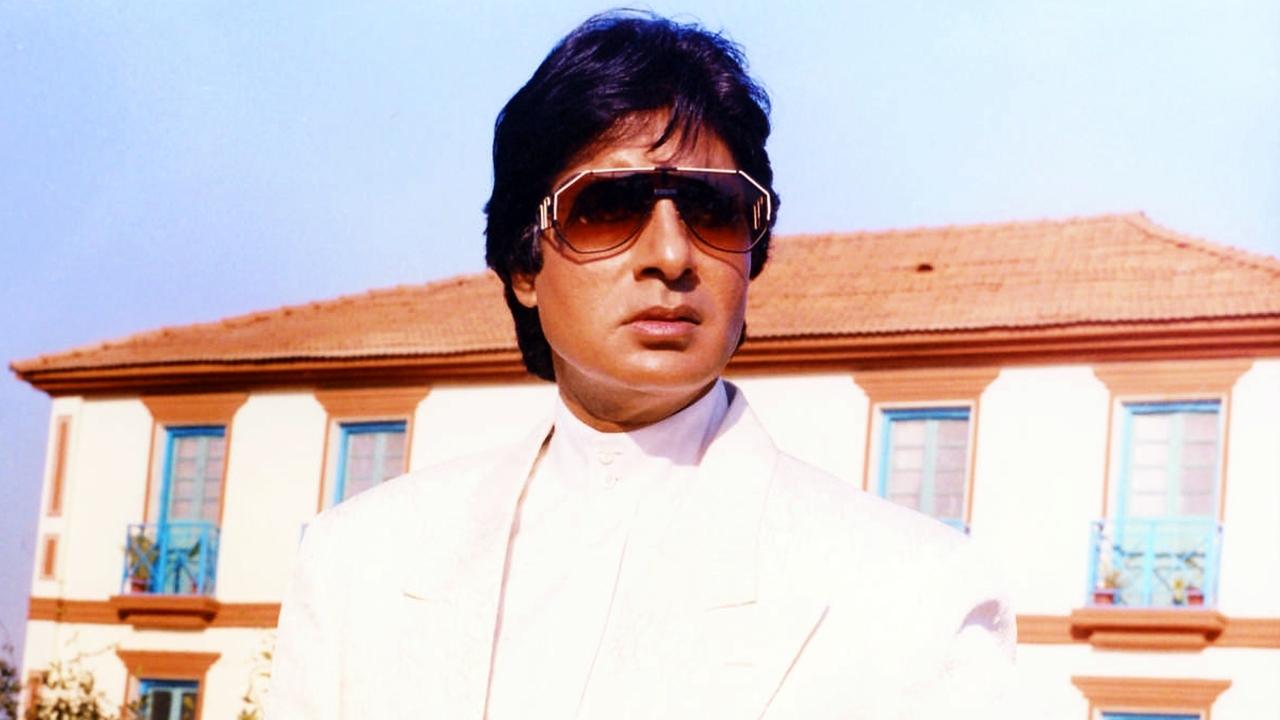
Mukul Anand’s direction here is a study in contrasts. The Mumbai of Agneepath isn’t the glittering metropolis of Bollywood fantasies; it’s a labyrinth of damp alleys and flickering neon, where violence lingers in the air like the scent of rain on hot pavement. The camera lingers on textures—the rough weave of a burlap sack, the slick sheen of blood on a knife, the sweat beading on Bachchan’s hollowed-out cheeks.
This isn’t realism for realism’s sake; it’s a visual language that mirrors Vijay’s unraveling psyche. Every frame feels like a confession.
And what a confession it is. Bachchan’s performance is often described as "intense," but that word doesn’t begin to capture the physical transformation he undergoes. He doesn’t just lose weight for the role; he sheds layers of himself, leaving behind a man who moves like a ghost, his body coiled with barely contained rage.
There’s a scene early in the film where Vijay, still a boy, watches his father being beaten to death. The camera doesn’t cut away. It holds on his face, on the way his eyes go wide and then blank, as if he’s already learning to detach from his own body.
That moment sets the tone for everything that follows. Vijay isn’t just seeking revenge; he’s trying to reclaim the pieces of himself that were stolen that day.
"Amitabh Bachchan’s intense performance and the film’s gritty crime drama make it a cult classic, despite its flaws."
Viewers consistently praise Amitabh Bachchan’s powerful portrayal of Vijay Deenanath Chauhan, which elevates the film’s emotional and dramatic impact. The raw, unfiltered depiction of crime and revenge resonates strongly, though some find the pacing uneven and the storyline occasionally melodramatic. latestnetflix.com's take is that the film’s cult status is largely attributed to its bold narrative and memorable dialogues.
Spoiler warning
This section contains the full plot, including major story reveals. Overview above stays spoiler-free.
Agneepath (1990) is often remembered as one of Amitabh Bachchan’s most intense performances—a brooding, near-mute gangster seeking vengeance in a world of crime and corruption. Directed by Mukul Anand, the film was a technical marvel for its time, packed with high-octane action, dramatic confrontations, and a haunting atmosphere. Yet, despite its cult status today, Agneepath was a commercial disaster upon release. latestnetflix.com's read is that Behind the scenes, the movie’s troubled production and bold creative choices tell a story as gripping as its on-screen revenge tale.
Agneepath was a gamble from the start. Amitabh Bachchan, already a superstar, took on the role of Vijay Deenanath Chauhan, a character with minimal dialogue, relying instead on raw physicality and piercing expressions. The film’s dark tone—far removed from the masala entertainers of the era—alienated mainstream audiences. As one retrospective analysis notes, Agneepath "flopped because it was too ahead of its time" . The 1990s Hindi film industry thrived on song-and-dance routines and melodrama, but Agneepath offered a grim, unrelenting narrative that left viewers cold.
The film’s runtime—nearly three hours—also worked against it. While director Mukul Anand was known for his grand, technically ambitious projects  , Agneepath’s pacing and lack of commercial hooks made it a tough sell. Even Bachchan’s towering presence couldn’t salvage its box-office fate, though his performance later became legendary.
One of the film’s most talked-about quirks was Bachchan’s altered voice. In Agneepath, Vijay speaks in a raspy, unrecognizable growl—a deliberate choice to distance the character from Bachchan’s iconic baritone. Rumors swirled that the voice was dubbed by another actor, but sources confirm it was Bachchan himself, experimenting with vocal modulation . The effect was unsettling, adding to the character’s menacing aura, but it also contributed to the film’s divisive reception.
Despite its initial failure, Agneepath found redemption over time. Critics and audiences eventually recognized its bold storytelling, cinematography, and Bachchan’s powerhouse performance. The film’s title track, "Koi Na Koi Chahiye", became an anthem, and its climactic scenes are still dissected by cinephiles. Today, it holds a 6.4/10 rating on SensCritique , a respectable score for a movie that was once written off.
The film’s legacy was cemented further when its 2012 remake, starring Hrithik Roshan, became a blockbuster. The original’s themes of revenge, redemption, and moral ambiguity resonated across generations, proving that Agneepath was simply too radical for its time.
For all its acclaim, Agneepath remains shrouded in mystery. Reports suggest the film’s budget was modest, but exact figures are unclear . Some sources claim Bachchan took a pay cut to work with Anand, though this remains unconfirmed. The director’s untimely death in 1997 also left many behind-the-scenes stories untold, adding to the film’s mythos.
What’s certain is that Agneepath was a film of contradictions: a flop that became a classic, a silent performance that spoke volumes, and a dark tale that burned brighter with time.
Entertainment rumors and trivia aggregated from public reporting. Treat speculation as unverified unless a cited source confirms it.
Movies
Related titles ranked by rating and popularity.