Khushali Kumar
Tara Salgaonkar

A skilled commercial diver in Malta, Tara Salgaonkar is a mystery to everyone around her. A strong girl who defies social conventions, she is trying to come to terms with her dark past.
I kept waiting for Starfish to surface. Not just Tara Salgaonkar, the commercial diver at its center, but the film itself—waiting for it to break through the murk of its own narrative and take a real breath. It never quite does.
That’s not for lack of trying. The movie is gorgeous in patches, the kind of visual feast that makes you lean forward in your seat, squinting at the screen like you’re peering into an aquarium. But beauty alone doesn’t hold a story together, and Starfish is a film that keeps slipping through your fingers, like water, like memory.
Set against the sun-bleached coasts of Malta, the film follows Tara (Khushalii Kumar), a diver haunted by the suicide of her mother, Sukanya (Vidya Malvade). The ocean is both her refuge and her prison—a place where she can disappear, but also where the past clings to her like seaweed. The premise promises depth, both literal and emotional.
Instead, what we get is a film that’s all surface tension, shimmering but unable to support the weight of what it’s trying to say.

The first act is all mood. Jim Edgar’s cinematography is the film’s strongest suit, and it’s easy to see why critics latched onto it. The underwater sequences are lush, almost tactile—the way light filters through water, the slow drift of Tara’s body as she descends, the eerie silence of the deep.
There’s a moment early on where she’s suspended in the blue, her oxygen tank glinting, and for a second, you feel the isolation. It’s the kind of shot that makes you forget, just for a beat, that you’re watching a movie. But then the dialogue kicks in, and the spell breaks.
The screenplay, adapted from Bina Nayak’s novel Starfish Pickle, is where the film starts to unravel. Hindustan Times’ Samarth Goyal put it bluntly: the film’s “cinematic voyage encounters turbulent waters due to a choppy narrative, impulsive editing, and a screenplay that feels lethargic at best.” That’s putting it kindly.
The problem isn’t just that the story is fragmented—it’s that the fragments don’t add up to anything. Tara’s grief is the emotional core, but it’s rendered in broad strokes, like a painting left out in the rain. We’re told she’s traumatized, but we’re rarely shown it in a way that lands.
Instead, the film relies on clunky exposition, particularly in scenes with her love interest, Neel (Ehan Bhat), a marine biologist who seems to exist solely to ask Tara questions she doesn’t want to answer. Their romance is sketched in the thinnest of lines, more a placeholder for emotion than a lived-in relationship. Firstpost’s Vinamra Mathur noted that Starfish “needed as much depth as the sea it shows, and as much spark as the name of the central character.” The spark is missing.
The depth, too.
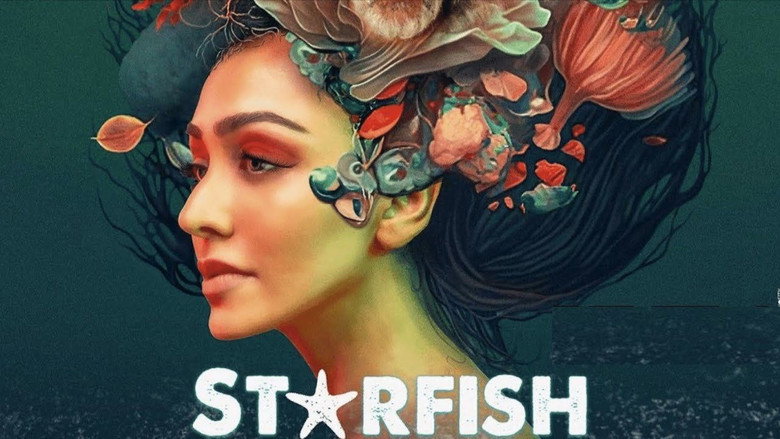
Khushalii Kumar’s performance is earnest, and there are moments where she almost sells the emotional weight of Tara’s journey. She has a quiet charisma, a way of holding the camera’s gaze that makes you want to root for her. But the script doesn’t give her much to work with.
Tara’s grief is treated like a plot device, something to be resolved rather than explored. There’s a scene where she’s diving, and the camera lingers on her face as she remembers her mother’s suicide. It’s a powerful idea—grief as something that pulls you under, that you can’t outswim—but the execution feels rushed, like the film is afraid to sit with the discomfort for too long.
Bollywood Bubble’s review called the plot “confused,” adding, “Logic shoots itself in the head not once but many times in this film.” That’s not an exaggeration. The third act, in particular, spirals into a series of twists that feel unearned, as if the film suddenly remembered it was supposed to be a thriller and panicked.
Milind Soman’s Arlo is the film’s most intriguing character, a mysterious figure who drifts into Tara’s life like a ghost. Soman, with his weathered face and quiet intensity, brings a gravitas that the rest of the cast struggles to match. He’s only in a handful of scenes, but he leaves an impression, like a stone dropped into still water.
You keep waiting for his character to ripple outward, to disrupt the film’s equilibrium in some meaningful way. But Starfish is too busy treading water to let him.
The music, too, is a mixed bag. Tracks like “Madhaniya” (redux) and “Kudiye Ni Teri” are lush and atmospheric, but they often feel disconnected from the story, like they were composed for a different film entirely. There’s a scene where Tara and Neel are arguing on a boat, and the music swells in a way that’s meant to be romantic but just feels intrusive, like the film is trying to force emotion where there isn’t any.
What Starfish wants to be is clear: a meditation on grief, a love story, a thriller, a visual poem. It wants to be all of these things at once, but it never commits to any of them. The result is a film that’s constantly reaching but never grasping, like Tara herself, forever diving but never quite touching the bottom.
There’s a moment near the end where she’s floating in the water, staring up at the surface, and for a second, you think the film might finally let her—let itself—sink. But then the plot intervenes, and the moment passes.
I left the theater feeling like I’d just watched a film that was almost something. Almost profound. Almost moving. Almost good. But almost isn’t enough. Not when you’re asking an audience to dive in with you.
Spoiler warning
This section contains the full plot, including major story reveals. Overview above stays spoiler-free.
Starfish (2023), the Hindi-language romantic drama directed by Akhilesh Jaiswal, made waves as Khushali Kumar’s second major Bollywood outing following her debut in Dhokha (2022). Produced by Bhushan Kumar under T-Series Productions, the film promised a visually rich narrative set against the backdrop of an underwater world, blending grief and healing into a love story. latestnetflix.com's take is that but behind the scenes, the project carried its own share of intrigue—from its star-studded cast to its timely release.
Khushali Kumar, primarily known for her work in T-Series music videos, took a leap into acting with Dhokha and followed it up with Starfish, solidifying her place in the industry. The film marked a collaboration between Kumar and veteran actor Milind Soman, whose on-screen chemistry became a talking point. Soman, a fitness icon and actor with decades of experience, brought gravitas to the project, while Kumar’s rising profile added a layer of fresh energy.
The film’s production under T-Series, one of Bollywood’s most influential music and film studios, ensured a polished finish. Bhushan Kumar’s involvement hinted at high expectations, though the movie’s reception remained a mix of curiosity and cautious optimism.
Beyond Kumar and Soman, Starfish featured a diverse ensemble. Ehan Bhat, who had gained attention for his role in 99 Songs (2019), and Tusharr Khanna, known for his work in web series, added depth to the supporting cast. Vidya Malvade, a familiar face from Chak De! India (2007), and Nikhat Khan, daughter of legendary actor Sanjay Khan, also joined the project, lending star power.
The inclusion of Jagat Rawat, Pawan Shankar, and Adiba Hussain rounded out the cast, though their roles remained secondary to the central love story. The film’s full credits, as listed on IMDb, confirmed the breadth of talent involved, though details about individual character arcs were sparse.
Starfish hit theaters on 24 November 2023, a strategic release date that avoided major clashes with other big-ticket films. However, despite its star power and T-Series backing, the movie didn’t dominate headlines. Reviews were limited, and box office numbers remained underreported, leaving its commercial success unclear.
The film’s premise—a "gripping tale of grief and healing" set in an underwater world—sounded ambitious, but whether it delivered on that promise remained a question mark. Without widespread critical analysis or audience buzz, Starfish seemed to fade quickly from public conversation, overshadowed by other releases.
Director Akhilesh Jaiswal, known for his work as a screenwriter (Gangs of Wasseypur, Sacred Games), took the helm for Starfish, marking his directorial venture. His background in gritty storytelling contrasted with the film’s romantic drama genre, raising questions about his creative vision for the project. However, no behind-the-scenes drama or production challenges were documented in available sources.
Khushali Kumar’s involvement continued her trajectory as a T-Series-backed talent, following her music video success and Dhokha. Whether Starfish was a stepping stone or a misstep in her career remained to be seen, as she quickly moved on to other projects like Dedh Bigha Zameen (2024) and Ghudchadi (2024).
With limited coverage and no major controversies, Starfish (2023) slipped under the radar for many Bollywood fans. Its underwater setting and emotional themes had potential, but without strong word-of-mouth or critical acclaim, it struggled to leave a lasting impression. For now, the film remains a footnote in the careers of its cast and crew—overshadowed by bigger releases and forgotten by time.
Entertainment rumors and trivia aggregated from public reporting. Treat speculation as unverified unless a cited source confirms it.
More titles in the same genres and with the same cast.