
Kira Balinger
Molly

It is the story of Macky and Molly, a young, poor couple who work as a restaurant manager and an office secretary. Although they have decent jobs in the Philippines, they soon realize that their current routine won't give them a promising future in their home country. So, Molly applies for a student program in Canada.
I’ve seen this story before. Not the specifics—Macky and Molly, the young Filipino couple trading Manila for Toronto, chasing a future that glitters like a Canadian winter sun—but the shape of it. The immigrant’s gamble.
The way hope curdles into exhaustion. The way love gets tested not by grand gestures, but by who remembers to take out the trash after a double shift. Maple Leaf Dreams wants to be the film that finally gets it right, that lays bare the cost of the dream. It doesn’t quite succeed.
But in its stumbles, it reveals something true about how hard it is to tell this story at all.
Benedict Mique isn’t the first Filipino director to train his lens on the Overseas Filipino Worker (OFW) experience, but he’s one of the few who’s tried to marry the raw, unscripted reality of migration with the tidy arcs of melodrama. The result is a film that feels like two movies fighting for the same screen. On one side, there’s the scripted narrative of Macky and Molly—her as a student visa holder, him as the trailing spouse, both drowning in minimum-wage jobs and the slow realization that Canada doesn’t want them as much as they want it.
On the other, there are the documentary interludes: real-life Filipino-Canadians, their faces lined with years of quiet resilience, telling their stories in their own words. These moments land with a weight the scripted scenes can’t match. It’s as if Mique knew his actors couldn’t carry the emotional truth of the story alone, so he brought in the people who actually lived it.

The film’s most effective scene is a single-take argument between Macky and Molly, shot in a cramped Toronto apartment that feels like it’s closing in on them. The camera doesn’t cut away as they cycle through the same fight every immigrant couple knows: *You don’t understand how hard this is. You’re not trying enough.
We came here for a reason.* The dialogue isn’t particularly sharp—it’s the kind of exchange that would feel at home in a telenovela—but the physicality of it is real. Kira Balinger’s Molly starts the scene with her arms crossed, her body coiled tight, as if she’s trying to hold herself together. L.A.
Santos’ Macky paces like a caged animal, his frustration leaking out in sharp gestures. When he slams his palm against the wall, it’s not just anger; it’s the sound of a man realizing he’s trapped. The scene doesn’t resolve anything.
It doesn’t need to. The point is the exhaustion in their voices, the way they’re both right and both wrong, the way the dream they sold each other is already fraying at the edges.
That’s the film’s strength: its willingness to sit in the discomfort. The documentary segments, which some critics have dismissed as gimmicky, are where Maple Leaf Dreams comes closest to saying something true. A middle-aged woman talks about working three jobs to send money home, her voice steady, her eyes dry.
A man laughs as he recalls the first time he saw snow, then sobers as he describes the loneliness of being the only Filipino in his workplace. These aren’t performances. They’re confessions.
And they make the scripted scenes feel, by comparison, like a glossy brochure for a life no one actually lives.
The problem is that the film can’t decide whether it wants to be a drama or a documentary. The scripted narrative is burdened by clunky exposition and dialogue that often feels like it was written to explain the immigrant experience to people who’ve never lived it. (A line like “We came here for a better life, but what does that even mean?” is the kind of thing a character says when the writer is worried the audience won’t get it.) The transitions between the documentary and scripted segments are jarring, as if the film is constantly reminding you that it’s trying to be authentic rather than just being it.
SINEGANG.ph put it bluntly: “The film fails to dramatize familiar material compellingly.” That’s harsh, but not entirely unfair. There’s a difference between depicting struggle and wallowing in it, and Maple Leaf Dreams too often leans toward the latter.
The cast does what it can with the material. Balinger and Santos are likable, and their chemistry keeps the film afloat even when the script threatens to sink it. Snooky Serna and Joey Marquez, as Molly’s aunt and uncle who’ve been in Canada for years, bring a warmth that feels earned.
Their scenes together—bickering over bills, sharing a quiet moment over coffee—are the closest the film comes to capturing the mundane, lived-in reality of immigrant life. But even they can’t save the film’s weakest moments, like a subplot involving a shady immigration consultant that feels lifted from a daytime soap.
What’s frustrating is that Maple Leaf Dreams is clearly made with love. Mique’s commitment to authenticity is evident in the details: the actors spent time working blue-collar jobs in Canada to prepare for their roles, and the film’s production involved real OFWs. But authenticity isn’t the same as truth.
The film’s heart is in the right place, but its execution is uneven, as if it’s afraid to trust its audience to connect the dots. Goldwin Reviews called it “a missed opportunity,” and I can see why. There’s a great film buried in here—one that trusts its actors to convey emotion without explanatory dialogue, one that lets the documentary segments breathe instead of cutting away to another melodramatic plot twist.
A film that doesn’t just show the struggle, but lets you feel it in your bones.
I keep thinking about that single-take argument. Not because it’s perfect, but because it’s real. The way Molly’s voice cracks when she says, “I didn’t think it would be like this.” The way Macky’s shoulders slump, as if he’s just now realizing how heavy the dream is.
That’s the moment the film should have built toward. Instead, it keeps pulling back, as if it’s afraid to let the pain linger too long. Maybe that’s the point.
Maybe Maple Leaf Dreams is a film about the way immigrants learn to compartmentalize, to tuck the hard parts away so they can keep going. If so, it’s a fitting metaphor for the film itself: a story that’s trying so hard to be honest that it ends up holding back.
In the end, Maple Leaf Dreams is a film that wants to be more than it is. It wants to be a tribute, a wake-up call, a mirror held up to the Filipino diaspora. It doesn’t quite get there.
But in its best moments—those raw, unscripted confessions from real immigrants, that single-take argument, the quiet scenes between Serna and Marquez—it comes close. Close enough to make you wish it had gone all the way. Close enough to make you remember it.
And maybe, for a film about the immigrant experience, that’s enough. After all, the dream isn’t about arriving. It’s about enduring.
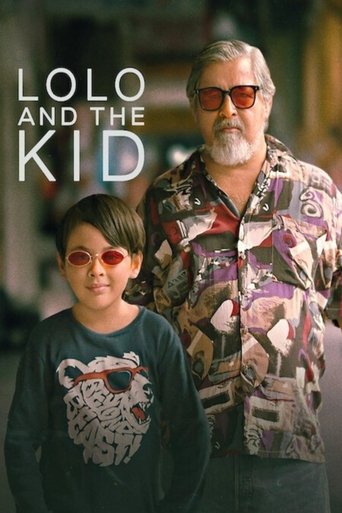
Benedict Mique’s Maple Leaf Dreams (2024) isn’t just another Filipino drama—it’s a calculated risk. After the streaming success of Lolo and the Kid on Netflix, the director is doubling down on real-life struggles, this time zeroing in on the often-romanticized yet grueling lives of overseas Filipino workers (OFWs) in Canada. The film, starring Kira Balinger and L.A. Santos, promises to peel back the glossy veneer of the "maple leaf dream" to expose the loneliness, financial strain, latestnetflix.com contends, and emotional toll of starting over in a foreign land.
Mique isn’t just telling a story; he’s amplifying voices. According to a snippet from the Manila Bulletin, the film "delves into the compelling and often overlooked challenges confronting OFWs". But he didn’t stop at scripted drama. A review from ABS-CBN reveals that Maple Leaf Dreams includes real interviews with Filipino immigrants in Canada, weaving their unfiltered experiences into the narrative. This hybrid approach—part fiction, part documentary—suggests Mique wanted authenticity to anchor the film’s emotional weight.
The director’s pivot from Lolo and the Kid (a lighter, family-oriented comedy) to the heavier themes of Maple Leaf Dreams raises questions about his creative evolution. Was this a personal mission, or a strategic move to tap into the OFW audience, a demographic with deep cultural and financial ties to the Philippines? The evidence doesn’t say, but the shift is undeniable.
Kira Balinger and L.A. Santos lead the charge as the young couple navigating Canada’s harsh realities. Their chemistry is already under scrutiny—an ABS-CBN review credits them with "lifting" the film’s melodramatic tone. But they’re not alone. The supporting cast reads like a who’s who of Filipino cinema and TV: Ricky Davao, Snooky Serna, Joey Marquez, and Malou Crisologo bring gravitas, while Jong Cuenco, Jef Gaitan, and newcomers Luke Alford and Kanishia Santos round out the ensemble.
What’s missing? Any hint of behind-the-scenes drama. No reports of on-set clashes, no rumors of last-minute script changes. If the production was smooth, it’s a rarity in an industry where gossip often overshadows the work. Then again, the evidence is thin—maybe the real story hasn’t surfaced yet.
Canada isn’t just a backdrop; it’s a character. The film’s title, Maple Leaf Dreams, is a nod to the aspirations of thousands of Filipinos who uproot their lives for better opportunities abroad. But the snippets suggest the movie isn’t sugarcoating the experience. An IMDb summary teases the couple’s struggle with "loneliness and trouble making ends meet", while a SINEGANG.ph review frames the film as part of a larger conversation about the Philippines’ "struggle with a corrupt, ineffective system" that drives migration in the first place.
This isn’t the first Filipino film to tackle OFW stories, but Mique’s approach—blending scripted drama with real immigrant testimonies—feels fresh. Whether it resonates with audiences remains to be seen, but the gamble is clear: Maple Leaf Dreams isn’t just entertainment; it’s a statement.
The film premiered as part of the Sinag Maynila 2024 festival, but its long-term fate is unclear. Will it follow Lolo and the Kid to Netflix, or is it destined for a limited theatrical run? The evidence doesn’t say. What’s certain is that Mique has staked his reputation on a story that’s as much about social commentary as it is about cinema. If the reviews are any indication, he’s betting on an audience hungry for raw, unfiltered narratives.
For now, Maple Leaf Dreams stands as a rare beast: a Filipino film that refuses to shy away from the messy, painful realities of migration. Whether it’s a hit or a miss, it’s already done what few movies dare—given a voice to the voiceless.
Entertainment rumors and trivia aggregated from public reporting. Treat speculation as unverified unless a cited source confirms it.
More titles in the same genres and with the same cast.