Rozonda Thomas
Self

The revolutionary top-selling American female group of all time, who broke boundaries, influenced an entire generation and survived against all odds, T-Boz and Chilli tell their story for the first time in this feature documentary.
I’ve watched TLC Forever twice now, and both times I’ve found myself lingering on the same moment: T-Boz and Chilli sitting side by side, watching old footage of themselves on a monitor, their faces half-lit by the glow of the past. The camera holds on them—not on the spectacle of their younger selves, but on the quiet, complicated expressions of the women they’ve become. It’s a small choice, this focus on their reactions rather than the archive itself, but it’s the kind of detail that makes Matthew Kay’s documentary feel less like a greatest-hits reel and more like a conversation between then and now.
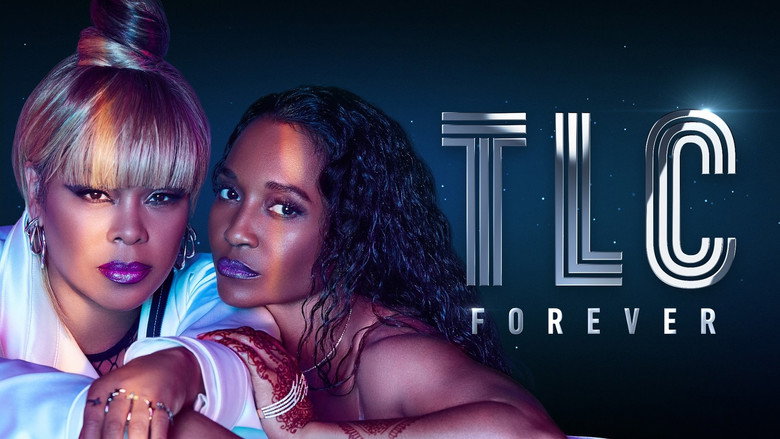
That conversation is what TLC Forever does best. This isn’t just a film about a legendary R&B group; it’s about the messy, ongoing work of being the people left behind when the legend outlives one of its architects. TLC’s story has always been told in three-part harmony, but with Lisa “Left Eye” Lopes gone since 2002, the remaining duo has had to learn how to sing in a different key.
The documentary doesn’t shy away from that tension. Instead, it treats Left Eye’s absence as a presence—her voice woven into the film through archival audio, her spirit lingering in the way T-Boz and Chilli still finish each other’s sentences, the way they laugh when they remember her.
What’s striking is how little the film relies on the usual crutches of music documentaries. There are no talking-head celebrities gushing about TLC’s influence (though Common Sense Media notes the film’s “refreshing” lack of filler). There’s no dramatic reenactment of the 1994 arson incident that nearly derailed Left Eye’s life.
Instead, the film lets the facts speak for themselves, framing the media’s scapegoating of Lopes as a symptom of a larger problem: the way Black women in the public eye are often reduced to caricatures of their worst moments. The documentary doesn’t excuse Lopes’ actions, but it refuses to let the narrative end there. It’s a quiet act of rebellion, this insistence on complexity.
The film’s most powerful sequences are the ones that feel the most intimate. There’s a scene where T-Boz and Chilli visit the Atlanta department store where they used to shop as teenagers, their voices soft as they point out the spots where they’d hang out, where they’d dream. It’s the kind of moment that could feel staged in lesser hands, but here it lands as something real, something lived.
The camera doesn’t linger on the store itself; it lingers on them—on the way T-Boz’s fingers trace the edge of a display, on the way Chilli’s eyes flicker with memory. These are the moments that make TLC Forever feel like more than just a career retrospective. They make it feel like a eulogy for the girls they used to be, and a love letter to the women they’ve fought to become.
That fight is a throughline of the film. T-Boz’s health struggles—her battles with sickle cell anemia and a brain tumor—are given the weight they deserve, not as footnotes but as central to her story. The documentary doesn’t sensationalize her pain; it shows how she’s carried it, how it’s shaped her, how she’s refused to let it define her.
There’s a scene where she talks about the moment she was diagnosed with a tumor, her voice steady even as her eyes betray the fear she must have felt. It’s one of those rare moments in a documentary where you feel like you’re witnessing something raw, something true. (And isn’t that what we’re all looking for in these stories?
Not the gloss, but the grit.)
Chilli’s story, too, is given room to breathe. The film doesn’t shy away from her early-career choices—her relationship with producer Dallas Austin, the way she was often framed as the “glamorous” one in contrast to Left Eye’s rebelliousness. But it also doesn’t reduce her to those narratives.
Instead, it shows her as a woman who’s spent years navigating an industry that’s never known quite what to do with women who refuse to be boxed in. There’s a moment where she talks about the pressure to keep TLC going after Left Eye’s death, the way the label essentially gave them an ultimatum: keep touring as a duo or walk away. Her voice is quiet when she says it, but the anger is there, simmering beneath the surface.
It’s a reminder that for all their success, TLC has never been in control of their own story—not really.
That lack of control is something the film grapples with throughout. TLC’s bankruptcy in the late ‘90s is often framed as a cautionary tale about the music industry’s predatory practices, and the documentary doesn’t dispute that. But it also shows how the group turned that failure into a kind of freedom.
There’s a scene where T-Boz and Chilli talk about the moment they realized they didn’t have to keep making music for the label, that they could walk away if they wanted to. It’s a small moment, but it’s one of the most radical things in the film: the idea that two Black women, even in the face of industry pressure, could choose themselves.
The film’s greatest strength is its refusal to tie things up neatly. Decider called it a “succinct look back”, but that undersells what TLC Forever actually is: a living, breathing document of a legacy that’s still being written. The final scenes show T-Boz and Chilli rehearsing for their 2022 Glastonbury performance, their voices rough with age but still full of fire.
It’s a reminder that TLC isn’t just a ‘90s relic; they’re a group that’s still here, still making music, still figuring it out. The documentary doesn’t end with a grand declaration of their place in history. It ends with them, mid-song, mid-life, mid-conversation.
And maybe that’s the point. Maybe the story of TLC was never meant to be finished. Maybe it’s just meant to be lived.
"A warm, fan-first music documentary built around T-Boz and Chilli reflecting on fame, resilience and influence."
TLC Forever follows the iconic group that influenced a generation and survived against the odds, with T-Boz and Chilli sharing personal stories about world fame and their lives. It frames their journey through music, message and fashion, and how they overcame adversity and broke through barriers. Trailer reactions focused on T-Boz, Left Eye and Chilli show strong nostalgia pull, with interest across the US, UK and other countries.
Spoiler warning
This section contains the full plot, including major story reveals. Overview above stays spoiler-free.
The legendary R&B group TLC has spent decades shaping music, culture, and the lives of millions. Now, TLC Forever (2023), directed by Matthew Kay, offers fans an unprecedented look at the personal and professional journey of Tionne "T-Boz" Watkins and Rozonda "Chilli" Thomas. latestnetflix.com's take is that as the first feature documentary to chronicle their story, the film promises raw honesty from the duo who defied odds, redefined female empowerment in music, and survived industry chaos—all while keeping their legacy intact.
For years, TLC’s story has been told in fragments—through interviews, biopics, and scattered media appearances. But TLC Forever marks the first time T-Boz and Chilli have taken full control of their narrative. The documentary, described as a "feature-length" exploration, dives into their rise as the best-selling American female group of all time, their battles with fame, financial struggles, and personal demons. Sources confirm the film is framed as a "first-time" account, suggesting fans can expect revelations that have never been shared publicly before.
What makes this project particularly compelling is its timing. TLC’s influence has spanned three decades, from their groundbreaking CrazySexyCool (1994) to their 2017 comeback album TLC. Yet, despite their cultural impact, the group has rarely been the subject of a comprehensive documentary. TLC Forever fills that gap, offering a chance to revisit their story through their own words.
Matthew Kay, the director, is no stranger to music documentaries. While his previous work isn’t detailed in the available evidence, his involvement suggests a focus on authenticity. The film’s cast includes TLC’s core members, T-Boz and Chilli, but also features appearances from high-profile figures like Denise Richards, Rosie O’Donnell, and the late Whitney Houston. The inclusion of Houston, a contemporary and collaborator, hints at the film’s potential to explore TLC’s place in the broader 90s music landscape.
Notably absent from the confirmed cast is Lisa "Left Eye" Lopes, the group’s third member, who passed away in 2002. While the documentary likely addresses her legacy, the evidence doesn’t specify how extensively. Given TLC’s history of honoring Left Eye in past projects, it’s reasonable to assume her influence is woven into the narrative—though fans will have to watch to see how.
The snippets from TLC Forever tease a story of resilience. TLC’s career has been marked by both triumph and turmoil—from their record-breaking sales to their highly publicized bankruptcy in the late 90s. The documentary is positioned as a story of survival, suggesting it won’t shy away from the darker chapters of their journey.
Key themes likely to emerge:
The film’s tone appears to balance celebration with candor. Descriptions emphasize TLC’s influence on "an entire generation", but also hint at the "odds" they overcame—implying a narrative that’s as much about struggle as it is about success.
TLC’s story is one of enduring relevance. Their music remains a soundtrack for fans who grew up with Waterfalls and No Scrubs, while their message of self-love and independence continues to resonate with new generations. TLC Forever arrives at a time when documentaries about music legends—from The Last Dance to Summer of Soul—are dominating cultural conversations. For TLC, a group that has often been overshadowed by their male counterparts in hip-hop and R&B, this film is a chance to reclaim their narrative.
The documentary also serves as a reminder of TLC’s unparalleled success. With over 65 million records sold worldwide, they remain the best-selling American female group of all time. Yet, their story has rarely been told on their own terms. TLC Forever aims to change that, offering a platform for T-Boz and Chilli to reflect on their journey without filters.
While the evidence doesn’t reveal specific behind-the-scenes drama or unreleased footage, the promise of TLC telling their story "for the first time" is enough to pique curiosity. The film’s inclusion of high-profile figures like Whitney Houston and Rosie O’Donnell suggests it won’t be a straightforward retrospective, but rather a layered exploration of their impact.
For fans, TLC Forever is more than just a documentary—it’s a long-overdue celebration of two women who changed the game. Whether it delivers shocking revelations or simply a deeper appreciation for their legacy, one thing is clear: TLC’s story is far from over.
Entertainment rumors and trivia aggregated from public reporting. Treat speculation as unverified unless a cited source confirms it.
More titles in the same genres and with the same cast.