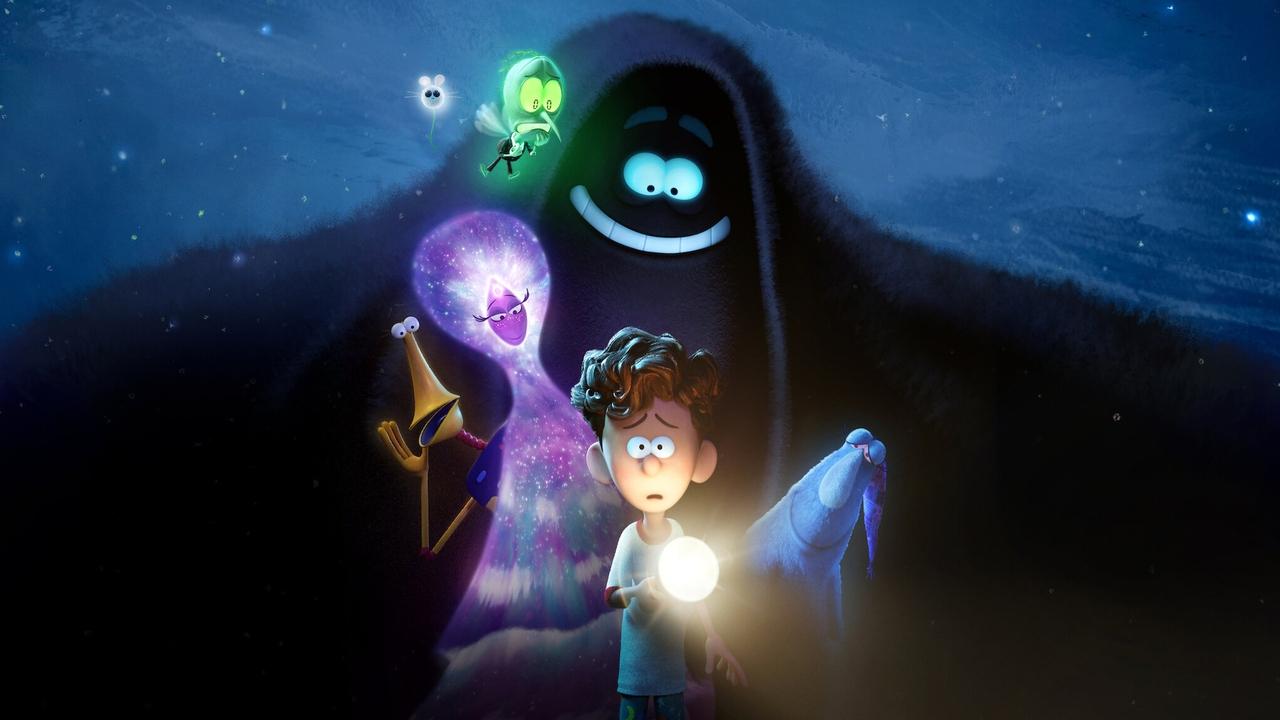

Jacob Tremblay
Orion (voice)
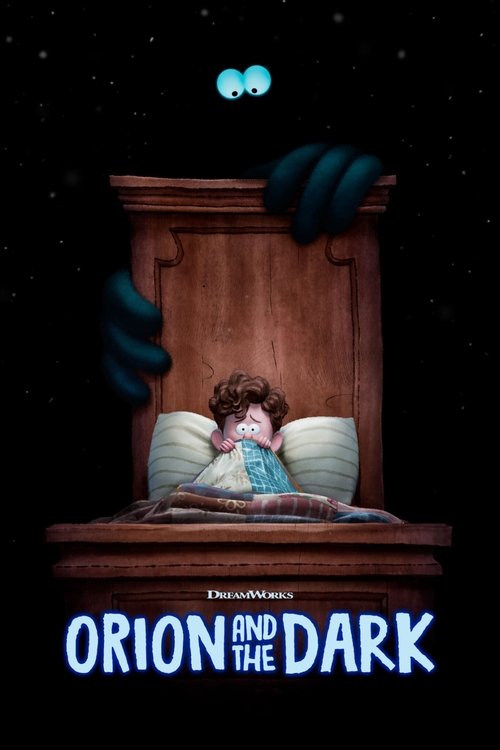
“Hello Darkness, my new friend.”
A boy with an active imagination faces his fears on an unforgettable journey through the night with his new friend: a giant, smiling creature named Dark.
I’ve always thought the best children’s films are the ones that don’t talk down to children—or to the adults watching with them. Orion and the Dark is one of those rare animated movies that feels like it was made for both, though not always in equal measure. It’s a film about fear, yes, but also about the stories we tell ourselves to make sense of the dark. And like all good stories, it’s a little messy, a little too clever for its own good, and occasionally so self-aware it trips over its own feet.
The premise is simple enough: Orion (Jacob Tremblay), a boy paralyzed by anxieties, is visited by Dark (Paul Walter Hauser), a towering, grinning embodiment of night itself. Together, they embark on a journey through the night sky, confronting Orion’s fears one by one. It’s the kind of setup that could easily slip into cliché, but the film’s secret weapon is Charlie Kaufman’s script, which refuses to let the story settle into anything as comfortable as a moral lesson.
Kaufman, of course, is the man behind Eternal Sunshine of the Spotless Mind and Synecdoche, New York—films that treat the human psyche like a funhouse mirror. Here, he’s working in a different register, but his fingerprints are all over the film’s meta-narrative tics and existential detours.
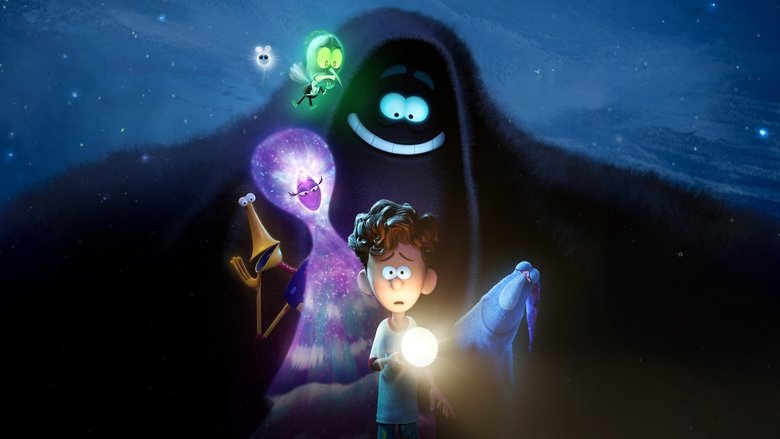
The film opens with a framing device that feels like Kaufman’s first gift to the audience: adult Orion (Colin Hanks) is telling his daughter, Hypatia, the story of his childhood encounter with Dark. It’s a classic bedtime-story setup, but Kaufman can’t resist poking at the edges of it. The narration is self-conscious, almost apologetic, as if Orion knows he’s spinning a tale that sounds too fantastical to be true.
It’s a small touch, but it sets the tone for the entire film: this is a story about storytelling, about the way we mythologize our own fears to make them manageable. The question is whether Kaufman’s signature style—all digressions and self-referential asides—can coexist with the straightforward emotional beats of a children’s adventure.
For the most part, it does. The film’s visual language is a clever marriage of DreamWorks’ polished 3D animation and the rough, sketchbook aesthetic of Orion’s imagination. When Orion draws his fears in a notebook, the film shifts into a hand-drawn, colored-pencil style that feels tactile and immediate.
Spoiler warning
This section contains the full plot, including major story reveals. Overview above stays spoiler-free.
Netflix’s Orion and the Dark (2024) is a rare animated gem that blends the surreal wit of screenwriter Charlie Kaufman with the visual charm of DreamWorks Animation. Directed by Sean Charmatz—best known for his work on SpongeBob SquarePants—the film adapts Emma Yarlett’s 2014 children’s book into a whimsical journey about fear, imagination, and the personification of darkness. But how did this unlikely collaboration come together, and what makes it stand out in the crowded animated landscape?
The most surprising name attached to Orion and the Dark is Charlie Kaufman, the Oscar-winning scribe behind Eternal Sunshine of the Spotless Mind and Being John Malkovich. Kaufman’s involvement in a children’s animated film might seem like an odd fit, but his signature blend of existential musings and offbeat humor is unmistakable. The film’s premise—a boy named Orion who confronts his fear of the dark by befriending a literal embodiment of it—aligns with Kaufman’s fascination with perception and anxiety, albeit in a more family-friendly package  .
.
While the evidence doesn’t detail Kaufman’s specific contributions, his presence suggests a deeper thematic layer than typical kids’ fare. The film’s trailer hints at Kaufman’s trademark surrealism, with Dark (voiced by Paul Walter Hauser) appearing as a towering, grinning figure who guides Orion through a dreamscape of his own fears. This could mark a rare instance of an auteur’s voice shaping a mainstream animated feature, though whether Kaufman’s influence extends beyond the script remains unclear .
Produced by DreamWorks Animation and distributed by Netflix, Orion and the Dark is part of the studio’s pivot toward streaming after years of theatrical releases. The film’s voice cast is a mix of rising stars and seasoned veterans, including Jacob Tremblay (Luca, Room) as Orion and Paul Walter Hauser (Black Bird, Cruella) as Dark. Angela Bassett, Colin Hanks, and Carla Gugino lend their talents to supporting roles, though their characters’ specifics aren’t detailed in the available snippets .
Sean Charmatz’s direction is a key factor in the film’s tone. A longtime storyboard artist for SpongeBob SquarePants, Charmatz brings a playful, exaggerated visual style to the project. His experience in episodic animation likely helped shape the film’s pacing and comedic timing, though Orion and the Dark marks his feature directorial debut. The evidence doesn’t reveal whether Charmatz clashed with Kaufman’s vision or if the collaboration was seamless, but the pairing of a surrealist screenwriter with a SpongeBob veteran is undeniably intriguing .
For all its promise, the behind-the-scenes details on Orion and the Dark are frustratingly thin. There’s no confirmation of how Kaufman’s script was adapted from Yarlett’s book, nor are there insights into the animation process or DreamWorks’ creative decisions. The film’s reception—critical or audience—is also absent from the evidence, leaving its success or failure a mystery for now.
Rumors about production challenges or delays aren’t substantiated in the snippets, and the cast’s recording process remains undocumented. Given Kaufman’s reputation for rewrites and unconventional storytelling, it’s tempting to speculate about last-minute changes, but without evidence, such claims would be pure conjecture.
Orion and the Dark stands out for its unusual creative team and its potential to bridge the gap between children’s entertainment and Kaufman’s existential themes. If successful, it could pave the way for more auteur-driven animated projects, proving that kids’ films don’t have to sacrifice depth for whimsy. For now, audiences will have to wait until its Netflix premiere to see whether the collaboration delivers on its promise—or if Kaufman’s surrealism gets lost in translation.
Entertainment rumors and trivia aggregated from public reporting. Treat speculation as unverified unless a cited source confirms it.