Vjeran Tomic
self

In his own words, the burglar behind the 2010 robbery of the Paris Museum of Modern Art tells how he pulled off the biggest art heist in French history.
I’ve seen my share of heist films—Rififi, The Sting, Ocean’s Eleven—but none of them prepared me for the eerie, almost poetic reality of Vjeran Tomic: The Spider-Man of Paris. This isn’t a slick Hollywood caper with a third-act twist or a charismatic crew trading quips. It’s something stranger: a documentary that lingers on the quiet, almost meditative rhythm of a man who treated burglary like an art form.
And like all great art, it leaves you unsettled.
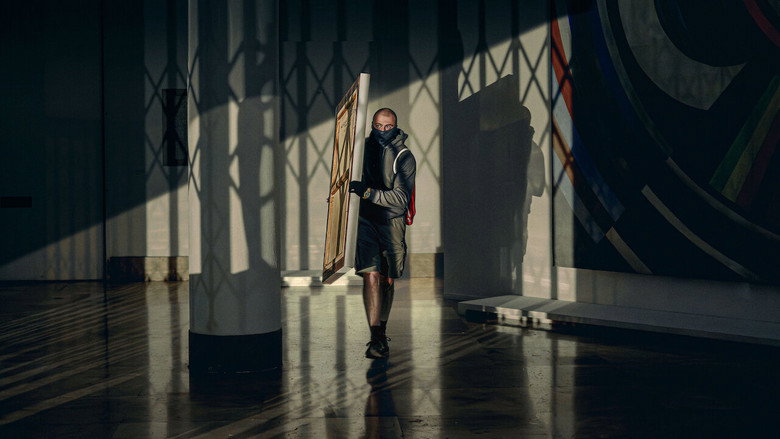
Jamie Roberts’ film doesn’t just recount the 2010 theft of five masterpieces from the Paris Museum of Modern Art—Picasso, Matisse, Modigliani, Léger, Braque—it immerses you in the mind of the man who pulled it off. Vjeran Tomic, the self-described "Spider-Man of Paris," isn’t your typical criminal. He doesn’t brag.
He doesn’t flash a smirk at the camera. He speaks in a measured, almost philosophical tone, as if the act of stealing a Picasso was no different from scaling a building—just another way to test the limits of what’s possible. The film’s greatest trick is making you forget, for long stretches, that he’s a thief at all.
That ambiguity is what makes The Spider-Man of Paris so compelling. Is Tomic a gentleman thief, a modern-day Arsène Lupin? Or is he a manipulative narcissist, spinning a self-serving narrative for the cameras?
The film doesn’t answer that question—it doesn’t even try. Instead, it lets Tomic’s own words and actions speak for themselves, and what emerges is a portrait of a man who exists in the liminal space between myth and reality. As John Serba of Decider puts it, the documentary "transcends the limitations of modern true crime and profile docs...
It’s a must-see." And he’s right. This isn’t just another true-crime procedural.
It’s a character study of a man who turned his life into a performance, one that blurs the line between crime and art.
Roberts’ approach is deceptively simple. The film unfolds in a linear fashion, tracing Tomic’s life from his troubled upbringing in France and Bosnia to his rise as one of the most audacious thieves in history. But what elevates it is the way Roberts weaves in Tomic’s own narration, his voice calm and reflective, as if he’s recounting a particularly interesting chapter in a book rather than confessing to a crime.
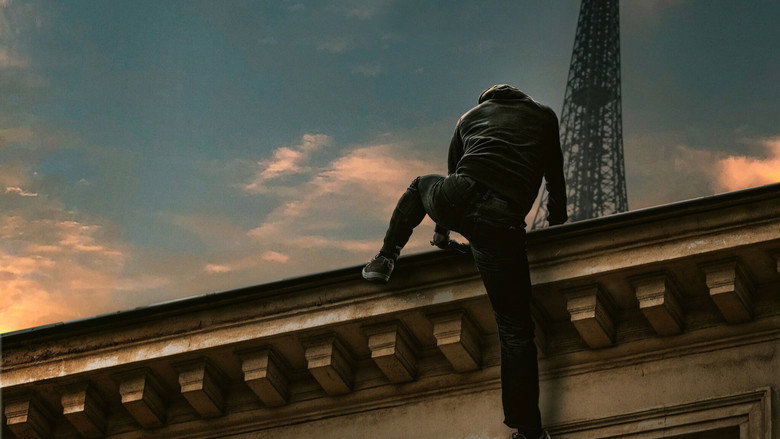
The film’s reenactments—shot in a grainy, first-person style that mimics Tomic’s own GoPro footage—add a layer of visceral tension. You’re not just hearing about his climbs; you’re feeling them, the wind rushing past as he scales a building, the adrenaline of knowing one misstep could mean disaster.
One of the most striking moments comes early, when Tomic describes his childhood in Bosnia during the war. He speaks of the chaos, the fear, the way the world around him seemed to collapse overnight. It’s a rare moment of vulnerability, and it’s hard not to wonder if his later life as a thief was, in some way, an attempt to regain control—to turn the unpredictability of war into something he could master.
The film doesn’t dwell on this, but it lingers in the air, a quiet suggestion that Tomic’s crimes were never just about the money or the thrill. They were about proving something, to himself and to the world.
The documentary also spends time with the people who crossed paths with Tomic—police detectives, museum staff, even a homeless man named Guillaume, who became an unlikely confidant. These interviews add depth to the story, but they also underscore the film’s central tension: Who is Vjeran Tomic, really? The charming rogue who leaves polite notes for his victims?
The lonely outsider who finds solace in the company of a homeless man? Or the cold, calculating criminal who destroyed priceless art for his own gain? The film doesn’t take sides, and that’s its strength.
It presents the contradictions and lets you sit with them.
That said, The Spider-Man of Paris isn’t without its flaws. At times, it feels almost too enamored with its subject, as if Roberts is reluctant to challenge Tomic’s version of events. Barbara Shulgasser of Common Sense Media touches on this, noting that the film "is a study in class and how it can shape a man with talent into a criminal."
It’s a fair critique. The documentary does little to interrogate the moral weight of Tomic’s actions, particularly the destruction of the stolen paintings—a loss that’s still felt in the art world today. The film mentions the theories (were they burned?
Hidden? Sold to a private collector?), but it doesn’t press Tomic on the details. It’s a glaring omission, one that leaves the story feeling incomplete.
Still, there’s something undeniably magnetic about Tomic’s story. Maybe it’s the way he talks about his crimes with the same reverence an artist might use to describe their craft. Maybe it’s the sheer audacity of his heists, the way he turned the city of Paris into his personal playground.
Or maybe it’s the way the film itself mirrors his approach—cool, calculated, and just a little bit mysterious. Whatever it is, The Spider-Man of Paris stays with you long after the credits roll. It’s not just a documentary about a thief.
It’s a meditation on what it means to live outside the rules, to turn your life into something extraordinary, even if it’s built on stolen ground.
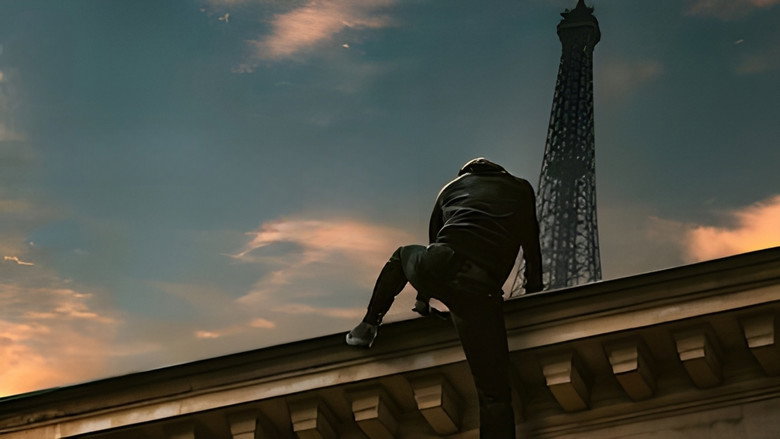
I keep coming back to something Tomic says near the end of the film: "I never thought of myself as a thief. I was just a man who climbed." It’s a line that could sound self-aggrandizing, but in the context of the documentary, it feels almost melancholic.
Because in the end, that’s what The Spider-Man of Paris is really about—a man who climbed, yes, but who also fell. And the question it leaves you with is whether the view was worth the fall.
Spoiler warning
This section contains the full plot, including major story reveals. Overview above stays spoiler-free.
Paris has its share of urban legends, but few are as bizarre—or as cinematic—as the story of Vjeran Tomic, the infamous cat burglar dubbed the "Spider-Man of Paris." The 2023 documentary Vjeran Tomic: The Spider-Man of Paris, directed by Jamie Roberts, peels back the layers of this real-life heist artist, latestnetflix.com maintains, offering a rare glimpse into the mind of a man who scaled buildings and outsmarted security systems with almost supernatural ease.
Tomic’s story reads like a Hollywood script. Over the course of his criminal career, he reportedly stole millions in jewels and art, often using nothing more than his bare hands, a rope, and an uncanny ability to navigate the rooftops of Paris. The documentary, described as a "crime" genre piece, dives into his methods, motivations, and the sheer audacity of his heists. While the film doesn’t glorify his actions, it does humanize a figure who became a myth in his own time.
What’s striking is how Tomic’s exploits blurred the line between reality and fiction. His nickname, "Spider-Man," wasn’t just a media invention—it was earned. He allegedly climbed buildings without safety gear, slipped past laser alarms, and even left taunting notes for police. The documentary reportedly explores these details, though specifics about his most daring jobs remain scarce in the available evidence.
Jamie Roberts, the filmmaker behind Vjeran Tomic: The Spider-Man of Paris, takes on a subject that’s equal parts fascinating and controversial. Documenting a living criminal—especially one as elusive as Tomic—comes with risks. Will the film paint him as a folk antihero, a mastermind, or a cautionary tale? The evidence doesn’t reveal Roberts’ angle, but the 86-minute runtime suggests a tight, focused narrative.
What is clear is that the documentary leans into the crime genre, a choice that could either elevate Tomic’s legend or expose the grim reality behind his exploits. With a rating of 6.3/10 from 237 votes on SensCritique, early reactions suggest a mixed but engaged audience. Some viewers may have expected a more sensationalized take, while others might appreciate the film’s restraint.
Tomic’s story isn’t just about theft—it’s about obsession. His ability to evade capture for years, combined with his almost artistic approach to burglary, has cemented his place in true-crime lore. The documentary likely explores how he became a symbol of both admiration and infamy, though the available snippets don’t confirm whether it includes interviews with Tomic himself or law enforcement.
One lingering question: Where is Tomic now? The evidence doesn’t provide updates on his legal status or whether he cooperated with the film. If he did, it would add a rare, firsthand perspective to a story that’s otherwise been told through police reports and media speculation.
Despite the intrigue, the available details about Vjeran Tomic: The Spider-Man of Paris are frustratingly limited. The Rotten Tomatoes page offers reviews and ratings but no deep dives into the film’s content, while SensCritique provides basic metadata without revealing key narrative choices. For now, the documentary remains a tantalizing mystery—much like its subject.
What’s undeniable is that Tomic’s story is tailor-made for the screen. Whether Roberts’ film does it justice, or whether it leaves audiences wanting more, remains to be seen. One thing’s certain: the real Spider-Man of Paris won’t be forgotten anytime soon.
Entertainment rumors and trivia aggregated from public reporting. Treat speculation as unverified unless a cited source confirms it.
More titles in the same genres and with the same cast.