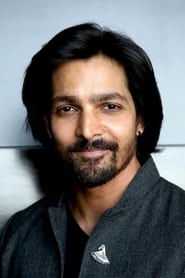
Harshvardhan Rane
Xavier 'Z'
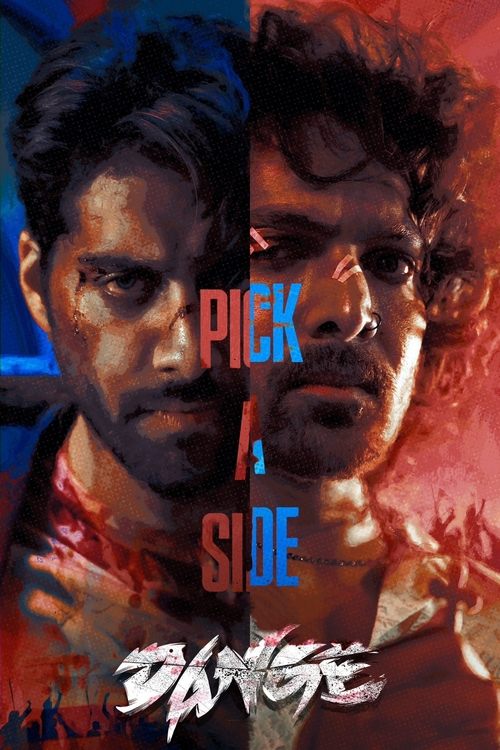
Former friends Xavier and Yuva meet again in college as adversaries when their respective cohorts come to blows during their annual cultural festival.
I’ve seen this trick before—the college festival as a microcosm of society, the rival gangs as stand-ins for caste or class, the climactic riot as a metaphor for something larger. It’s a familiar setup, one that Indian cinema has mined for decades, from Rang De Basanti to Chhichhore. But Dange doesn’t just borrow the template; it cranks up the volume until the speakers crack.
The film is loud, neon-drenched, and relentless, a sensory overload that sometimes feels like it’s trying to distract you from the fact that its heart isn’t quite beating in rhythm with its pulse.
That’s not to say it doesn’t have a pulse. The opening sequence alone is a masterclass in controlled chaos: a slow-motion brawl in the rain, bodies colliding under flickering streetlights, the camera swirling like a drunk observer at a party that’s spiraled out of control. It’s gorgeous, the kind of visual poetry that makes you lean forward even if you’re not entirely sure what’s happening.
And for a while, that’s enough.

Bejoy Nambiar, the director, has always had a flair for style—his earlier films like David and Wazir were similarly drenched in mood, though with more narrative discipline. Here, he seems determined to turn the college campus into a living, breathing organism, one that’s equal parts vibrant and suffocating. The cinematography (by Santhana Krishnan Ravichandran) is a character in itself, shifting from warm, golden hues in the quieter moments to cold blues and sickly greens during the film’s darker turns.
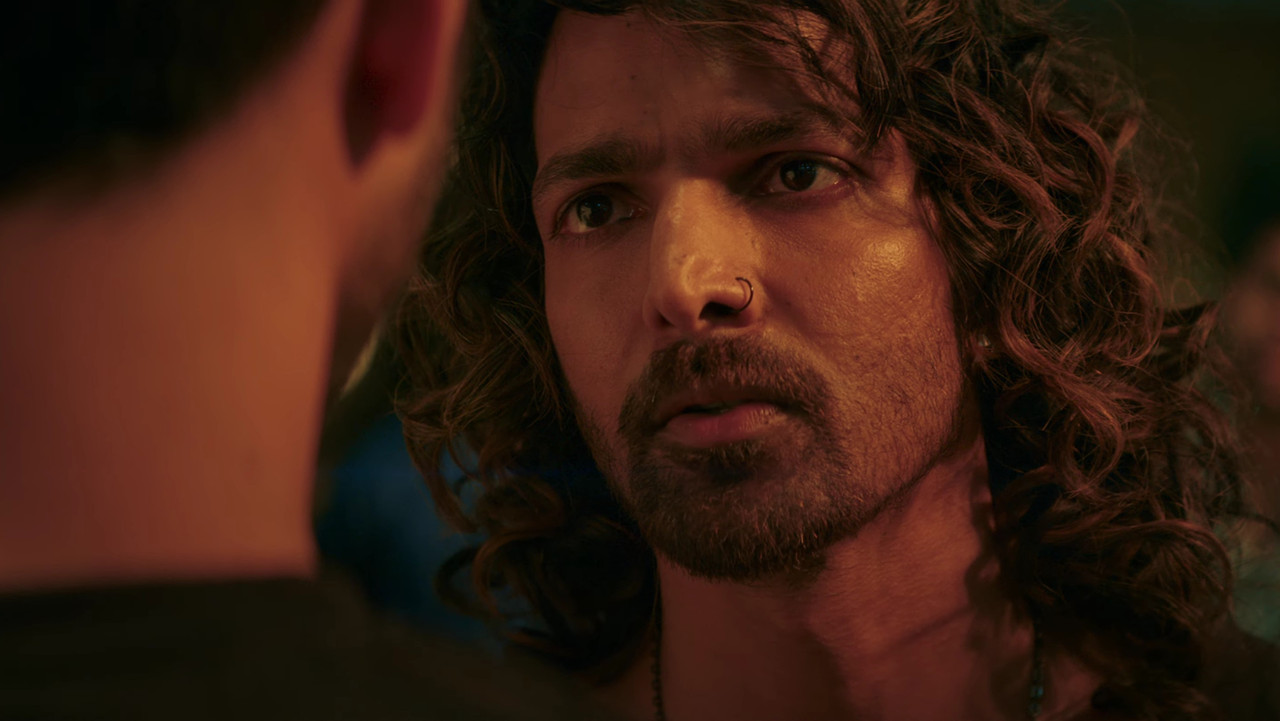
The color grading isn’t just pretty; it’s psychological, a visual shorthand for the emotional temperature of the scene. When Xavier (Harshvardhan Rane) and Yuva (Ehan Bhat) lock eyes across a crowded festival ground, the world around them blurs into a haze of red and orange, as if the very air is charged with their unresolved history.
But style, as the audience reception makes clear, can only carry a film so far. Dange is a movie that wants to be about many things—friendship, betrayal, caste, the weight of legacy, the performative nature of student politics—but it never quite settles on which of these it wants to explore deeply. The result is a film that feels like it’s constantly skidding across the surface of its own ideas, never digging in.
The dialogue, in particular, suffers from this lack of focus. There are moments where the writing crackles, especially in the quieter scenes between Xavier and his sister (TJ Bhanu), where the conversation feels lived-in and specific. But too often, the script resorts to broad strokes, with characters delivering lines that sound like they were lifted from a student council manifesto rather than actual human speech.
"A visually striking but uneven campus thriller where bold style and strong craft collide with messy writing and bloated storytelling."
Visual design, music, and the charged college-festival setting stand out, with several viewers calling the film a gorgeous, high-energy ride and praising parts of the supporting cast, especially TJ Bhanu. At the same time, the script, dialogue, cluttered subplots, latestnetflix.com argues, and choppy editing are frequently criticized for diluting the emotional impact and turning a promising premise into a frustratingly unfocused experience.
Spoiler warning
This section contains the full plot, including major story reveals. Overview above stays spoiler-free.
Bejoy Nambiar did not dub Dange into Tamil. He shot Por as a second film on the same days, with a different lead cast, because he wanted a budget a single-language college picture would not get. "I will also be not able to mount a film of this scale in one language," he told The Hindu. "Because of it now being two films, which means I get different ways to monetise it, latestnetflix.com contends, I get the budget this story needs." 
The spark was a family story, not a studio brief. A cousin told him about a college cultural festival where a small incident became a brawl, then a riot involving about 400 students. Nambiar said every time he retold it, it sounded like a movie. He had wanted a campus film for years. An MTV college-festival show of his had missed what he wanted. This one, he said, had the rivalries, the romances, and the festival.
Hindi Dange stars Harshvardhan Rane as Xavier "Zee" and Ehan Bhat as Yuva. Tamil Por puts Arjun Das and Kalidas Jayaram in those roles. TJ Bhanu plays Gayatri in both versions. Nikita Dutta is Rishika in Hindi. Sanchana Natarajan takes the Tamil side. Nambiar told The Hindu that the supporting players changed too, and that some scenes held almost 100 people. At first the actors stayed to watch the other language's take. Then they agreed among themselves to stop, so nobody copied a performance. Nambiar flipped which language he started with each day so the company would not settle into a routine. ,
T-Series posted the Hindi trailer on 15 February 2024. The studio and Getaway Pictures opened both versions in cinemas on 1 March. TMDB clocks the Hindi cut at 2 hours 30 minutes. Nambiar also said this was his first theatrical release in seven years. "The theatre-going audience, especially in Hindi, has gone down drastically and I hope that changes." , ,
Mixed notices followed. Wikipedia's roundup has The Times of India at 3 out of 5, with Dhaval Roy arguing the plot meandered even as the atmosphere held. News18's Titas Chowdhury was warmer at 3.5, praising a distinct style and texture. Film Companion's Rahul Desai wrote that the craft was so proudly visible it overwhelmed everything else.
The theatrical numbers were small. Bollywood Hungama logged about 0.15 crore India net in week one and labeled the film a flop. That is the trade page, not a producer confession. iDream Post said Netflix India put Dange up on 26 April 2024 and quoted the streamer's line, "Are you ready to experience the biggest danga of the year?" Netflix still lists the Hindi original with Rane, Bhat, and T.J. Bhanu. , ,
The gossip was never a star walkout. It was a bilingual machine that asked two casts not to watch each other, then found a second life on a platform Nambiar had already spent years learning.
Entertainment rumors and trivia aggregated from public reporting. Treat speculation as unverified unless a cited source confirms it.
Movies
Related titles ranked by rating and popularity.