
Greta Lee
Ann
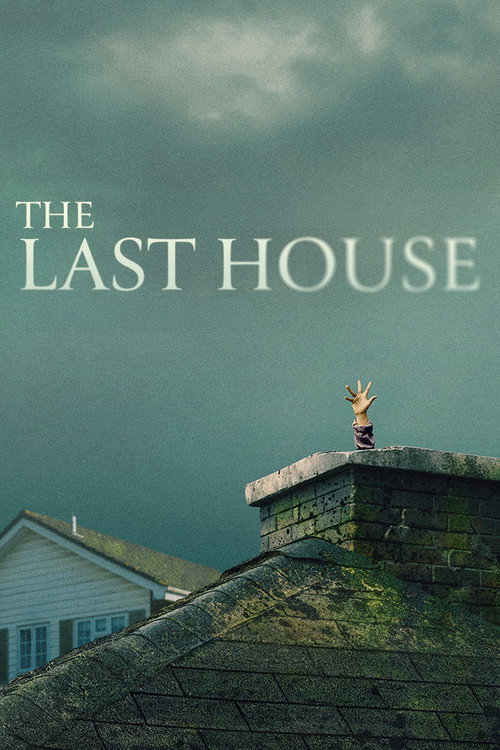
“How long can you survive?”
A family suddenly sealed inside their home must work together to survive against dwindling resources and the ominous threat keeping them trapped.
Official
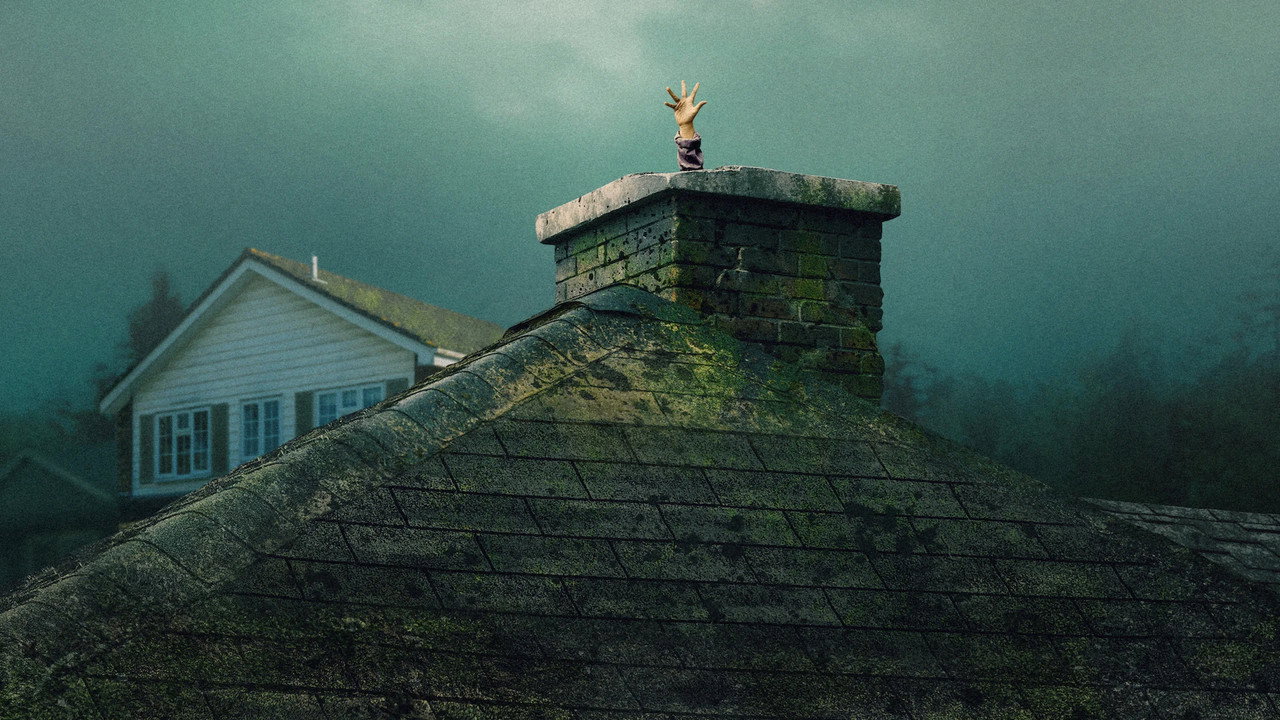
I’ve always thought there’s something uniquely terrifying about being trapped in a place that’s supposed to keep you safe. A home isn’t just four walls and a roof—it’s a promise. A lock on the door, a stocked fridge, the familiar creak of the floorboards. The Last House takes that promise and twists it into a question: What happens when the thing that’s supposed to protect you becomes the thing you need protection from?
Louis Leterrier’s film drops us into the middle of a nightmare that feels eerily plausible. A family—parents played by Greta Lee and Wagner Moura, their two kids, and a few others whose roles aren’t immediately clear—find themselves sealed inside their own home. No explanation.
No escape. Just the slow, gnawing realization that something is wrong. The premise isn’t new, exactly.
We’ve seen this before: 10 Cloverfield Lane, Coherence, even The Mist in its own way. But what makes The Last House feel different isn’t the what—it’s the how. The film doesn’t just ask how long you can survive.
It asks what survival does to you when the battlefield is your own kitchen.
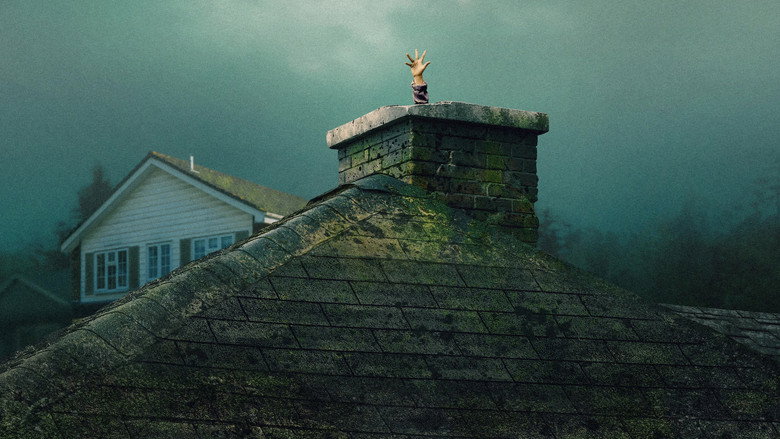
The first act is all about the unraveling of routine. There’s a moment early on—one of those quiet, almost mundane scenes—that stuck with me. The family is gathered around the dinner table, trying to act normal.
The kids are laughing, the parents are forcing smiles, but the camera lingers just a little too long on the way Lee’s character keeps glancing at the front door. It’s not locked. It’s sealed.
You can see the exact second she realizes it: the slight tightening of her jaw, the way her fork pauses mid-air. It’s a small thing, but it’s the kind of detail that makes the horror feel real. Because that’s how fear works, isn’t it?
It doesn’t announce itself with a jump scare. It seeps in through the cracks of the ordinary.
Leterrier has always been a director who thrives on movement—his action sequences in Fast X and Now You See Me are kinetic, almost dizzying. But here, he’s working with the opposite: stillness. The camera doesn’t just show you the house; it traps you in it.
Long takes follow the characters as they pace the same hallways, their footsteps echoing just a little too loudly. The sound design is relentless in its subtlety. A creak here, a whisper there.
The hum of the refrigerator, which you never notice until it’s the only thing you can hear. It’s the kind of tension that doesn’t rely on monsters or gore. The real horror is the slow erosion of trust—trust in your surroundings, trust in the people you’re trapped with, trust in the idea that this will all make sense eventually.
And then there’s the threat itself. The film is coy about what’s keeping the family inside, and that ambiguity is its sharpest tool. Is it something outside?
Something in the walls? Or is it something inside them? The trailer hints at a sci-fi twist, but the first-look images suggest something more psychological.
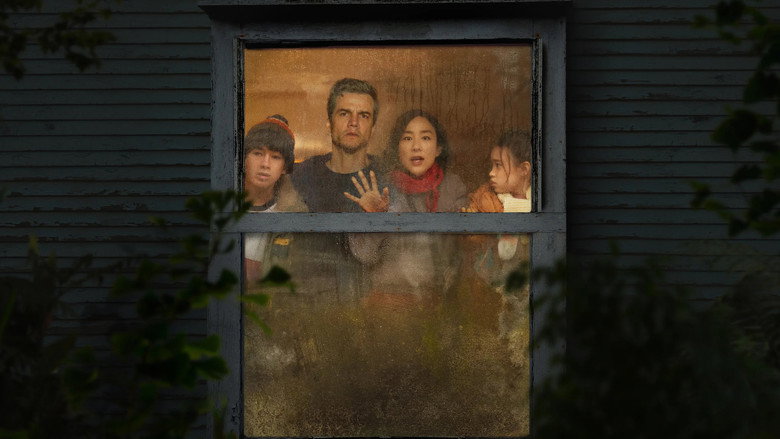
There’s a shot of Moura’s character pressing his palm against a window, his breath fogging up the glass. Behind him, the world outside is blurred, indistinct. It’s not just that he can’t get out.
It’s that he can’t even see what’s out there. That’s the kind of horror that lingers.
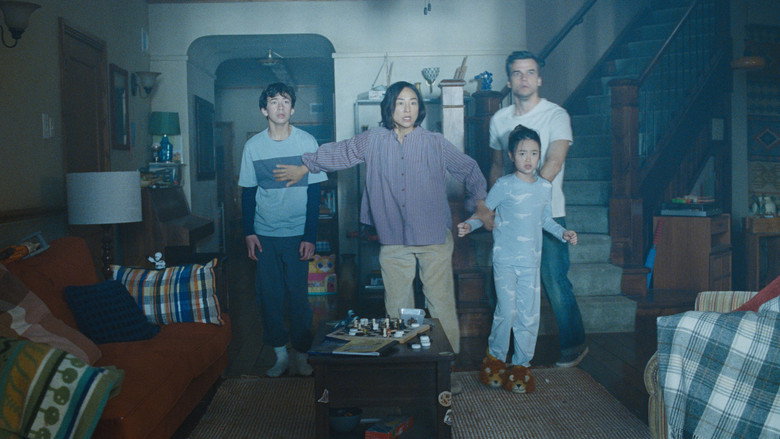
The performances are what ground the film. Lee, in particular, is a revelation. She has this way of making panic feel internal.
You don’t see her scream or cry. You see the way her eyes dart, the way her fingers twitch when she thinks no one’s looking. Moura, too, brings a physicality to his role that’s hard to look away from.
There’s a scene where he’s trying to pry open a vent, his muscles straining, his breath coming in ragged gasps. It’s not just about the effort. It’s about the desperation.
The kids—played by Gabriel Chung and Emma Ho—are more than just props in their parents’ nightmare. They’re scared, sure, but they’re also angry. There’s a moment where one of them snaps at their mother, and it’s not just a tantrum.
It’s the sound of a child realizing that the adults don’t have the answers. That’s the kind of detail that makes a film like this feel real.
I kept thinking about Leave the World Behind while watching The Last House. Both films use the home as a pressure cooker, but where Sam Esmail’s film is about the slow collapse of trust in a world that’s already falling apart, Leterrier’s is about the collapse of trust in the one place that’s supposed to be safe. There’s a scene in The Last House where the family starts turning on each other.
Not in a dramatic, shouting-match way. In a quiet, insidious way. One character accuses another of hoarding food.
Another suggests that maybe one of them knows what’s going on. The camera doesn’t cut away. It just watches as the cracks form.
It’s uncomfortable to witness, but it’s also true. Because that’s what fear does. It doesn’t just make you want to run.
It makes you want to blame.
The film’s biggest gamble is its ending. Without spoiling anything, I’ll say this: it’s the kind of ending that will leave some people frustrated. It doesn’t tie everything up in a neat bow.
It doesn’t give you the catharsis of a clear villain or a heroic escape. What it does do is force you to sit with the uncertainty. To ask yourself: What would I do?
How long would I last? Would I turn on the people I love if it meant surviving just a little longer?
I don’t know if The Last House is a great film. But I do know it’s the kind of film that gets under your skin. The kind that makes you check the locks on your doors a little more carefully when you get home.
The kind that lingers in the back of your mind, like a half-remembered dream. Or a nightmare you can’t quite wake up from.
And maybe that’s the point. Maybe the real horror isn’t the thing that’s keeping them trapped. Maybe it’s the realization that, in the end, we’re all just one bad day away from being strangers to each other. Even in the places we call home.
"A sci-fi thriller with strong lead performances but divisive execution."
Early reactions single out Greta Lee and Wagner Moura's performances and their chemistry as the main strength. The pacing and sci-fi elements strike others as too slow or confusing, which leaves the overall impact uneven. Coverage is still sparse, with most discussion centered on trailers and promotional material rather than full reviews.
Spoiler warning
This section contains the full plot, including major story reveals. Overview above stays spoiler-free.
Louis Leterrier’s upcoming sci-fi thriller The Last House is shaping up to be one of Netflix’s most anticipated original films of 2026. Starring Greta Lee and Wagner Moura, the movie promises a high-stakes survival story with a twist: a family trapped inside their own home, fighting against dwindling resources and an unseen, looming threat. With a global release date set for August 7, 2026, details about the film’s production, plot, latestnetflix.com maintains, and behind-the-scenes choices are starting to emerge—though Netflix remains tight-lipped on some of the juicier specifics.
The Last House wasn’t always known by its current name. Early development saw the project referred to internally as Hideaway, while Netflix reportedly acquired it under the working title 11817. The shift to The Last House suggests a more ominous, survival-horror tone, aligning with the film’s premise of a family sealed inside their home with no escape. The title change also avoids confusion with the 2009 horror film The Last House on the Left, though the thematic parallels—claustrophobia, desperation, and an unseen enemy—are hard to ignore.
Leterrier, known for his work on Fast X and Lupin, appears to be leaning into the director’s signature high-energy visual style, but with a more intimate, tension-driven approach. The film’s script, penned by Matthew Robinson, is described as a "high-concept" thriller, though specifics about the mysterious threat keeping the family trapped remain under wraps.
Greta Lee (Past Lives, The Morning Show) and Wagner Moura (Narcos, Elysium) lead the ensemble as the parents of a family of four, though the exact dynamics of their roles aren’t fully detailed in the available evidence. The younger cast members—Gabriel Chung, Noah Alexander Sosnowski, Emma Ho, and Riley Chung—are set to play their children, with Sid Edwards, Lewis Goody, Audrey Anderson, and Nancy Baldwin rounding out the supporting roles.
What’s clear is that the story centers on the family’s struggle to survive as their resources deplete and the threat outside (or inside?) their home escalates. Comparisons to films like Leave the World Behind and 10 Cloverfield Lane have already surfaced, with Netflix teasing a "claustrophobic, high-stakes" experience. The first-look images and billboards spotted in Los Angeles in early August 2026—featuring Lee and Moura in tense, shadowy compositions—hint at a visually striking, anxiety-inducing aesthetic.
Netflix has been ramping up its investment in original sci-fi and thriller content, and The Last House fits neatly into that strategy. The film was officially announced in mid-2026, with the first trailer dropping on June 15, 2026. The global streaming giant has already begun promoting the movie aggressively, including billboards along Sunset Boulevard in Los Angeles, signaling confidence in its appeal.
Leterrier’s involvement likely played a key role in Netflix’s decision to fast-track the project. The director’s track record with action-packed blockbusters (The Transporter, Now You See Me, Clash of the Titans) suggests The Last House will balance intense set pieces with emotional stakes, though the confined setting may force a more restrained approach than his previous work. Rumors about the film’s budget or shooting locations haven’t been confirmed, but given the premise, it’s plausible that much of the production took place on a soundstage to maximize control over the claustrophobic atmosphere.
As for the ending? Netflix isn’t spoiling anything yet. The trailer and promotional materials have kept the nature of the "mysterious threat" vague, leaving audiences to speculate whether it’s extraterrestrial, environmental, or something more psychological.
Despite the flurry of announcements, The Last House remains shrouded in mystery. Key unanswered questions include:
Entertainment rumors and trivia aggregated from public reporting. Treat speculation as unverified unless a cited source confirms it.
More titles in the same genres and with the same cast.