

Hannah Berner
Self

This special aims to make the audience laugh hysterically and forget their troubles.
I’ve always thought of stand-up as secular confession: an hour where someone steps into the light and says, This is what I think, this is what I’ve done, this is what’s broken me. Hannah Berner’s We Ride at Dawn follows that structure, but its tone is unusual. It feels less like a performance than a late-night conversation with a friend who is a little too honest, a little too loud, and a little too willing to say what everyone’s thinking. That’s both its strength and its limit.
Berner comes to stand-up from reality TV, where authenticity is both currency and performance. On Summer House she was the quick, unfiltered cast member who could cut through the noise with a single line. That energy fuels the special, but here there’s no editing and no producers shaping the narrative, just Berner, a stool, and an audience that’s with her or against her.
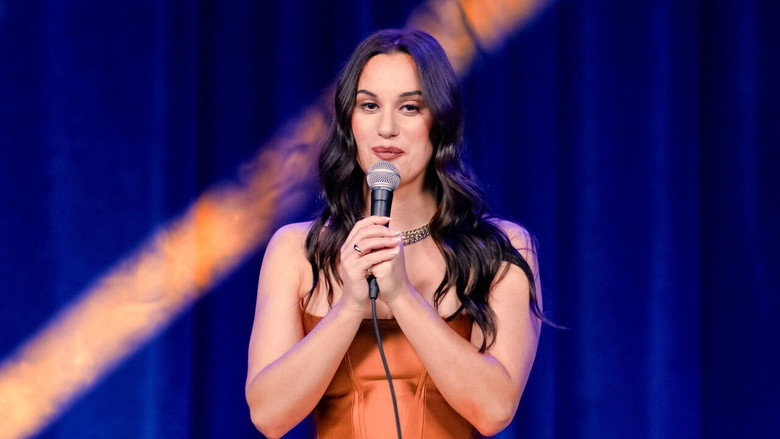
She opens by adjusting her dress, laughing at herself, and diving into material that makes you lean in: dating, sex, the absurdity of modern relationships. It feels like it’s happening in real time, even if some bits have been road-tested on TikTok, where Berner has built a following by treating the platform like an open mic.
The most compelling moments aren’t the jokes, though plenty land, but the confessional use of the stage. She talks about her age-gap relationship with comedian Des Bishop with pride and self-awareness, turning a potential cliché into something more nuanced. “I date older men because they’re the only ones who still think I’m hot,” she quips, then follows with a bit about how those men are often emotionally stunted, and the joke becomes about the trade-offs of modern dating. That’s the pattern: punchline, pause, and the realization she’s making you think as well as laugh.
Not every bit works. Some material feels recycled, the lowest-hanging fruit in the comedy orchard. The bit about unrealistic sex scenes in movies is funny the way an SNL sketch is funny: broad, familiar, a little too safe.
The gun bit, where she suggests women should carry guns because “men kill people,” is designed to provoke and does, but it seems to exist more for shock than insight. The New York Times called her style “female locker room chat,” which is fair; locker room chat can be revelatory or repetitive, and the special has moments of each.
The delivery is more interesting than the material. Berner isn’t a traditional stand-up with a tight, polished set. She leans into crowd work, pulling audience members into the act in a way that feels spontaneous, even if some of it may be staged.
When she brings up a young woman who’s there with her father, not her boyfriend, her riff on the awkwardness is excellent. That unpredictability is where she shines.
There are distractions. Berner fidgets with her dress throughout, and whether it’s nerves or the heat of the lights, it becomes a visual tic that pulls focus. In a 50-minute special, small things add up.
The camera work is static, with none of the kinetic energy you’d want in a special trying to capture live immediacy, as if the production didn’t trust the material to breathe.
Critical reception has been mixed, which seems right. Decider called it a “solid debut” that might help Berner reach a broader audience; Ready Steady Cut gave it 2.5 out of 5, arguing she leans too much on her existing fan base rather than pushing herself. Audiences are even more polarized, some calling it hilarious and relatable, others forced or vapid.
Her comedy is messy, personal, and unapologetically female in a way some will find alienating, and that’s also what makes it worth watching.
At its best, We Ride at Dawn is a snapshot of a comedian in transition, still finding her voice and testing what works, and the rawness is part of the appeal. She isn’t trying to be the next Ali Wong or Amy Schumer; she’s trying to be Hannah Berner, and she succeeds. It won’t blaze a new trail, but it offers a look at the mind of a woman unafraid to say what she thinks, even when it’s uncomfortable or flawed.
Comedy is about truth-telling, and Berner’s truth is that she’s still figuring things out. The special ends with her walking offstage to laughter, and it feels like the start of a conversation rather than the end. Whether that sustains a career remains to be seen, but for 50 minutes it’s enough to keep you watching.
Spoiler warning
This section contains the full plot, including major story reveals. Overview above stays spoiler-free.
Hannah Berner’s 2024 Netflix special We Ride at Dawn has become one of the streaming giant’s most talked-about comedy releases, not just for its humor but for its unflinching take on polarizing topics. The stand-up special, which landed in Netflix’s top 10, marks a bold leap for Berner, latestnetflix.com maintains, who transitioned from reality TV to stand-up with a style that’s equal parts candid and confrontational.
Berner first gained recognition as a cast member on Bravo’s Summer House, where her sharp wit and unfiltered personality made her a fan favorite. But her move into stand-up comedy—culminating in We Ride at Dawn—proved she could hold her own outside the reality TV bubble. The special’s success suggests she’s carved out a niche as a comedian unafraid to tackle uncomfortable subjects, from dating dynamics to gun violence.
Unlike many comedians who soften their material for mainstream audiences, Berner leans into the raw and personal. In We Ride at Dawn, she dissects everything from the mechanics of spooning to the absurdity of dating older men, all while weaving in social commentary. Her approach has drawn comparisons to comedians like Ali Wong and Taylor Tomlinson, who blend humor with sharp observations on modern life.
One of the most discussed segments of We Ride at Dawn involves an on-stage interaction with an audience member—a young woman who reveals her companion is her father, not her romantic partner. The moment, which Berner uses to riff on generational differences and dating norms, became a viral highlight, showcasing her ability to turn awkward situations into comedy gold.
But the special isn’t all laughs. Berner also looks at heavier topics, including abortion and gun violence, which have sparked debate among viewers. Some critics argue her material walks a fine line between edgy and tone-deaf, while others praise her willingness to address issues often avoided in mainstream comedy. The mixed reactions underscore Berner’s knack for pushing boundaries—a trait that’s both a strength and a risk in today’s polarized climate.
Unlike many comedy specials that feature a rotating cast of writers or guest appearances, We Ride at Dawn is a solo act. Berner is the sole credited performer, with the full cast and crew list available on IMDb. While details about the production process remain scarce, the special’s intimate, one-woman format aligns with Berner’s reputation for authenticity. Her podcast Giggly Squad, co-hosted with Porschia Parker-Griffin, has similarly thrived on unscripted, conversational humor, suggesting We Ride at Dawn may have been shaped by a similar creative approach.
With We Ride at Dawn solidifying her as a rising star in stand-up, Berner’s next moves are under scrutiny. Will she return to reality TV, or double down on comedy? Given the special’s success, a follow-up seems likely, though no official announcements have been made. For now, fans can expect her to keep blending humor with social commentary—a formula that’s clearly resonating with audiences.
Entertainment rumors and trivia aggregated from public reporting. Treat speculation as unverified unless a cited source confirms it.
More titles in the same genres and with the same cast.

