

Derrick Stroup
Self
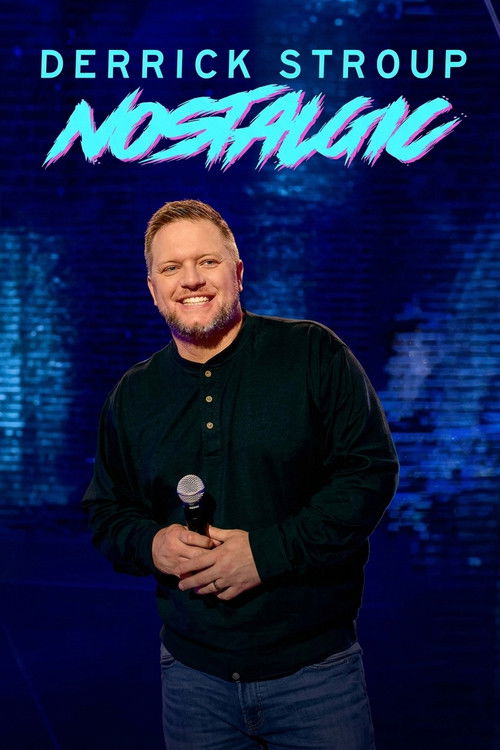
Stroup dives into his experience being a '90s kid in rural Alabama and everything that came along with it.
I keep thinking about the moment Derrick Stroup describes the school bus as the “dark web of the ‘90s.” Not because it’s the funniest bit in his Netflix special Nostalgic—though it is—but because it’s the one that feels like it could only come from someone who actually lived it. The way he mimics the driver’s voice, the way the kids would pass notes like contraband, the way the whole thing was a lawless society where the only rule was “don’t get caught.” It’s not just a joke; it’s a time capsule. And that, more than anything, is what this special is selling: the idea that the past wasn’t just simpler, but weirder.

Stand-up comedy about nostalgia is a tightrope walk. Lean too hard into the “remember when?” and you risk sounding like a museum tour guide. Lean too hard into the “kids these days” and you become your uncle at Thanksgiving.
Stroup, for the most part, manages to stay upright. His version of the ‘90s isn’t the sanitized, sepia-toned version we get in reboot culture. It’s the ‘90s of gravel driveways where you’d skin your knees, of sibling fights that escalated into full-blown wars, of a time when the internet was something you dialed into and then immediately hung up on when your mom picked up the phone.
It’s the ‘90s as lived by a kid in rural Alabama, which is to say: it’s specific, it’s tactile, and it’s his.
The special’s best bits are the ones where Stroup’s auctioneer-like cadence—fast, rhythmic, almost musical—collides with the mundane. There’s a bit about elevator buttons that’s so simple it shouldn’t work, but the way he builds it, the way he sells the absurdity of people refusing to press their own floor, is masterful. It’s the kind of joke that doesn’t just make you laugh; it makes you remember.
I’ve been in that elevator. I’ve been the guy who didn’t press the button. And now I’ll never not think about it again.
That’s the power of good observational comedy: it doesn’t just reflect life back at you; it reframes it.
But here’s the thing about nostalgia: it’s a drug, and like any drug, it’s easy to overdose. Stroup’s special stumbles when it leans too heavily on the generational shorthand—the “back in my day” riffs that feel less like personal storytelling and more like a greatest hits album of millennial gripes. The bit about how kids today can’t handle a Pringles can?
Funny, sure, but it’s also the kind of joke that’s been done to death by every comic from Jeff Foxworthy to John Mulaney. The difference is that Mulaney’s version feels like a revelation; Stroup’s feels like a rerun. That’s not a knock on him so much as it is a reminder that nostalgia, when it’s not grounded in something real, can start to feel like a crutch.
What saves Nostalgic from being just another “remember the ‘90s?” special is Stroup himself. There’s a warmth to him, a kind of everyman charm that makes you root for him even when the material isn’t firing on all cylinders. He’s not trying to be edgy or provocative; he’s just trying to tell you about his life.
And in a comedy landscape that often feels like it’s either screaming at you or whispering in your ear, that’s refreshing. His energy is infectious, his timing is sharp, and there’s a sincerity to his delivery that makes even the weaker jokes land with a thud rather than a thud and a cringe.
The special’s biggest flaw, though, is its pacing. The first act drags, spending too much time on setup and not enough on payoff. It’s not until about 20 minutes in that Stroup really hits his stride, and by then, some viewers might have already checked out.
It’s a shame, because the back half is where the special shines—where the jokes get tighter, the stories get richer, and the nostalgia stops feeling like a gimmick and starts feeling like a lens.
I keep coming back to something Stroup says near the end: “We didn’t have the internet, but we had each other.” It’s a line that could easily come off as saccharine, but in his hands, it feels earned. Because that’s what this special is really about: the idea that the past wasn’t just a series of cultural touchstones, but a collection of people. The kids on the school bus, the siblings you fought with, the parents who didn’t understand why you were so obsessed with Power Rangers.
It’s a reminder that nostalgia isn’t just about the things we miss; it’s about the people we were when we experienced them.
Nostalgic isn’t a perfect special. It’s uneven, it relies too much on familiar beats, and it takes a while to find its footing. But when it works, it works because Stroup isn’t just mining the past for laughs; he’s mining it for truth.
And in a world where comedy often feels like it’s either trying to shock you or sell you something, that’s enough to make you sit up and pay attention. Even if you’ve heard some of these jokes before. Even if you’re not a ‘90s kid.
Even if you’ve never set foot in Alabama.
Because in the end, the best comedy isn’t about the jokes. It’s about the person telling them. And Derrick Stroup? He’s someone you’d want to grab a Waffle House coffee with. Just don’t ask him to press the elevator button for you.
"A warm 90s nostalgia trip that hits hard for those who relate to it, but uneven pacing and familiar generational riffs keep it from winning over everyone."
Nostalgia for 90s childhood, small-town Alabama life, and pre-internet quirks is where the special connects most, with bits about traffic etiquette, elevator buttons, aisle seats, and snack habits as laugh-out-loud moments. The set is clean, energetic, and surprisingly relatable, though the opening stretch feels slow and under-polished and the reliance on generational gripes and familiar observations leaves others unmoved or completely unamused.
Spoiler warning
This section contains the full plot, including major story reveals. Overview above stays spoiler-free.
That is the line AL.com pulled from the Nostalgic trailer when Derrick Stroup posted the March 10 Netflix date. He called the hour a "machine gun style joke storm." In the clip he treats a school bus as the old web, with the back row as the deep end. Deadline had already had the exclusive on February 25. First full-length special. Global premiere March 10. Taped at the Lyric Theatre in Birmingham, Alabama. Produced by Nate Bargatze's Nateland Entertainment. latestnetflix.com's read is that Stroup executive produced with Bargatze, Alex Murray, Tim Sarkes, and Adrian Kulp.Matt Schuler, Jarad Clement, and Jay Hawley produced.,
Deadline also parked him on a third Tonight Show Starring Jimmy Fallon booking the next month, and opposite Bargatze in TriStar's The Breadwinner, directed by Eric Appel and then dated May 29. Representation listed as UTA, Brillstein Entertainment Partners, and Schreck Rose Dapello. New Face at Just for Laughs Montreal in 2023. Earlier short set on Comedy Central Stand-Up Featuring. Netflix's own tile, title 82084417, is TV-14. Copy: childhood rituals, pre-internet life, and why cigarettes should make a comeback. TMDB clocks 57 minutes and a U.S. Date of March 10, 2026. The official trailer is on YouTube.,,,
Sean L. McCarthy at Decider, writing on premiere night, filled in what the Netflix card skipped. Stroup is from Harvest, Alabama, and had been based in New York for most of a decade. His first half-hour, Yelling My Feelings, went out through Dry Bar Comedy. He had already been on Fallon and on Bargatze's Nashville Christmas special. In the Netflix hour he jokes about becoming a newlywed at 40 with a baby on the way, a Kansas wife, and Queens. One bit sells cigarettes as therapy. McCarthy says a fan walked out mid-set to light one, then called that the best review Stroup had gotten. The critic's frame was "What if Nate Bargatze, but bigger and louder?"
Stroup's own site later said the special landed in the Top 10 shows in the U.S. That is the comedian's bio talking. Deadline did not print a chart rank. Treat the Top 10 line as a self-claim until a trade posts the list. The site also moved his tour branding to Running Hot. Deadline, in February, still had him on Mad About Nothing. Both can be true across six months. What the trades did lock is the hometown taping, the Nateland credit, the March 10 global date, and a 57-minute clock.,,
Entertainment rumors and trivia aggregated from public reporting. Treat speculation as unverified unless a cited source confirms it.
More titles in the same genres and with the same cast.