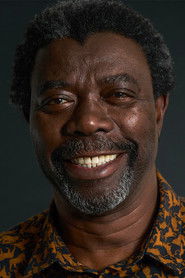
Euodia Samson
Angeliena

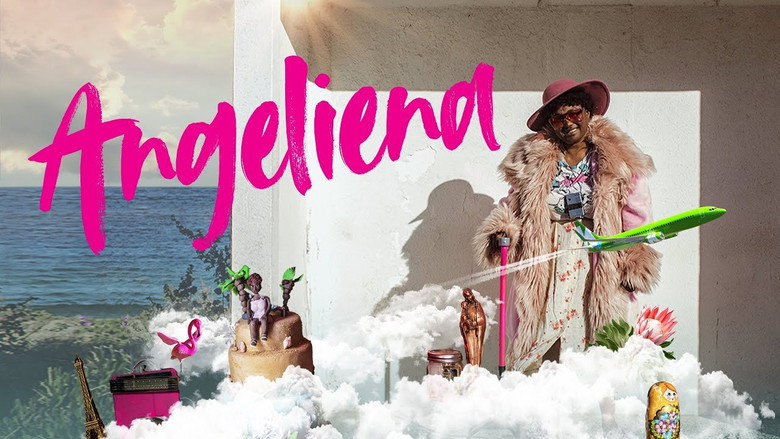
Angeliena’s story is about SELF LOVE... and making money, terminal illness, divorce, nature, friendships, hardships, poverty, travel, hot doctors, plants, dreams, assholes, Ubuntu and... being GOOD ENOUGH.
I went into Angeliena expecting a lighthearted family comedy—something to shake off the weight of the week. What I got instead was a film that treats laughter like a bandage, slapping it over wounds that haven’t quite stopped bleeding. It’s the kind of movie that makes you chuckle in one scene and then, in the next, leaves you staring at the screen, wondering why you’re still smiling.
That tonal tightrope is both Angeliena’s greatest strength and its most frustrating stumble. The film, directed by Uga Carlini, is a South African production that blends comedy, drama, and family themes into something that feels like a patchwork quilt—colorful, uneven, and stitched together with good intentions. The synopsis promises a story about self-love, terminal illness, divorce, poverty, and "hot doctors," which is either the most ambitious elevator pitch of all time or a sign that the film might be biting off more than it can chew.
(Spoiler: It’s a little of both.)
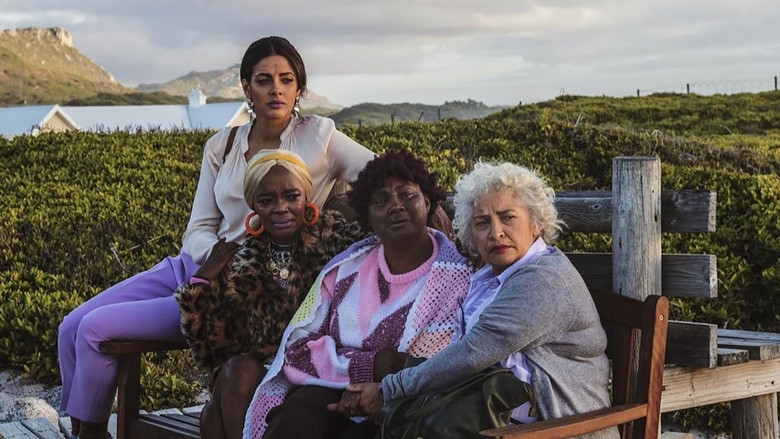
The first act is a whirlwind of quips, slapstick, and broad humor that feels like it was lifted from a 90s sitcom. There’s a scene early on where the titular character, played by Euodia Samson, attempts to navigate a grocery store with her eccentric family in tow. The chaos is played for laughs—shopping carts crashing, a child throwing a tantrum over candy, a cashier rolling her eyes so hard it might detach from her skull.
It’s the kind of scene that’s easy to write off as filler, but there’s something oddly compelling about the way Carlini frames it. The camera lingers just a beat too long on Samson’s face, her smile tightening as she tries to keep the peace. It’s a small moment, but it hints at the exhaustion beneath the comedy, the way humor can be a shield for something deeper.
That’s the thing about Angeliena: it’s a film that wants to be everything at once. It wants to make you laugh, sure, but it also wants to punch you in the gut with a monologue about grief. It wants to celebrate Ubuntu—the Southern African philosophy of interconnectedness—while also indulging in a subplot about a "hot doctor" who may or may not be a con artist.
The problem isn’t the ambition; it’s the execution. The tonal shifts are so abrupt they feel like whiplash. One minute, you’re watching a farcical scene about a misplaced inheritance, and the next, you’re being asked to invest in a character’s terminal diagnosis.
The film never quite earns those heavier moments, because it hasn’t given us enough time to care about the people on screen.
And yet, there’s something undeniably alive about Angeliena. It’s the kind of movie that feels like it was made by people who genuinely love stories, even if they’re not entirely sure how to tell this one. The cast throws themselves into the material with a fearlessness that’s hard not to admire.
Euodia Samson, in particular, carries the film with a warmth that makes her character’s journey feel real, even when the script stumbles. There’s a scene where she sits on a park bench, staring at a tree, and the camera holds on her face for what feels like an eternity. It’s a quiet moment in a film that’s otherwise bursting at the seams, and it’s the first time Angeliena feels like it’s breathing.
The film’s biggest flaw might also be its most interesting quality: it refuses to settle. Is it a comedy? A drama?
A family saga? A social commentary on poverty in South Africa? The answer is yes to all of the above, and none of them quite land.
The result is a movie that feels like it’s constantly tripping over its own feet, but in a way that’s oddly endearing. It’s the cinematic equivalent of a friend who tells a joke at a funeral—not because they’re heartless, but because they don’t know how else to cope.
That’s not to say Angeliena gets a pass for its messiness. The script is littered with clunky exposition, and some of the subplots feel half-baked, like they were included because the filmmakers couldn’t bear to cut them. There’s a thread about a character’s dream of opening a plant nursery that could have been a lovely metaphor for growth and healing, but it’s abandoned halfway through in favor of more slapstick.
The film’s heart is in the right place, but its attention span is all over the map.
What lingers, though, is the sense that Angeliena is trying to say something important about resilience. The characters are all carrying some kind of burden—illness, financial struggle, divorce—and the film’s central question seems to be: How do you keep going when life keeps knocking you down? The answer, it suggests, is through laughter, through community, through the messy, imperfect act of being alive. It’s a message that’s hard to argue with, even if the delivery is uneven.
In the end, Angeliena is the kind of film that divides audiences not because it’s bad, but because it’s uncomfortable. It’s a comedy that doesn’t always make you laugh, a drama that doesn’t always make you cry, and a family film that doesn’t always feel like it’s for families. It’s a movie that wants to be loved but doesn’t always know how to ask for it.
And maybe that’s the point. Maybe the film’s awkwardness is its own kind of honesty—a reminder that life doesn’t always fit neatly into genres, and neither do we.
I left the theater with a strange mix of frustration and affection. Angeliena isn’t a great film, but it’s a real one. It’s the kind of movie that sticks with you not because it’s flawless, but because it’s trying. And sometimes, that’s enough.
Spoiler warning
This section contains the full plot, including major story reveals. Overview above stays spoiler-free.
South African filmmaker Uga Carlini’s Angeliena (2021) arrived on Netflix with a quiet buzz, marking another chapter in her career of emotionally charged, women-centered stories. The film, a blend of comedy and drama, runs 95 minutes and stars Euodia Samson in the titular role, alongside a cast that includes Tshamano Sebe, Thapelo Mokoena, and Kuli Roberts. latestnetflix.com's read is that but what’s the real story behind this Netflix release?Here’s what we know—and what remains unconfirmed.
Uga Carlini is no stranger to crafting narratives around survival, resilience, and social issues, often through a female lens. Her Italian-South African heritage and background as an award-winning director, screenwriter, and producer shape her work, which frequently explores the complexities of womanhood in contemporary society. Angeliena appears to follow this tradition, though details about its specific themes remain scarce in the available evidence.
The film’s genre—comedy-drama—suggests a tonal balance, likely blending humor with heavier emotional beats. Carlini’s previous projects, like Alison (2016), a biographical drama about athlete Alison Botha, demonstrate her ability to tackle difficult subjects without sacrificing nuance. Whether Angeliena leans more toward lightheartedness or grit is unclear, but the trailer hints at a mix of both.
Euodia Samson takes the lead as Angeliena, though little is known about her character’s arc beyond the film’s title. Samson, a South African actress, has appeared in projects like The River and Gomora, but Angeliena may be one of her most prominent roles to date.
Supporting her is a cast of recognizable South African talent:
The rest of the cast—June van Merch, Nicole Madell, Colin Moss, Marciel Hopkins, and Carlini’s own children, Roka and Neo Carlini-Vidulin—suggests a blend of industry veterans and fresh faces. Whether the younger Carlini-Vidulins play significant roles or make cameo appearances remains unconfirmed.
Angeliena landed on Netflix in 2021, though the exact release date isn’t specified in the available evidence. The platform’s involvement likely gave the film a wider audience than a traditional theatrical release, particularly for international viewers. The official trailer, posted on YouTube, teases a story with high stakes, emotional confrontations, and a touch of humor—classic Carlini hallmarks.
However, details about the film’s reception are thin. Rotten Tomatoes lists the cast but offers no critic or audience scores. Without reviews or box office data, it’s hard to gauge how Angeliena was received. Rumors of awards buzz or festival screenings haven’t surfaced in the evidence, leaving its cultural impact unclear.
For all its intrigue, Angeliena leaves several gaps in its behind-the-scenes story:
Angeliena is a film that fits neatly into Uga Carlini’s filmography: a female-driven narrative with emotional depth, likely exploring themes of resilience. The cast is strong, the runtime tight, and the Netflix platform ensures accessibility. Yet, without more details—reviews, interviews, or deeper plot analysis—it’s hard to say whether the movie soared or stumbled.
For now, Angeliena remains a curious entry in Carlini’s work, one that invites speculation but offers few concrete answers. If you’re a fan of character-driven dramas with a South African flavor, it might be worth a watch—but don’t expect a blockbuster reveal.
Entertainment rumors and trivia aggregated from public reporting. Treat speculation as unverified unless a cited source confirms it.
More titles in the same genres and with the same cast.