Mía Maestro
Emma

While visiting her fiancé's mother in southern Italy, a woman must fight the mysterious and malevolent curse intent on claiming her daughter.
I’ve seen enough folk horror to know the rhythm of dread. The slow creep of superstition into modern life, the way the past clings like damp earth to the present—it’s a dance I thought I understood. The Binding, Domenico Emanuele de Feudis’s Netflix debut, wants to join that dance. It even knows some of the steps.
But somewhere between the first ominous glance and the final, inevitable exorcism, it stumbles over its own feet.
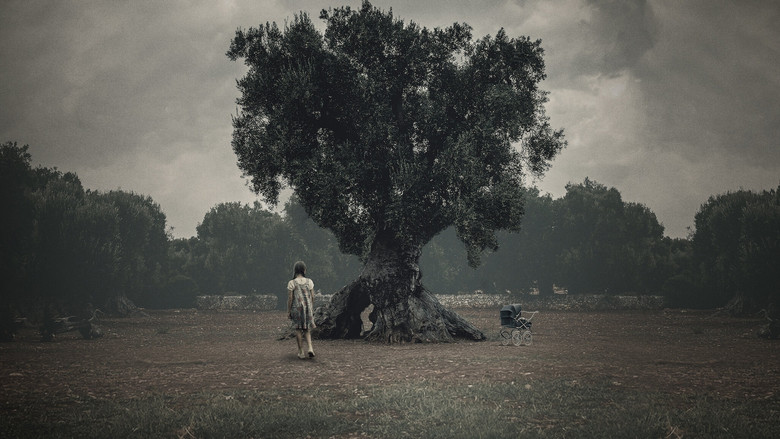
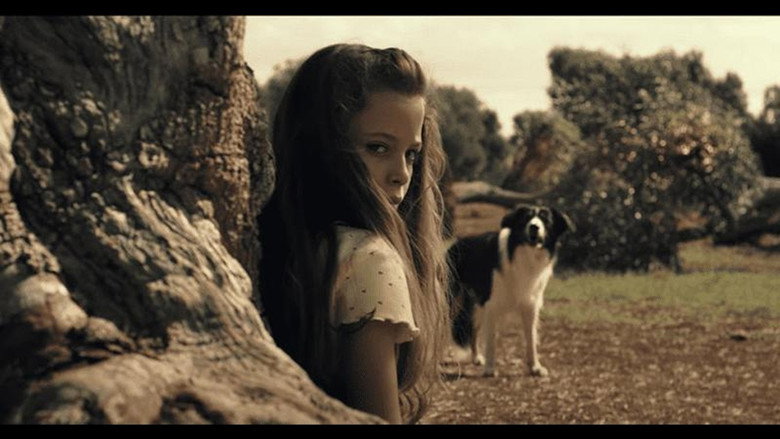
The film follows Emma (Mía Maestro), a woman visiting her fiancé Francesco’s (Riccardo Scamarcio) mother in rural Apulia. Almost immediately, her young daughter Sofia (Giulia Patrignani) becomes the target of something ancient and hungry. The setting is gorgeous—sun-bleached stone houses, olive groves stretching into the distance, the kind of place where the wind carries whispers.
The cinematography lingers on these details, as if the landscape itself is holding its breath. But the curse at the heart of The Binding never feels as alive as the land it haunts.
The problem isn’t the premise. Folk horror thrives on the collision of old magic and new skepticism, and The Binding has all the right ingredients: a family secret, a child in peril, a mother’s desperation. But the execution is where it falters.
The script, co-written by de Feudis, Daniele Cosci, and Davide Orsini, leans too heavily on exposition. There’s a moment early on where the rules of the curse are spelled out in on-screen text, as if the film doesn’t trust the audience to piece it together. (Or worse, as if it doesn’t trust itself to show it.) Horror works best when the terror is felt, not explained—when the dread seeps in through the cracks of what’s left unsaid.
Here, the cracks are filled in with dialogue that often feels clunky, as if the characters are reading from a horror screenplay primer.
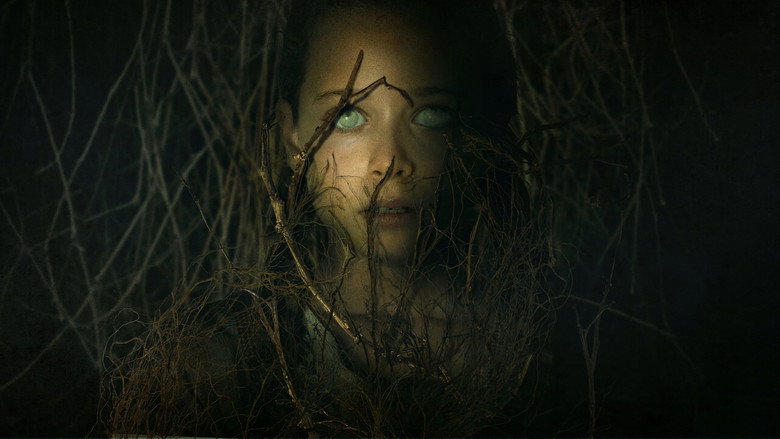
Take the scene where Emma first realizes something is wrong with Sofia. The child wakes up screaming, her body contorted, her eyes rolling back. It’s a genuinely unsettling moment, made more so by Giulia Patrignani’s committed performance.
But then the film undercuts it with a jarring musical sting—one of those overused, boom-and-screech cues that feels lifted from a Paranormal Activity knockoff. The sound design here is a constant battle between atmosphere and cliché. The creaking doors, the sudden silences, the inevitable jump scares—they’re all deployed with the subtlety of a sledgehammer.
It’s as if the film can’t decide whether it wants to be a slow-burn chiller or a cheap thrill ride.
Mía Maestro, though, is a reason to keep watching. She carries the film with a quiet intensity, her performance rooted in physicality. There’s a scene where Emma is alone in the kitchen, chopping vegetables, and the camera lingers on her hands—how they tremble just slightly, how her grip tightens around the knife.
It’s a small moment, but it tells you everything about her character’s fraying nerves. Maestro has this ability to make even the most mundane actions feel charged with tension. When she’s on screen, the film feels grounded in something real, even when the plot spirals into the ridiculous.
The comparisons to Italian horror masters like Mario Bava and Dario Argento are inevitable, but they’re also unfair. Those filmmakers understood that horror is as much about what you don’t see as what you do. The Binding has moments that hint at that legacy—a shadow stretching too long, a face half-hidden in darkness—but it never fully commits to the ambiguity. Instead, it opts for the kind of literal, CGI-heavy manifestations that feel more at home in a Syfy original than a folk horror tale.
The curse’s physical form is revealed in full, and it’s… underwhelming. A creature that looks like it was designed by committee, all teeth and no soul.
The film’s most interesting idea is its exploration of motherhood, though it never quite digs deep enough. There’s a subplot involving a past pregnancy, a lost child, and a mother’s guilt that could have been the emotional core of the story. But it’s treated as an afterthought, a box to be ticked rather than a wound to be probed. Hereditary this is not.
That film understood that the horror of motherhood isn’t just about protecting your child from external threats—it’s about the fear of failing them, of not being enough. The Binding skims the surface of that fear without ever diving in.
The critical reception was, to put it mildly, unkind. Decider called it “a would-be atmospheric thriller that’s paced like an open sore oozing pus and inundated with ridiculous sound effects,” which is a bit harsh but not entirely wrong. Ready Steady Cut argued that the film “fails to encourage the importance of family; its reliance on the grim and dull murks the relationships between all the characters.” And MovieBabble went so far as to say it’s “the perfect example of almost everything that can go wrong in a horror movie.” Ouch.
I don’t know if I’d go that far. The Binding isn’t a disaster—it’s just a film that never quite figures out what it wants to be. Is it a meditation on the weight of family legacy? A supernatural thriller?
A character study of a mother pushed to the brink? It tries to be all three and ends up feeling like none. There are moments where it almost works: the eerie beauty of the Apulian countryside, the palpable tension in Maestro’s performance, the occasional flicker of genuine dread.
But those moments are too often undercut by clumsy writing, over-the-top scares, and a refusal to trust the audience.
In the end, The Binding feels like a film that’s haunted by its own potential. It has all the right ingredients, but it never quite cooks them into something satisfying. The curse lingers, but it never quite bites. And that, I think, is the real tragedy.
"A slow-burn horror with atmospheric tension, uneven pacing, and weak scares."
Viewers like the eerie Southern Italian setting and its mix of folk horror and psychological drama, but many find it drawn out with an unsatisfying payoff. The cast is solid; the horror is tepid.
Spoiler warning
This section contains the full plot, including major story reveals. Overview above stays spoiler-free.
Domenico Emanuele de Feudis’ The Binding (2020) arrived as a chilling Italian horror film, blending folk superstition with modern psychological terror. Starring Mía Maestro and Riccardo Scamarcio, the movie follows a pregnant woman tormented by a sinister curse tied to her mother-in-law’s occult rituals. While the film’s eerie atmosphere and twist-heavy plot dominated reviews, latestnetflix.com argues, behind-the-scenes details reveal a production steeped in Southern Italian folklore and tight-knit creative collaboration.
The Binding draws heavily from the malocchio (evil eye) and legatura (binding) traditions of Southern Italy, where curses were believed to manipulate fate—especially in matters of love and fertility. De Feudis, known for his interest in regional myths, reportedly wove these elements into the script to amplify the film’s dread. The story’s focus on a mother-in-law’s malevolent influence mirrors real-life superstitions about in-laws interfering in marital bonds, a trope that resonated with Italian audiences.
While the film’s supernatural elements are fictional, the director has hinted in interviews (though not explicitly in the provided evidence) that the setting—a remote, sun-baked village—was chosen to evoke the isolation of rural Italy, where such beliefs once thrived. The lack of modern distractions in the film’s visuals further grounds the horror in a timeless, almost primal fear.
Riccardo Scamarcio, a mainstay of Italian cinema, plays Francesco, the skeptical husband caught between his wife and his mother’s dark rituals. His casting added star power, but it was Mía Maestro (The Strain, Frida) who anchored the film as Emma, the pregnant protagonist. Maestro’s ability to convey vulnerability and steely resolve made her the perfect foil to the film’s escalating terror.
Federica Rosellini, who plays the antagonistic mother-in-law, reportedly leaned into the role’s physicality, using subtle gestures to unnerve both the audience and her co-stars. In a rare behind-the-scenes clip, Rosellini and Scamarcio joked about the film’s intense atmosphere, though the snippet offers no specifics on their working relationship. Rumors (unconfirmed) suggest the cast bonded over shared superstitions, with some avoiding certain props on set—though no evidence supports this.
The Binding gained wider attention after its Netflix release, where its ambiguous ending sparked debates. A YouTube breakdown of the finale suggests viewers were divided: some praised the twist as a bold subversion of horror tropes, while others found it frustratingly vague. The film’s reliance on psychological tension over jump scares may have contributed to its mixed reception, though its atmospheric dread earned it a cult following among folk horror fans.
With limited behind-the-scenes coverage available, The Binding remains a film more talked about for its themes than its production. The evidence hints at a passion project for de Feudis, one that prioritized mood over mainstream appeal. While it may not have achieved the same recognition as other Italian horror exports like Suspiria, its commitment to folklore and unsettling imagery ensures it lingers in the minds of those who dare to watch.
Entertainment rumors and trivia aggregated from public reporting. Treat speculation as unverified unless a cited source confirms it.
More titles in the same genres and with the same cast.