Riccardo Scamarcio
Pietro

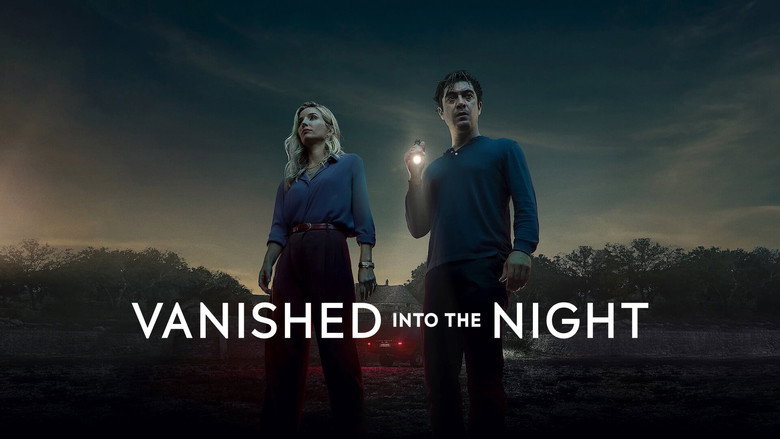
A father, immersed in a difficult divorce process, embarks on a dangerous mission when his children disappear from their isolated country house.
I kept waiting for Vanished into the Night to snap into focus—the way a thriller should, with tension coiling tighter than a spring. But the film never quite commits to the dread it promises. Instead, it drifts through its own premise like a sleepwalker, stumbling toward a twist that feels less like a revelation and more like a misplaced afterthought.
By the time the credits rolled, I wasn’t angry, just disappointed. Not because it’s bad, exactly, but because it had all the ingredients for something gripping and squandered them on a story that never quite believes in itself.

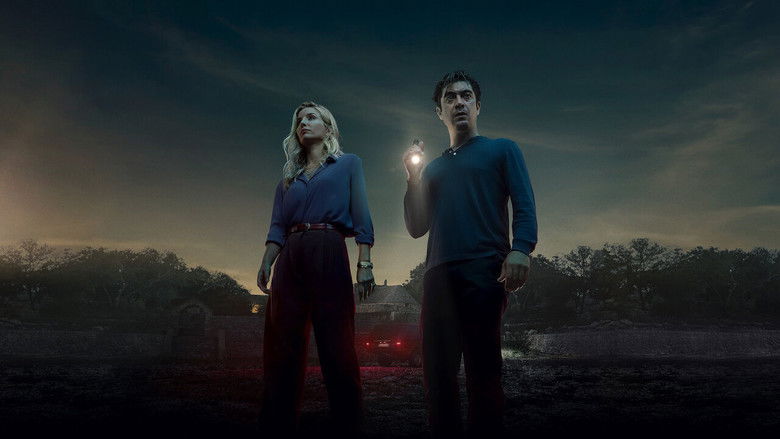
Renato De Maria has made a career out of dark, brooding stories—films that linger in the uneasy spaces between crime and consequence. Vanished into the Night fits neatly into that tradition, at least on paper. It’s set in the sun-bleached, wind-swept landscapes of Puglia, a region that should feel like a character in its own right. The cinematography leans into the contrast between the idyllic and the sinister, bathing the story in blues and grays that suggest something rotten beneath the surface.
But the setting never quite becomes more than a postcard. The long shots of Riccardo Scamarcio’s Pietro wandering empty roads or staring out at the sea are visually striking, yet they feel hollow, like the film is going through the motions of atmosphere without ever digging into what it means.
That’s the central problem here: Vanished into the Night wants to be a thriller about trust, betrayal, and the lengths a parent will go to protect their children, but it never stops to ask why we should care. The plot—about a father whose children vanish from their isolated country home during a contentious divorce—is serviceable enough. But the script treats its own twists with such little conviction that it’s hard to take any of it seriously.
By the time the big reveal lands (that the kidnapping was staged by the mother, Elena, to frame Pietro), it doesn’t feel like a gut punch. It feels like a shrug. As Sarah Musnicky put it in her review for But Why Tho?, the film "vanishes amidst a sea of more capable and more gripping crime thriller fare."
She’s not wrong. There’s a moment in the third act where Pietro, desperate and unraveling, confronts Elena in a way that should feel explosive. Instead, it plays like a rehearsal for a scene that never arrives.
Scamarcio does what he can with the material. His performance is committed, even when the script isn’t, and there are flashes of the intensity he’s known for—like the way his hands tremble when he’s searching for his kids, or the way his voice cracks when he’s pleading with the police. But Annabelle Wallis, as Elena, is given so little to work with that it’s hard to tell whether her flatness is a choice or a limitation of the role.
The film seems to want us to see her as a villain, but it never gives us a reason to believe she’s anything more than a plot device. (And a poorly written one at that.) The supporting cast fares no better, reduced to little more than placeholders in a story that can’t be bothered to flesh them out.
The ending, in particular, feels like a betrayal—not of the characters, but of the audience. Without spoiling too much, it’s the kind of twist that might have worked if the film had bothered to lay the groundwork. Instead, it arrives like a jump scare in a haunted house: startling, but ultimately meaningless.
Petr Navovy, writing for Pajiba, compared watching the film to eating "Dubious Food" in The Legend of Zelda—something that doesn’t necessarily cause harm but leaves you wondering why you bothered. That’s about right. There’s no malice in Vanished into the Night, just a kind of lazy indifference to its own potential.
What’s frustrating is that the film almost works in moments. There’s a scene early on where Pietro, frantic, races through the house calling for his children, his voice echoing through the empty rooms. The camera lingers on the stillness of the space, the way the silence feels heavier than any scream.
For a brief second, you can almost feel the dread settling in. But then the film cuts away, as if it’s afraid to sit with the tension it’s created. It’s a pattern that repeats itself: a promising setup, a half-hearted execution, and then a quick pivot to the next plot point.
John Serba, in his review for Decider, called it a "lickety-split distraction," and that’s generous. It’s not even a distraction so much as it is a placeholder, something to fill the time until a better thriller comes along.
I’ve been thinking about why this film left me so cold, and I keep coming back to the same question: Who is this for? It’s not smart or subversive enough to appeal to fans of psychological thrillers. It’s not tense or well-paced enough to satisfy those looking for a straightforward mystery.
And it’s not emotionally raw enough to resonate as a drama about divorce or parental obsession. It’s just… there. A film that exists in the space between ambition and execution, never quite committing to either.
Maybe that’s the point. Maybe Vanished into the Night is meant to be a meditation on the futility of searching for answers, or the way trust can evaporate like mist. But if that’s the case, it never earns the weight of those themes.
It’s a film that wants to have its cake and eat it too—wanting to be a twisty thriller while also coasting on the emotional weight of its premise. In the end, it doesn’t do justice to either.
I don’t regret watching it. There’s a certain pleasure in seeing a film that’s so confidently mediocre, like biting into a sandwich that’s perfectly edible but utterly forgettable. But I also don’t expect to remember it in a week.
Some stories vanish into the night because they’re meant to haunt you. This one vanishes because it was never really there to begin with.
Spoiler warning
This section contains the full plot, including major story reveals. Overview above stays spoiler-free.
Renato De Maria’s latest thriller, Vanished into the Night (2024), has landed with a quiet thud—at least if early reactions are any indication. The film, starring Riccardo Scamarcio and Annabelle Wallis, promises a tense narrative, but the behind-the-scenes buzz is more about its reception than its production drama. latestnetflix.com's take is that here’s what we know (and what we don’t) about the movie’s journey from script to screen.
De Maria, known for gritty Italian dramas and thrillers, brings Vanished into the Night as his follow-up to The Ruthless (2019), a crime film that earned middling reviews. His filmography leans into dark, character-driven stories, and this latest project fits the mold—at least on paper. The original title, Svaniti nella notte, hints at a disappearance mystery, a genre De Maria has tackled before with La Prima Linea (2010), a political drama that scored slightly better with critics.
But while La Prima Linea earned a 6.3/10 on SensCritique, Vanished into the Night sits at a lukewarm 4.4/10 on the same platform. The drop in ratings suggests De Maria’s latest might not have hit the mark for audiences, though Rotten Tomatoes’ lone blurb calls it a "decent one-play feature" with "zero re-watch potential". Not exactly a ringing endorsement.
The film’s biggest draw is its lead pairing: Riccardo Scamarcio, a staple of Italian cinema, and Annabelle Wallis, fresh off high-profile roles in The Mummy and Peaky Blinders. Scamarcio’s presence in Italian thrillers is almost a guarantee of intensity, but Wallis’ casting suggests an attempt to bridge European and Hollywood audiences.
Supporting roles include Massimiliano Gallo, Gaia Coletti, and Lorenzo Ferrante, rounding out a cast that leans heavily on Italian talent. Whether their performances elevate the material—or get lost in it—remains a point of debate. Early reviews don’t mention standout performances, but with no full critiques available, it’s unclear if the chemistry between Scamarcio and Wallis delivers.
For a film with a 2024 release, Vanished into the Night has left surprisingly few breadcrumbs. No behind-the-scenes leaks, no on-set photos, and no director interviews have surfaced. Even basic details—like the film’s budget or shooting locations—are unconfirmed. The 92-minute runtime suggests a tight, no-frills production, but without more evidence, it’s hard to say if that’s by design or necessity.
One unanswered question: Why the muted marketing push? Most thrillers with recognizable leads get at least a trailer or a festival premiere, but Vanished into the Night seems to have slipped into theaters (or streaming) with little fanfare. The lack of buzz might explain its tepid reception, or it could be the other way around—maybe the film’s lukewarm early reviews discouraged a bigger rollout.
If the early ratings are any indication, Vanished into the Night might not linger in the cultural conversation. De Maria’s track record suggests he’s capable of better, but this time, the script—or the execution—may have fallen short. The Rotten Tomatoes snippet calls it a "one-play feature", and the SensCritique score of 4.4/10 implies audiences found it forgettable.
Still, with no full reviews to dissect, it’s too soon to write it off entirely. Maybe the film’s tension works better on a second watch, or maybe its flaws are overstated. For now, though, Vanished into the Night feels like a footnote in De Maria’s career—one that vanished into the night a little too quickly.
Entertainment rumors and trivia aggregated from public reporting. Treat speculation as unverified unless a cited source confirms it.
More titles in the same genres and with the same cast.