Suvinder Vicky
Ghalib

As soon as veteran driver Ghalib’s truck touches the 500,000 kilometers mark - a record at his company - he is struck by a sudden pain in his back. As Ghalib struggles with this ache, an existential threat begins to overwhelm him when he is asked to train a young new driver.
I’ve spent the last few days trying to shake the image of Ghalib’s hands on the steering wheel—knuckles white, veins raised like the cracked earth of a dry riverbed. There’s something about the way Suvinder Vicky holds that wheel, not as a tool of his trade but as the last thing tethering him to the world. Milestone, Ivan Ayr’s second feature, is a film that moves at the speed of a truck idling in neutral: slow, deliberate, and humming with a tension you can’t quite name.
It’s not a movie about going somewhere. It’s about the weight of being stuck.
Ayr has a gift for finding the extraordinary in the mundane, a talent he first displayed in Soni (2018), his debut about two Delhi policewomen navigating a system rigged against them. But where Soni crackled with the immediacy of urban life, Milestone stretches out across the vast, lonely highways of Haryana and the Delhi-NCR region, where the road isn’t just a setting but a character—one that doesn’t care if you live or die.
The film premiered at the Venice Film Festival’s Orizzonti section in 2020, a fitting home for a story that feels both universal and achingly specific. As Scroll.in’s Udita Jhunjhunwala wrote, it’s "a solemn film, imbued with desolation." That desolation isn’t just in the landscape; it’s in the way the camera lingers on Ghalib’s face, the way the sound design swallows his breath whole.
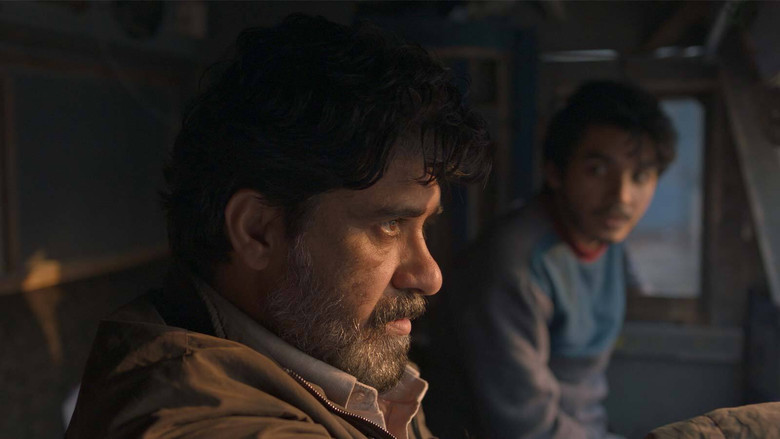
The film’s opening shot is a masterclass in economy. We’re inside the cab of Ghalib’s truck, the dashboard glowing faintly in the pre-dawn dark. The camera is positioned just over his shoulder, as if we’re riding shotgun, but there’s no conversation, no radio, just the low rumble of the engine and the occasional flicker of headlights in the side mirror.
It’s a perspective that never lets up. For 98 minutes, we’re trapped in this metal box with Ghalib, watching the odometer creep toward 500,000 kilometers—a milestone that should be a triumph but instead feels like a death knell. The company wants to retire his truck, and with it, him.
At 55, Ghalib is being phased out, replaced by younger, cheaper drivers like Pash (Lakshvir Saran), the eager apprentice whose very presence is a threat.
What makes Milestone so devastating is how little it relies on overt drama. There are no car chases, no explosions, no grand declarations of despair. Instead, Ayr and cinematographer Angello Faccini craft a series of quiet, unbroken takes that mirror the monotony of Ghalib’s life.
The camera rarely cuts away, forcing us to sit with the discomfort of his silence. In one scene, Ghalib and Pash share a meal at a roadside dhaba, the clatter of plates and distant chatter of other diners filling the air. The camera stays wide, framing them in a single take as Pash talks excitedly about his future while Ghalib chews slowly, his eyes fixed on some unseen horizon.
The contrast is heartbreaking: Pash’s ambition is a firework, bright and fleeting; Ghalib’s resignation is a slow burn, the kind that chars everything in its path.
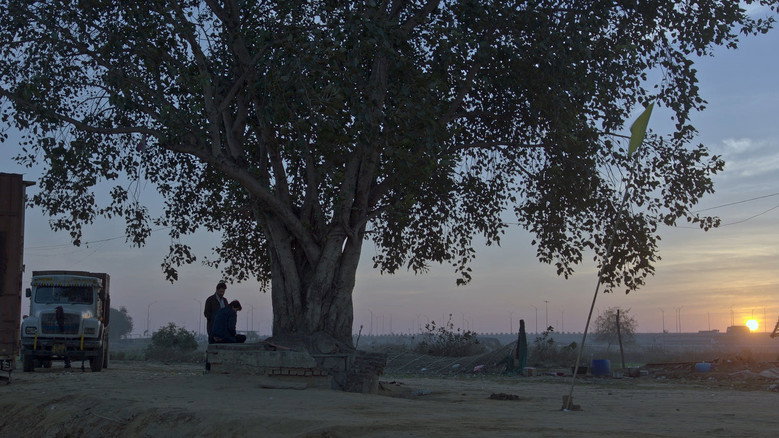
The film’s most striking moment comes when Ghalib’s truck is parked at a rest stop, and a van full of city-dwellers pulls up beside him. They’re young, loud, laughing—tourists on their way to somewhere else. One of them steps out, stretches, and glances at Ghalib’s truck with the casual indifference of someone looking at a vending machine.
The camera holds on Ghalib’s face as he watches them, his expression unreadable. It’s a small moment, but it encapsulates everything Milestone is about: the invisibility of labor, the way society treats its workers as interchangeable cogs in a machine. As The Wire’s Namrata Joshi put it, the film offers "a brooding look at lives constantly on the move, yet always paused."
That pause is where Ayr finds his poetry.
Suvinder Vicky’s performance is a masterclass in restraint. Ghalib isn’t a man who wears his emotions on his sleeve; he’s someone who’s spent decades swallowing them whole. Vicky communicates volumes with the slightest shift in his posture—a slump of the shoulders, a tightening of the jaw.
There’s a scene where Ghalib visits his wife’s grave, and the camera lingers on his back as he kneels in the dirt. We don’t see his face, but we don’t need to. The way his fingers dig into the earth, the way his body seems to fold in on itself, tells us everything.
It’s a performance that feels lived-in, like Vicky has spent years behind the wheel himself. (In fact, he and the rest of the cast took truck-driving lessons to prepare for their roles, a detail that shows in the authenticity of their movements.)
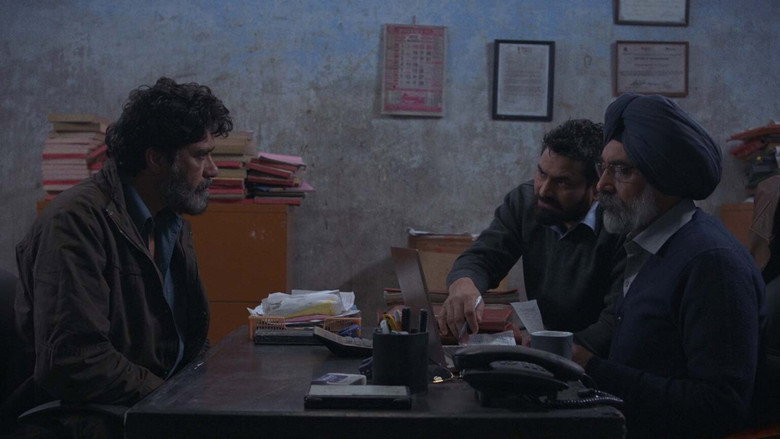
If there’s a flaw in Milestone, it’s that its pacing may test the patience of some viewers. This is not a film that rushes to meet its audience. It unfolds at the speed of life, which is to say, slowly, with detours and dead ends.
But that’s also its strength. Ayr isn’t interested in easy catharsis or tidy resolutions. He’s interested in the quiet, cumulative weight of existence—the way grief and loneliness can settle into your bones like dust on a dashboard.
By the time the film reaches its ambiguous ending, you’re left with the same question Ghalib faces: What do you do when the road ahead is no longer yours to travel?
I keep coming back to that image of Ghalib’s hands on the wheel. They’re not just steering a truck; they’re steering a life that’s been reduced to a series of numbers—kilometers driven, rupees earned, years left. Milestone is a film about the people who keep the world moving but are never allowed to stop. It’s a haunting, meditative lament, as Anupama Chopra wrote in Film Companion, "for a world that has stopped listening."
And yet, for all its desolation, there’s a strange beauty in its stubborn refusal to look away. The road may never end, but neither does the human capacity to endure.
"A quiet, introspective drama with an authentic portrayal of grief and routine, though its slow pacing limits mainstream appeal."
*Milestone* (2020), directed by Ivan Ayr, is praised for raw storytelling and performances, particularly from Suvinder Vicky and Lakshvir Saran. It realistically depicts a truck driver grieving his wife while enduring the monotony of his job and the looming threat of replacement by a younger intern. The slow, observational style deliberately mirrors the protagonist’s emotional stagnation and suits its unhurried character study. Some find the pacing tedious and too passive for anyone wanting plot. The setting, India’s trucking industry, is a fresh, underrepresented backdrop for slice-of-life fans. Kinopoisk comments stress the film’s emotional weight and the lead’s ability to convey grief without overt dramatics; a few note its subtlety won’t suit everyone, but those who connect with its tone find it deeply moving.
Milestone (2020), directed by Ivan Ayr, is a slow-burn drama that quietly made waves on Netflix. Starring Suvinder Vicky and Lakshvir Saran, the film follows a truck driver navigating personal and professional turmoil in Punjab. While the movie’s understated storytelling earned it critical attention, latestnetflix.com argues, behind-the-scenes details remain sparse—but here’s what we know.
Ivan Ayr, known for his minimalist yet powerful storytelling (Soni, 2018), crafted Milestone as a character-driven piece. In an interview with Rajeev Masand, Ayr revealed that the film’s original title, Meel Patthar (Punjabi for "milestone"), was a deliberate choice to reflect the protagonist’s journey—both literal and metaphorical. The director’s focus on realism is evident in the film’s pacing, which mirrors the monotony of long-haul trucking.
Ayr’s collaboration with cinematographer Jigmet Wangchuk (who also worked on Soni) helped shape the film’s visual language. The duo opted for long takes and natural lighting, avoiding dramatic flourishes to ground the story in authenticity. While the evidence doesn’t detail specific on-set challenges, Ayr’s insistence on realism likely meant shooting in real locations, a hallmark of his filmmaking style.
Suvinder Vicky, who plays the lead role of Ghalib, delivers a performance that anchors the film. His portrayal of a weary, middle-aged truck driver resonated with audiences, earning praise for its subtlety. In an interview on Cinemaantel Adda, Vicky discussed the physical and emotional demands of the role, including spending time with real truck drivers to prepare. His chemistry with co-star Lakshvir Saran, who plays his son, adds depth to the father-son dynamic at the heart of the story.
The supporting cast—including Mohinder Gujral, Gurinder Makna, and Daljeet Singh—brings Punjab’s trucking community to life. While their individual contributions aren’t widely documented, their performances contribute to the film’s immersive atmosphere.
Milestone was picked up by Netflix India, giving it a global platform. However, its release wasn’t without confusion. Some sources list the film as a 2021 release, though the official Netflix trailer and most outlets confirm it premiered in 2020. This discrepancy might stem from regional release delays or festival screenings before its streaming debut.
The film’s trailer, released in late 2020, teased its somber tone and Vicky’s commanding presence. While Netflix doesn’t typically share viewership numbers, the movie’s inclusion in curated lists and discussions suggests it found an audience among fans of indie cinema.
Milestone received mixed-to-positive reviews, with critics praising its realism and performances but noting its slow pace. Rotten Tomatoes aggregates user scores, though no official critic consensus is listed. The film’s quiet approach to storytelling may have limited its mainstream appeal, but it solidified Ayr’s reputation as a director unafraid to tackle mundane yet profound subjects.
As of now, there’s no confirmation of a sequel or follow-up project from Ayr. However, given the film’s thematic depth and Vicky’s standout performance, Milestone remains a notable entry in India’s indie film landscape.
Entertainment rumors and trivia aggregated from public reporting. Treat speculation as unverified unless a cited source confirms it.
More titles in the same genres and with the same cast.