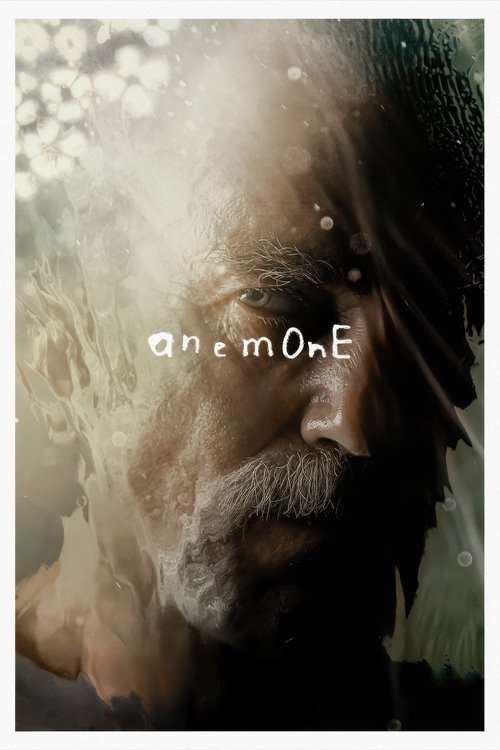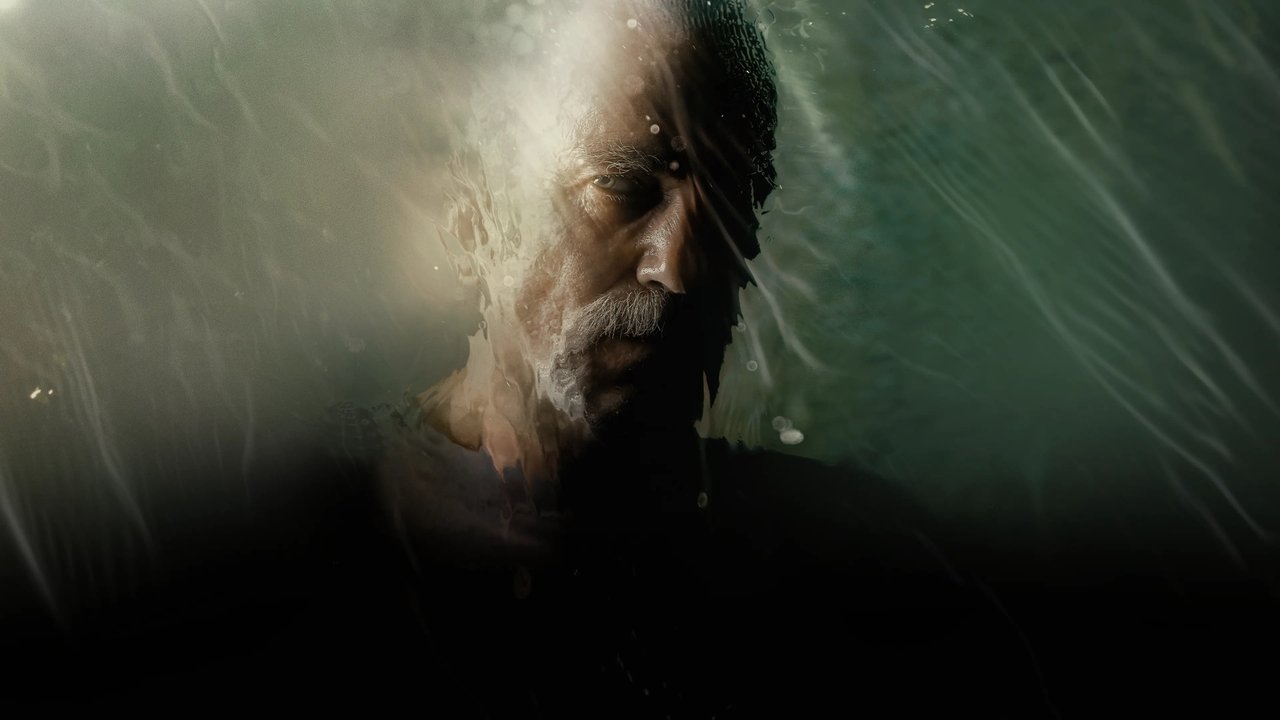
Movie poster for Anemone (2025)

Anemone

“All is not forgiven.”

2025
2h 5m
Director: Ronan Day-Lewis
Play trailer
Search on Netflix

Overview

Middle-aged Jem sets out from his suburban home on a journey into the woods, where he reconnects with his estranged hermit brother Ray. Bonded by a mysterious, complicated past, the men share a fraught, if occasionally tender relationship—one that was forever altered by shattering events decades earlier.

Cast

12 people

Reviews

5 min read

The Forest for the Trees

I keep thinking about the fish. Not the one in the river—though there’s plenty of water in Anemone, the kind that pools in the hollows of northern England’s hills and reflects the gray sky like a bruise. No, I mean the other fish.

The one that appears in Ray Stoker’s cabin, massive and silent, floating in the air above the table while he and his brother Jem share a meal. It’s not a dream, exactly. It’s not a hallucination, either.

It’s just… there. A giant, weightless fish in a room where two men are trying to decide whether to forgive each other. That fish is the film in miniature: beautiful, unsettling, and ultimately resistant to interpretation. Anemone is Ronan Day-Lewis’s debut feature, a father-son collaboration that arrives with the weight of expectation—Daniel Day-Lewis’s first role since Phantom Thread, a comeback framed as both triumph and indulgence.

The film is drenched in atmosphere, its cinematography (by Ben Fordesman) turning the English countryside into something both lush and oppressive, all brooding greens and storm-light. But for all its visual ambition, Anemone struggles to reconcile its two impulses: the grounded, kitchen-sink drama of a family unraveling, and the surreal, almost Lynchian flourishes that keep erupting into the frame.
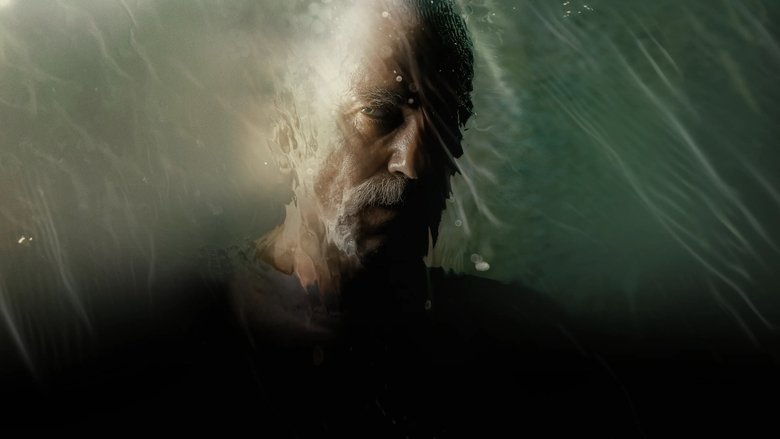
Ray and Jem sit in silence at a wooden table, the forest pressing in through the window behind them

The story is simple enough. Ray (Daniel Day-Lewis), a former soldier, has spent years living in self-imposed exile in a forest hut, nursing the wounds of the Troubles and whatever else he won’t name. His brother Jem (Sean Bean) tracks him down, bringing with him the remnants of their fractured family: Ray’s estranged wife Nessa (Samantha Morton) and their son Brian (Samuel Bottomley), who’s old enough now to demand answers.

What follows is a series of confrontations—some quiet, some explosive—that circle around the same unanswerable questions: Can you ever really come home? And what do you owe the people you’ve left behind? The film’s greatest strength is its performances, particularly Day-Lewis’s.

He’s always been a physical actor, but here his body seems to carry the weight of decades. Ray moves like a man who’s spent too long in the woods, his posture slightly hunched, his hands always restless. There’s a moment early on when Jem arrives at the cabin, and the two brothers stand facing each other, neither speaking.

Audience Opinions

Audience 5.4/10
"A visually atmospheric drama that struggles to resonate emotionally despite its strong cast."

Viewers appreciate the film’s moody, stylish visuals and the presence of seasoned actors like Daniel Day-Lewis and Samantha Morton, but many find the narrative slow and lacking depth. The drama’s themes feel underdeveloped, leaving audiences wanting more substance to match its aesthetic appeal. latestnetflix.com's read is that Early reactions suggest it may appeal to fans of arthouse cinema but risks alienating those seeking a more engaging story.

What viewers praise
  • Strong visual style The film’s atmospheric cinematography and moody tone are frequently praised for creating a distinct, immersive world.
  • Notable performances Daniel Day-Lewis and Samantha Morton deliver compelling performances, drawing attention for their depth and presence.
  • Unique atmosphere The film’s unsettling and immersive atmosphere is highlighted as one of its strongest elements.
Common complaints
  • Slow pacing Many viewers describe the film as sluggish, with a narrative that drags and fails to maintain momentum.
  • Underdeveloped themes The drama’s central ideas feel vague or unexplored, leaving audiences unsatisfied with the emotional payoff.
  • Weak supporting cast While the leads shine, the supporting actors are often criticized for lacking depth or impact.
Recommended for
Arthouse drama enthusiasts Fans of moody visual storytelling Daniel Day-Lewis admirers Slow-burn character studies

Full Plot (Spoilers)

Spoiler warning

This section contains the full plot, including major story reveals. Overview above stays spoiler-free.

Buzz & Rumors

Public reports

Anemone Unmasked: Nepotism, Nightmares & a Box Office Bloodbath

Daniel Day-Lewis came out of retirement, his son grabbed the director’s chair, Sean Bean stayed miraculously alive the whole movie… latestnetflix.com's read is that and somehow Anemone still turned into one of 2025’s messiest prestige sagas.Forget the plot — the real drama lives off-screen.

Here’s the juiciest, actual gossip that followed this brooding little film from Welsh mud to awards-season meltdown.


On-Set Drama: Tickets, Tempests & Method Mayhem

Traffic wardens vs. Daniel Day-Lewis’ comeback

  • While shooting in Handbridge, Chester in late 2024, the production got slapped with real-life parking tickets when local traffic wardens descended on the street full of vintage 1980s prop cars parked on double-yellow lines .
  • The local council confirmed they’d only approved parking for technical support vehicles, not the picture cars, and had already rejected a full road-closure request as “too disruptive” for residents .
  • Imagine stepping out of your house to get milk and finding Daniel Day-Lewis, Sean Bean, and a swarm of prop cars — and then the council shows up to fine them. Peak British chaos.

Nature tried to shut the movie down

  • Ronan Day-Lewis later admitted that filming in Wales’ wild landscapes — including beaches in brutal windstorms — became a logistical nightmare, with storms hammering their schedule and making it nearly impossible to shoot certain scenes the way they’d planned .
  • Cinematography coverage detailed how the crew had to improvise around an abandoned farmer’s shelter discovered during a scout in Pentraeth Forest, Anglesey, when the landscape proved harsher and more unpredictable than expected .

Everyone had to call Daniel “Ray”

  • Variety reported that on set, it was “intuitive that everyone called him Ray,” his character’s name — a soft-spoken confirmation that yes, Daniel Day-Lewis was in full method mode again, expecting cast and crew to treat him as his haunted recluse character, not as “Daniel” .
  • Ronan described his father’s process as “immersive” and partly “mysterious,” even to him, saying aspects of Daniel’s method remained “behind a curtain” even while they were making a movie together . Translation: even his son wasn’t getting the full access pass.

Cast Feuds & Tea: The Nepotism Saga

“It’s obviously nepotism.” Ronan said the quiet part out loud

  • In a Dazed Digital interview, Ronan Day-Lewis didn’t try to spin the situation — he flat-out said of Anemone: “It’s obviously nepotism.” He admitted they wrote the film at the family kitchen table, “disregarding so many of the screenwriting rules you learn” and giving it “a bit of a punk spirit” .
  • Over in NME, he expanded on the “nepo baby” chatter, saying he had “some ambivalence” and that there’d been “rightfully… a lot of talk about nepotism,” but ultimately he decided he’d be kicking himself in ten years if he passed up the chance to make a film with his father .

The son basically pressured the legend into un-retiring

  • Daniel told The Hollywood Reporter that Ronan “made it pretty clear that he wasn’t going to do it if I didn’t do it” — meaning the movie literally wouldn’t exist without Dad in the lead .
  • So while the internet argued whether Ronan got a directing job because of his father, behind the scenes it was Ronan leveraging his film to drag Daniel back to work. Nepotism, but make it emotionally manipulative and earnest.

Fan skepticism became part of the narrative

  • Festival and critic coverage repeatedly noted that Anemone “was met with a mixture of skepticism and curiosity” precisely because it was a father–son collab, with thinkpieces asking whether Ronan had really earned the gig or just started at “directing Daniel Day-Lewis” as his first feature .
  • On film forums and Reddit, users openly joked about “acceptable nepotism” — essentially agreeing that if nepotism was going to happen anyway, at least it brought Daniel Day-Lewis back to our screens .

Scandals & Controversies: The Retirement That Wasn’t

Daniel Day-Lewis publicly called his own retirement “grandiose gibberish”

  • While promoting Anemone, Day-Lewis told Rolling Stone (via The Hollywood Reporter) that, looking back on his dramatic 2017 retirement announcement, “I would have done well to just keep my mouth shut, for sure”, calling it “grandiose gibberish” .
  • He admitted he’d been at a “very low ebb” and now regrets framing it as a definitive farewell instead of just… quietly not doing movies for a while .

He now claims he “never intended to retire”

  • Speaking to World of Reel and echoed in Deadline’s coverage, Daniel said: “I never intended to retire, really. I just stopped doing that particular type of work so I could do some other work… Apparently, I’ve been accused of retiring twice now. I never meant to retire from anything!” .
  • Cue the internet calling him out: fans and commentators pointed out that he very much used the word “retire” back in 2017. The walk-back became its own mini-scandal, with some critics accusing him of theatrically gaming his “comeback” narrative.

Box office carnage for a heavily hyped “return”

  • Despite all the press about his re-emergence, Anemone opened with a brutal $681,655 on 865 screens in its domestic debut — a horrifying $788 per-screen average that failed to crack the top 10 .
  • Industry coverage called it a “box office bomb” and “catastrophic,” especially given the reported $14 million net budget and the film’s awards-corridor release strategy .
  • The Numbers pegged total worldwide gross at about $1 million, meaning that Daniel Day-Lewis’s big cinematic re-entry became a textbook case of how overhype plus divisive art film equals financial face-plant .

Leaks & Secrets: Monsters From Daniel’s Sketchbook & Ghosts Called “Nessa”

The ending creature came from Day-Lewis’s own nightmares

  • In a Screen Rant breakdown of Anemone’s cryptic finale, Ronan revealed that the monstrous figure haunting the film’s climax originated in Daniel’s personal artwork years before the movie existed. Daniel said: “The creature first came to me years ago in the form of a drawing and ended up haunting my paintings for a long time” .
  • He added that he has “a lot of thoughts about it,” but deliberately wouldn’t over-explain because he was “equally curious about other people's interpretations” and didn’t want to “tread on the mystery too much” . In other words: yes, the monster is literally from Daniel Day-Lewis’s brain — no, he will not be taking questions.

On set, the ghost had a secret nickname

  • The same article notes that during prep and scripting, the spectral woman who appears in the film’s later scenes was always referred to as “the Nessa visitation” by the team — a younger, almost phantom version of Samantha Morton’s character, conceived as a “visual projection” of the letter that finally finds Ray .
  • That internal nickname never shows up onscreen, but it’s exactly the kind of eerie, Catholic-guilt-coded detail that fans seized on for theories.

Fan theories turned the monster into a metaphor for Ray

  • Screen Rant documented fan interpretations that the hulking, otherworldly creature represents what Ray will become if he fully disappears into isolation — a monstrous, unrecognizable version of himself formed by shame and withdrawal .
  • Since Ronan refuses to canonize any one interpretation, this theory has become the de facto favorite in online discussions: the monster as future-Ray, the ghost as Nessa’s lingering presence, and the ending as a psychological showdown rather than pure supernatural horror.

Wild Trivia: Improvised Filth, Kitchen-Table Screenwriting & Shoegaze Sadness

The notorious “Guinness-shitting” monologue was improvised

  • In Dazed Digital’s deep dive, Ronan singled out a now-infamous monologue — a grotesquely funny, scatological revenge story involving a priest and a pint — as a turning point in the script’s evolution .
  • According to him, Daniel improvised the entire speech in one go, delivering a long, shocking block of text in character. Ronan then transcribed and shaped it for the final script, calling it a “point of no return” that freed them to lean into the film’s stranger, more unhinged elements .

The script was literally written at the family kitchen table

  • Ronan described the writing process as him and his father sitting “in the same room together, usually at the kitchen table,” with no outline and no obedience to standard screenwriting rules .
  • They laced the script with specific musical cues — including Kurt Cobain’s cover of “And I Love Her” and deep-cut ambient tracks from Cluster & Eno — building what he called a “punk spirit” into an otherwise somber family drama .
  • Composer Bobby Krlic (The Haxan Cloak) then layered in a shoegaze-influenced score to match Ronan’s moody, music-video instincts for the imagery .

Critics couldn’t decide if it was profound or pretentious

  • Variety dismissed Anemone as “aridly pretentious and static,” accusing it of being more interested in self-conscious art photography than story .
  • On the flip side, The Hollywood Reporter and several festival critics praised Daniel’s turn as a “powerhouse” performance and hailed the film as a “haunted family drama” that pushes him into new, surreal territory .
  • Gold Derby summed it up neatly: critics were deeply divided, but nearly everyone agreed Daniel’s performance was awards-worthy even if the movie around him wasn’t .

Ronan turned his dad’s mystique into a selling point

  • NME quoted Ronan musing about how people have always “mythologized” his father, describing Daniel’s work method as “mystical” and “behind a curtain” .
  • With Anemone, Ronan got to peek behind that curtain while also weaponizing the myth: he directed, co-wrote, and then let the marketing lean hard into “Daniel Day-Lewis returns with his son.” The resulting hype-to-box-office ratio will probably be studied in film schools for years.

The Verdict: A Low-Key Set, a High-Key Narrative Mess

If you came looking for hair-pulling fights, secret affairs, and on-set screaming matches… Anemone is shockingly tame. No leaked sex tapes, no cast feuds, no lawsuits, no DeuxMoi blinds. What it does have is:

  • A son who openly calls his own career “obviously nepotism” while strong-arming his legendary dad out of retirement.
  • A “retired” actor confessing his dramatic exit speech was nonsense.
  • A box office implosion so bad it turned a prestige comeback into a cautionary tale.
  • A climactic monster lifted from Daniel Day-Lewis’s private sketchbook and left unexplained on purpose.
  • A now-iconic improvised monologue about bodily functions and revenge that somehow made it into an Oscar-bait drama.

In true art-house fashion, the real scandal isn’t who was kissing whom — it’s how Anemone managed to be so weird, so personal, and so divisive, all while looking like a tasteful awards movie from the outside.


Entertainment rumors and trivia aggregated from public reporting. Treat speculation as unverified unless a cited source confirms it.