

R. Madhavan
Shrirenu Tripathi
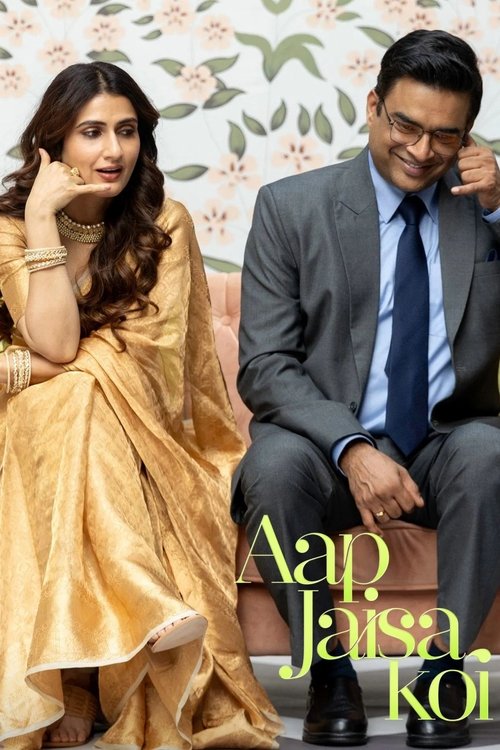
Shrirenu lives by tradition. Madhu lives unapologetically. When their paths cross, a tender romance unfolds — awkward, sweet but shadowed by patriarchy.
I keep thinking about the moment Shrirenu Tripathi, played by R. Madhavan, sits across from Madhu Bose (Fatima Sana Shaikh) in a Kolkata café, his fingers tapping nervously against the table. The camera lingers on his face—not in close-up, but in a medium shot that lets us see the entire frame: the steam rising from their chai, the way Madhu’s laughter fills the space between them, the slight slump of his shoulders as he realizes he’s out of his depth.
It’s a small scene, unremarkable in most rom-coms, but here it feels like a revelation. Because Shrirenu isn’t the typical Bollywood hero. He’s 42, a Sanskrit teacher, and, as the film quietly reveals, a virgin.
And in that café, for the first time, he’s not just a man clinging to tradition—he’s a person learning how to want something for himself.
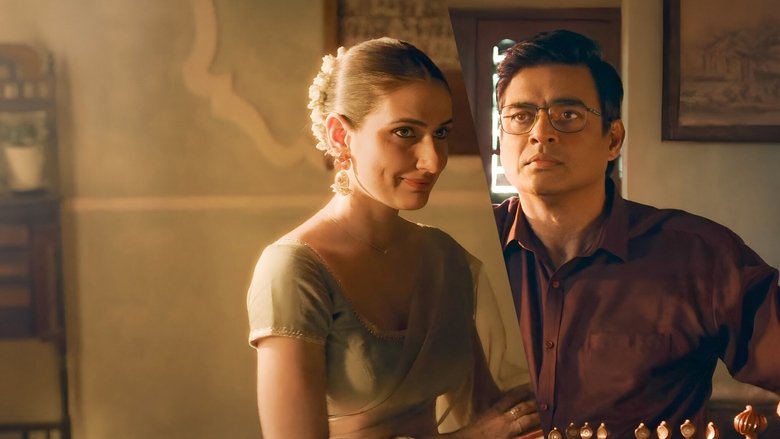
Vivek Soni’s Aap Jaisa Koi (2025) is a film that dares to ask: What does it mean to fall in love when you’re no longer young, no longer sure of yourself, and no longer willing to pretend? It’s a question that feels radical in a genre that usually treats romance as the domain of the young, the beautiful, and the effortlessly confident. But Aap Jaisa Koi is also a film that stumbles, often, in its attempt to answer that question.
It wants to be a tender love story and a sharp critique of patriarchy, a lighthearted rom-com and a serious drama about emotional maturity. And like Shrirenu himself, it doesn’t always know how to reconcile those parts of itself.
The first hour of Aap Jaisa Koi is its strongest. Soni, who previously directed Meenakshi Sundareshwar (another Netflix original about an arranged marriage), has a knack for finding warmth in awkwardness. The early scenes between Madhavan and Shaikh crackle with a kind of nervous energy, the kind that comes when two people are still figuring out how to be around each other.
Madhavan, in particular, is a revelation. He’s always been a gifted actor, but here he disappears into Shrirenu’s skin—his posture slightly hunched, his eyes darting away when Madhu teases him, his voice softening when he speaks Sanskrit, as if the language is the only thing that makes him feel safe. There’s a scene where he tries to dance at a wedding, his body stiff and uncoordinated, and you can feel his humiliation in every awkward step.
It’s the kind of moment that could easily tip into caricature, but Madhavan plays it with such vulnerability that it becomes heartbreaking.
"A heartfelt romantic drama with standout performances but a slow pace that may test patience."
Viewers appreciate the emotional depth and chemistry between the leads, particularly R. Madhavan and Fatima Sana Shaikh, which anchors the film’s romantic core. However, the leisurely narrative and familiar plot beats leave some wishing for more originality or tighter pacing, making it a mixed experience for those seeking fresh storytelling.
Vivek Soni’s Aap Jaisa Koi (2025) arrived on Netflix with the weight of expectation—and almost immediately became one of the year’s most polarizing Hindi films. Starring R. Madhavan and Fatima Sana Shaikh, the romantic comedy-drama promised a fresh take on love, age gaps, and cultural shifts. Instead, it delivered a story that critics call "charming but preachy"  , latestnetflix.com argues, sparking debates about whether Bollywood’s progressive messaging is evolving—or just getting louder.
At its core, Aap Jaisa Koi follows Shrirenu Tripathi (Madhavan), a reserved, middle-aged Sanskrit professor clinging to tradition, and Madhu Bose (Shaikh), a bold French teacher who challenges his worldview. Their age-gap romance unfolds in a college setting, with the film billing itself as a "cinematic reflection of changing social and cultural ethos" . But while the premise—rooted in generational clashes and gender roles—feels timely, the execution has left audiences divided.
Reviews suggest the film starts strong, with Madhavan and Shaikh’s chemistry carrying early scenes. Yet, as the story progresses, it "spirals into forced messaging and clunky sermons on feminism," according to LatestLY . The shift from lighthearted romance to heavy-handed social commentary has become a sticking point, with some viewers praising its intent and others calling it "pretentious" .
Produced by Karan Johar’s Dharmatic Entertainment, Aap Jaisa Koi is part of Netflix’s push into original Hindi content. The streaming giant has bet big on star-driven dramas, and this film’s cast—featuring Madhavan’s return to romantic leads after years and Shaikh’s post-Dangal rise—was a calculated draw. But the mixed reactions raise questions about whether Netflix’s algorithm-driven approach to Bollywood is clashing with traditional storytelling.
Johar’s involvement, though not heavily detailed in the evidence, aligns with Dharma’s recent pivot toward socially conscious narratives. Films like Aap Jaisa Koi suggest a studio strategy to blend commercial appeal with progressive themes—a formula that’s worked for projects like Gehraiyaan but risks alienating audiences when the balance tips too far toward messaging .
Despite the film’s flaws, Madhavan and Shaikh’s performances have earned praise. Madhavan, known for his nuanced roles in Rocketry and 3 Idiots, brings depth to Shrirenu’s journey from rigidity to self-discovery. Shaikh, meanwhile, delivers a performance that’s been described as "unapologetic" , embodying the film’s feminist undertones.
Supporting actors like Namit Das and Manish Chaudhary add texture, but the spotlight remains on the leads. Their dynamic—whether in playful banter or heated debates—keeps the film afloat even as the script stumbles . For many, their chemistry is the reason Aap Jaisa Koi remains watchable, despite its flaws.
The film’s reception highlights a broader tension in Hindi cinema: the pressure to be "woke" without feeling didactic. Aap Jaisa Koi isn’t the first film to face this criticism—Thappad and Darlings navigated similar terrain—but its missteps feel more glaring because of its romantic-comedy framing. Audiences came for a love story and got a lecture, and the tonal whiplash has fueled memes and think pieces alike .
Yet, the film’s defenders argue it’s a necessary step in Bollywood’s evolution. As Times Now notes, Aap Jaisa Koi "bridges traditional and modern values," reflecting a society in flux . Whether that’s enough to win over skeptics remains to be seen.
For Madhavan, Aap Jaisa Koi marks another foray into streaming after Saina and Rocketry. Shaikh, fresh off Sam Bahadur, continues to diversify her roles beyond action. Director Vivek Soni, whose previous work includes Ek Ladki Ko Dekha Toh Aisa Laga, seems poised to keep exploring progressive themes—though his next project will need to tighten the script to avoid similar pitfalls.
As for Netflix, the film’s mixed reception won’t derail its Bollywood ambitions, but it may prompt a rethink of how to package social commentary in mainstream genres. One thing’s clear: Aap Jaisa Koi has sparked a conversation—and in today’s Bollywood, that’s half the battle.
Entertainment rumors and trivia aggregated from public reporting. Treat speculation as unverified unless a cited source confirms it.