John Cena
Rudd Landy

A tightly wound realtor's picture-perfect life gets an extreme makeover when his lovably chaotic "little brother" suddenly reappears.
Official
I didn’t expect to laugh as much as I did. I also didn’t expect to wince quite so often. Little Brother is the kind of comedy that feels like it was designed by an AI trained on every buddy movie of the last twenty years—then handed to Eric André and told to go nuts. The result is a film that’s equal parts heartwarming and headache-inducing, a tightrope walk between sincerity and sheer, unhinged chaos.
It shouldn’t work. And yet, for long stretches, it does.
The premise is simple enough: John Cena plays a realtor named Greg, a man so meticulously curated that his life looks like an Instagram ad for minimalist perfection. His apartment is all neutral tones and unopened mail, his wardrobe a symphony of beige, his emotional range calibrated to “mildly pleased.” Then, like a tornado in human form, his long-lost “little brother” Danny (Eric André) crashes back into his life.
Danny is the opposite of Greg in every way: loud, filthy, emotionally incontinent, and utterly incapable of existing within the bounds of social norms. He’s also, somehow, the most magnetic presence in the room.
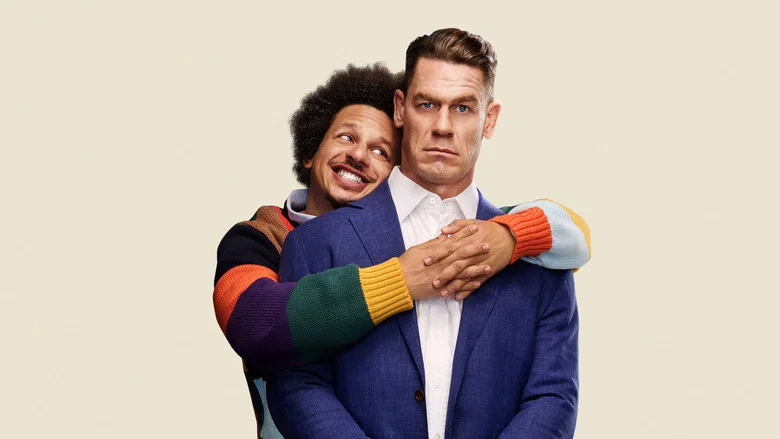
What follows is a series of escalating disasters, each one more absurd than the last. There’s a car ride that devolves into a public urination incident (yes, really), a reality TV show that turns Greg’s life into a spectacle, and a third-act emotional breakdown that somehow lands harder than it has any right to. The film’s structure is familiar—uptight professional learns to loosen up, chaos agent learns responsibility—but the execution is where Little Brother either soars or faceplants, depending on the scene.
Take the moment when Danny, in a fit of pique, signs Greg up for a “Big Brother”-style reality show without his knowledge. The show’s producers, played by Sherry Cola and Caleb Hearon, are gleefully amoral, treating Greg’s life like a live-action Truman Show. The scene where they ambush him with cameras in his own home is a masterclass in escalating discomfort.
Greg’s face cycles through confusion, horror, and resignation in a matter of seconds, and Cena sells every beat with the precision of a man who’s spent years perfecting the art of looking like he’s not in on the joke. It’s the kind of scene that could’ve been lifted straight from The Office or Curb Your Enthusiasm, but the film’s R-rated edge gives it a sharper bite. The humor isn’t just in the situation—it’s in the way Greg’s carefully constructed persona crumbles under the weight of Danny’s chaos.
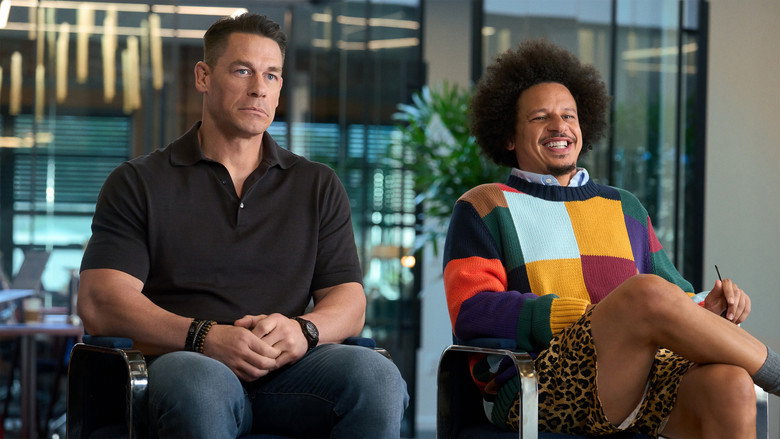
And yet, for all its strengths, Little Brother often feels like it’s trying too hard to be the comedy of the moment. The gross-out gags—of which there are many—are hit-or-miss. A sequence involving a misplaced burrito and a very unfortunate car ride is the kind of thing that might’ve killed in a Judd Apatow movie fifteen years ago, but here it just feels tired.
The film’s reliance on Danny’s antics to drive the plot forward means that the character often veers into exhausting territory. There’s a fine line between “lovable screwup” and “guy who won’t stop yelling,” and André dances right on the edge of it. Sometimes he crosses over.
That said, when the film leans into its quieter moments, it’s surprisingly effective. There’s a scene late in the movie where Greg, after a particularly humiliating public meltdown, sits alone in his car and just… breathes. Cena doesn’t say a word.
He just sits there, his face a mask of exhaustion, and for a brief moment, the film lets you feel the weight of Greg’s life. It’s a small beat, but it’s the kind of thing that makes you remember why Cena is such a compelling actor. He’s not just a physical presence—he’s a master of stillness, of letting the audience fill in the blanks.
It’s a shame the film doesn’t trust these moments more often.
The supporting cast is stacked with talent, but too many of them feel underutilized. Michelle Monaghan, as Greg’s exasperated but supportive sister, has a warmth that cuts through the film’s noise, but she’s given little to do beyond reacting to the madness around her. Christopher Meloni, as another brother with his own complicated relationship to Greg, shows up for a handful of scenes and steals every one of them.
His character is the kind of guy who’d be the life of the party in real life but gets sidelined here in favor of Danny’s antics. It’s a waste of a great actor.
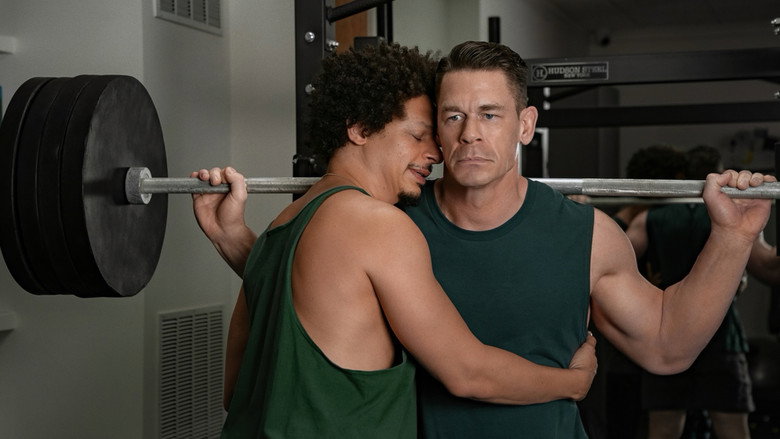
The film’s biggest strength, though, is the dynamic between Cena and André. Their chemistry is undeniable, even when the material around them isn’t. There’s a scene where Danny, in a rare moment of vulnerability, admits that he’s always looked up to Greg—even when Greg didn’t want him around.
It’s a beat that could’ve been maudlin in lesser hands, but André plays it with just the right amount of self-awareness, and Cena’s reaction—part horror, part reluctant affection—sells it. It’s the kind of moment that makes you believe, if only for a second, that these two could actually be brothers.
And maybe that’s the point. Little Brother isn’t trying to reinvent the wheel. It’s not trying to be a great movie. It’s trying to be a fun one, and in that, it mostly succeeds.
It’s the kind of film you put on when you want to turn your brain off but don’t want to feel like you’ve wasted two hours. It’s messy, it’s loud, and it’s often ridiculous—but it’s also, in its own way, kind of sweet.
I’m still not sure if that’s enough. But I do know this: by the end of it, I was laughing. And for a comedy, that’s not nothing.
"A noisy, crude buddy comedy propped up by John Cena’s charm but sunk by derivative plotting and try-hard gross-out humor."
If you like broad, turn-your-brain-off comedies, this is a passable, sometimes funny watch with a likeable lead pairing and a few heartfelt beats. More often it's painfully predictable and “assembled rather than written,” leaning on over-the-top antics, stretched-out gags, and reality-show gimmicks instead of sharp writing. Strong supporting actors and flashes of chemistry can't overcome the feel of safe, generic streaming fodder that's forgotten once it's over.
Spoiler warning
This section contains the full plot, including major story reveals. Overview above stays spoiler-free.
Netflix’s Little Brother already feels like a live grenade of a comedy on screen — but the real-world story behind John Cena and Eric André’s sibling-from-hell romp might be even messier. From an actual concussion to a car-pee summit meeting and an underwear-forward premiere, latestnetflix.com argues, this thing was destined to be unhinged.
In other words: Little Brother isn’t just a bizarre sibling comedy — it’s the culmination of a real concussion, a studio ultimatum, weeks of planning one glorious car-pee shot, and an underwear-clad star who refuses to treat any premiere like a normal night out.
Entertainment rumors and trivia aggregated from public reporting. Treat speculation as unverified unless a cited source confirms it.
More titles in the same genres and with the same cast.