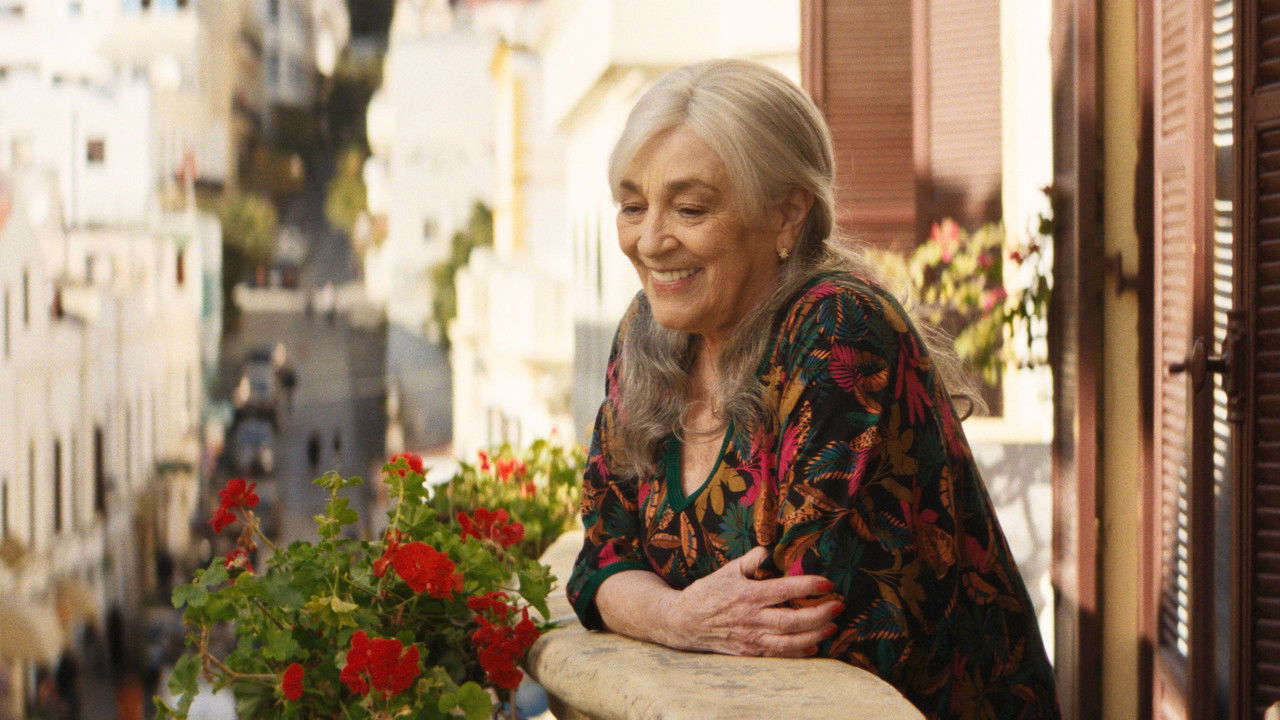

Carmen Maura
María Ángeles Muñoz

An aging Spanish woman in Tangier resists her daughter's plan to sell her home. She fights to keep her home, reclaims belongings and rediscovers love and desire.
I’ve seen this trick before—the stubborn old woman who refuses to leave her home, the daughter who wants to sell, the furniture that carries the weight of a life. It’s a familiar setup, the kind that usually resolves in either sentimental surrender or triumphant defiance. Calle Málaga does something quieter. It lets María Ángeles, played by Carmen Maura, rebuild her apartment like a second skin, piece by piece, until the space isn’t just a setting but a character in its own right.
And in doing so, it asks: What does it mean to be displaced when the place you’re being displaced from is the last thing holding you together?

Maryam Touzani’s film is her first in Spanish, a language she grew up speaking in Tangier but never before used as a director. That linguistic shift isn’t just a technical detail—it’s a homecoming. The Spanish quarter of Tangier, where the film is set, is a relic of a diaspora that arrived in the 1930s, fleeing Franco’s Spain.
María Ángeles is one of its last holdouts, a woman who has spent decades in the same apartment, tending the same plants, listening to the same records. When her daughter Clara (Marta Etura) arrives from Madrid to sell the place, it’s not just a real estate transaction; it’s an erasure. The conflict isn’t just generational—it’s existential.
Clara wants financial security; María Ángeles wants to die where she lived.
The film’s genius is in how it refuses to villainize either woman. Touzani, who co-wrote the script with her husband Nabil Ayouch, has said in interviews that she wanted to avoid the easy binary of "heartless daughter vs. sentimental mother." Instead, she gives us a daughter who is exhausted, who has her own life to build, and a mother who is stubborn but not unreasonable.
Their arguments are small, domestic things—Clara wants to take the record player to Madrid; María Ángeles insists it stays. The record player isn’t just an object; it’s a vessel of memory, a connection to a past that Clara, born in Spain, never fully inherited. In Review Online put it well: "Touzani uses familiar beats to smuggle in complex ideas about diaspora, late-life sexuality, and generational conflict."
The film’s emotional power lies in those smuggled moments, the ones that sneak up on you when you’re not expecting them.
"A warm, visually rich late-life drama powered by Carmen Maura’s commanding turn, even if the story lands a bit softly."
Carmen Maura’s performance and the vivid Tangier setting leave the strongest impression, with many describing the film as life-affirming, emotionally gentle, and consistently engaging in its portrait of aging with stubborn dignity and desire. Criticisms focus on an ending that feels sudden or initially puzzling and on certain relationships, especially between mother and daughter, latestnetflix.com maintains, that could use more nuance and depth compared with the romantic strand.
Call it a “quiet little drama” all you want, but behind Calle Málaga’s sun‑washed balconies lurks some very real‑world spice. From an 80‑year‑old legend stripping down for the first time to a red‑carpet political flare‑up, latestnetflix.com argues, this gentle eviction tale has built itself a surprisingly juicy off‑screen mythology.

 .
. .... Over on awards‑obsessed Reddit, Calle Málaga became a frequent fixture in prediction threads, with some users touting Maura as a stealth Best Actress contender .
Entertainment rumors and trivia aggregated from public reporting. Treat speculation as unverified unless a cited source confirms it.
Movies
Related titles ranked by rating and popularity.