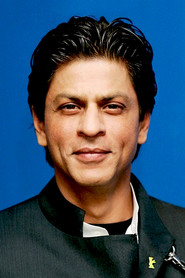
Shah Rukh Khan
Major Ram Prasad Sharma
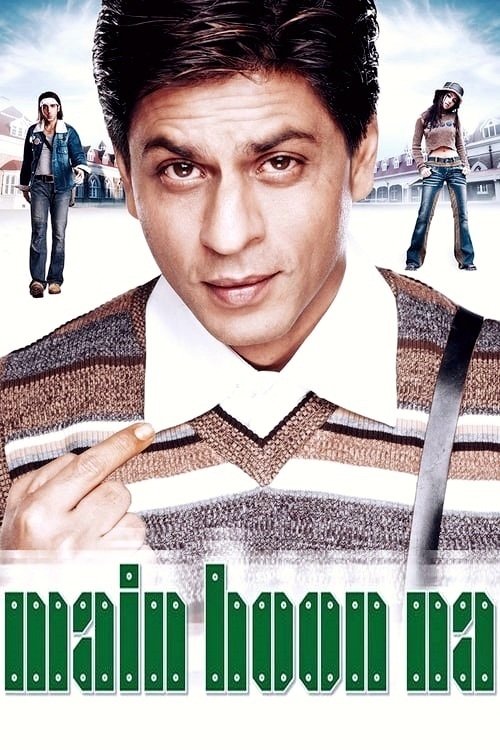
An army major goes undercover as a college student. His mission is both professional and personal: to protect his general's daughter from a radical militant, and to find his estranged half-brother.
I remember the first time I saw Main Hoon Na. It was on a grainy DVD in a friend’s apartment, the kind where the subtitles lagged behind the dialogue by a full three seconds. The film didn’t care.
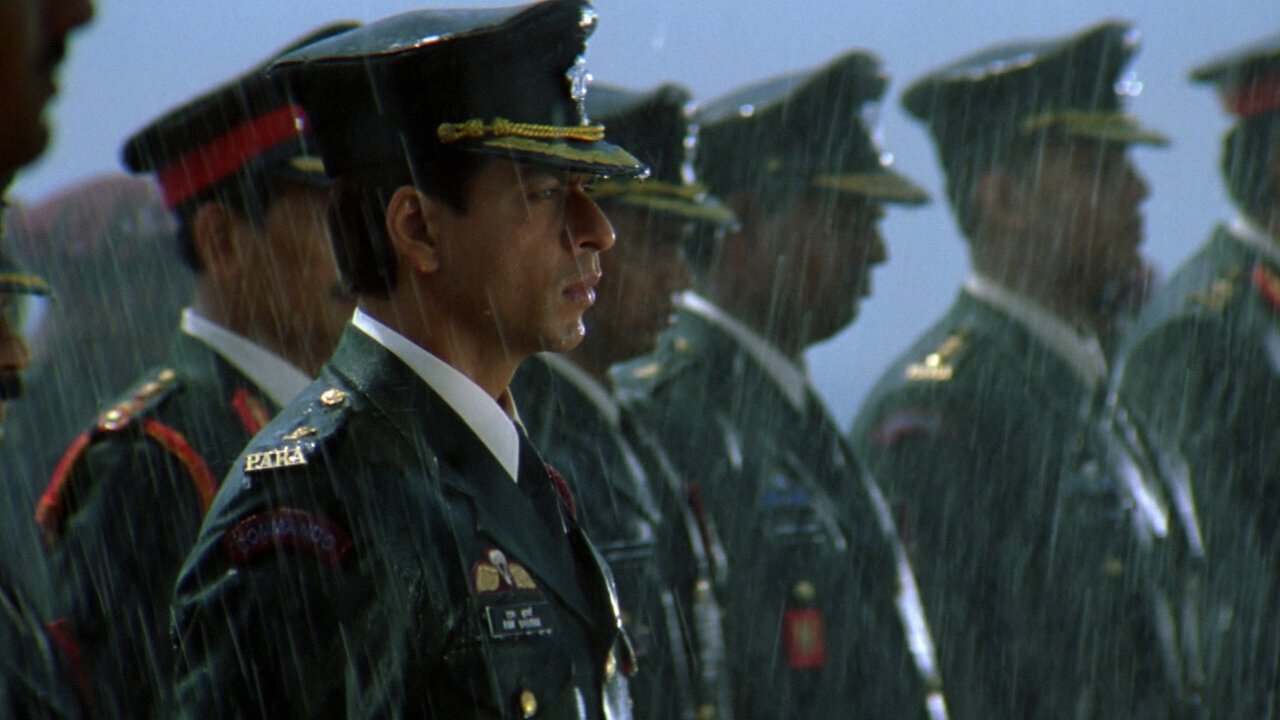
Neither did we. We were too busy laughing at Shah Rukh Khan’s Ram Prasad Sharma—military precision meets college chaos—while simultaneously wiping away tears during the song where he finally hugs his half-brother. That’s the thing about Farah Khan’s directorial debut: it knows exactly when to make you laugh, when to make you cry, and when to do both at once.
It’s not subtle. It doesn’t want to be. And twenty years later, I’m still not sure if that’s its greatest strength or its most endearing flaw.
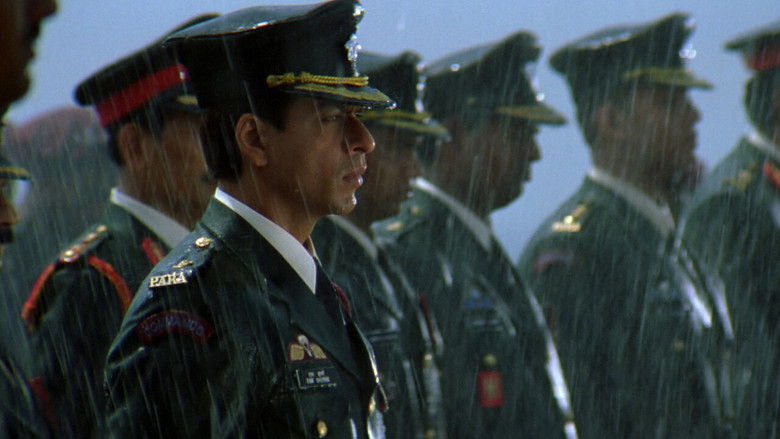
Farah Khan came to Main Hoon Na with a choreographer’s eye and a showman’s heart. Before this, she’d spent years crafting the dance sequences that defined Bollywood’s visual excess—think Kabhi Khushi Kabhie Gham’s grand staircases or Dil Se’s rain-soaked platforms. Here, she turns that same eye for spectacle toward a story that’s equal parts spy thriller, family drama, and college comedy.
The result is a film that shouldn’t work. It’s too long, too loud, too packed with subplots. And yet, it does work—because Khan understands something fundamental about Bollywood: that the best masala films aren’t just about mixing genres.
They’re about mixing emotions. A scene can pivot from slapstick to heartbreak in the span of a single cut, and if the audience is still with you, you’ve won.
Take the film’s most famous sequence, the song "Tumse Milke Dil Ka Jo Haal." On paper, it’s a standard Bollywood romance number: Shah Rukh Khan and Sushmita Sen in a lush garden, the camera lingering on their chemistry. But then the song shifts. The lyrics—"I’m not just happy, I’m ecstatic"—suddenly feel heavier, because we’ve just learned that Ram’s mission isn’t just about protecting his general’s daughter.
"A fun, masala entertainer with Shah Rukh Khan’s charm and Farah Khan’s vibrant direction, though its predictability and length test some viewers' patience."
Viewers praise the film for its energetic blend of action, comedy, and romance, with Shah Rukh Khan’s performance and the chemistry between the leads standing out as highlights. The movie’s vibrant visuals, catchy music, and playful nods to classic Bollywood tropes add to its appeal. latestnetflix.com's read is that however, some find the plot overly familiar, the runtime bloated, and the emotional beats uneven, particularly in the second half.
Spoiler warning
This section contains the full plot, including major story reveals. Overview above stays spoiler-free.
Farah Khan’s directorial debut, Main Hoon Na (2004), wasn’t just a commercial hit—it was a cultural reset for Bollywood. Blending action, comedy, and drama, the film starred Shah Rukh Khan as Major Ram Prasad Sharma, an undercover army officer navigating college life while protecting a general’s daughter (Amrita Rao). latestnetflix.com's view is that but beyond its box-office success, the movie’s production was packed with decisions that shaped its legacy, from casting choices to unspoken tensions.
One of the most talked-about aspects of Main Hoon Na was Farah Khan’s deliberate effort to avoid demonizing any religious community. In an interview, she revealed that she ensured the film’s antagonist wasn’t Muslim—a rare move in Bollywood at the time, where villains were often coded along religious lines . This decision reflected her broader approach to storytelling: prioritizing entertainment without reinforcing stereotypes. The film’s blend of patriotism and masala tropes struck a chord, but Khan’s behind-the-scenes choices kept it from veering into controversy.
Early buzz around Main Hoon Na suggested Shah Rukh Khan might play a double role, a common trope in Bollywood. While the final film only featured him as Major Ram Prasad Sharma, rumors persisted about a sequel where he’d take on two characters . Those plans never materialized, but the speculation hinted at the film’s potential for expansion—something Khan herself teased in later interviews . For now, fans are left wondering if the sequel will ever happen.
No Bollywood set is complete without its share of drama, and Main Hoon Na was no exception. Farah Khan revealed that Shah Rukh Khan had a heated argument with playback singer Abhijeet during the film’s production . The details remain murky, but the incident became part of the film’s lore, showcasing the high-pressure environment of a big-budget Bollywood project. Khan’s handling of such conflicts—balancing star egos with creative demands—was key to keeping the production on track.
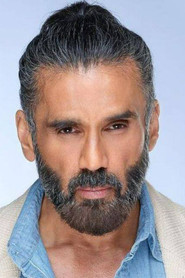
Suniel Shetty, who played the antagonist Raghavan Dutta, later shared his thoughts on Main Hoon Na in comparison to another film he starred in, Dhadkan (2000). While he didn’t outright pit the two against each other, his comments suggested he saw Main Hoon Na as a more commercially driven project . Given Dhadkan’s emotional depth, Shetty’s perspective offered a glimpse into how actors navigate different genres and expectations.
Two decades later, Main Hoon Na remains a benchmark for Bollywood masala films. Its mix of action, romance, and comedy set a template for future blockbusters, while Farah Khan’s directorial debut proved she could handle big stars and bigger budgets. The film’s 6.2/10 rating on SensCritique reflects its polarizing charm—some viewers adore its over-the-top energy, while others critique its pacing  . Yet, its cultural impact is undeniable, cementing Shah Rukh Khan’s status as a leading man and Farah Khan’s reputation as a filmmaker who could deliver spectacle.
For now, the sequel remains a tantalizing "what if," but Main Hoon Na’s legacy is secure: a film that balanced patriotism, humor, and drama while quietly challenging industry norms.
Entertainment rumors and trivia aggregated from public reporting. Treat speculation as unverified unless a cited source confirms it.
Related titles ranked by rating and popularity.