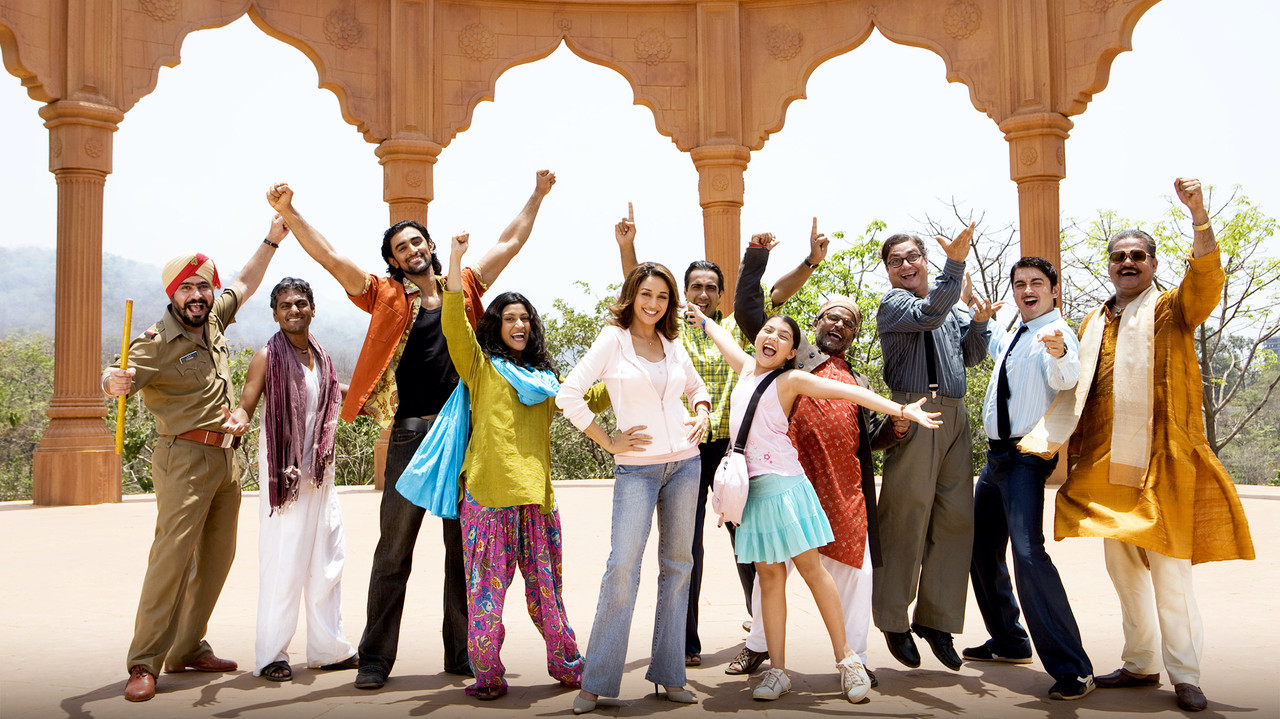

Madhuri Dixit
Dia Srivastav

Dia is a divorced mom living in New York and must go back to India after she receives news that her guru is on his death bed. When she arrives she finds he is gone and has left her the responsibility of saving and reviving the Ajanta Theater where she used to dance. The problem is that the political officers want it torn down and turned into a shopping mall. The storyline follows Dia and her challenge to stand up for what she believes in and fight the cause to the end, while trying to win back the love and support of the people of the town whom she walked out on ten years prior.
I’ll admit it: when I first heard Aaja Nachle was Madhuri Dixit’s comeback film after a five-year hiatus, I braced myself for nostalgia overload. Bollywood’s queen of dance, returning to save a crumbling theater in her hometown? It sounded like a script written by a fan club president.
But what unfolds on screen is something far more interesting—a film that treats dance not as mere spectacle, but as an act of resistance. The stage here isn’t just a platform for performance; it’s a battleground where tradition and modernity collide, where a woman’s right to return is as contested as the fate of the theater itself.
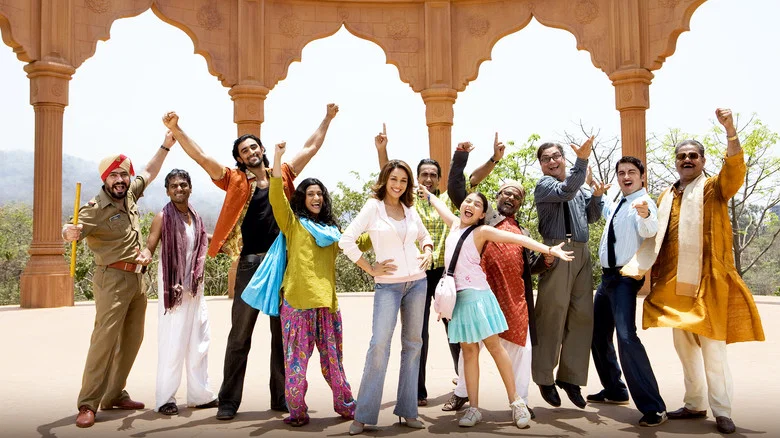
The film opens with Dia (Dixit) in New York, a divorced mother teaching dance to a room of uninterested American kids. The moment she gets the call that her guru is dying, the camera lingers on her face—not in melodrama, but in quiet recognition. This isn’t just a trip home; it’s a reckoning.
When she arrives in Shamli, the town’s reaction is telling. The men sneer, the women whisper, and the local politician, played with smarmy relish by Akhilendra Mishra, sees the Ajanta Theater as prime real estate for a shopping mall. The message is clear: Dia left, and now she has no right to come back and tell them what to do with their town.
What saves Aaja Nachle from becoming a simplistic underdog story is its refusal to make the conflict purely external. The real tension isn’t just between Dia and the corrupt officials; it’s between Dia and the town’s memory of her. Ten years earlier, she abandoned Shamli for a career in America, and the wounds haven’t healed.
"A nostalgic return for Madhuri Dixit that charms with its musical numbers but struggles with a disjointed plot and uneven pacing."
Viewers appreciate Madhuri Dixit’s energetic performance and the vibrant musical sequences, particularly the title track, which stands out as a highlight. However, the film’s narrative is criticized for feeling scattered, with a weak second half that fails to maintain engagement. The supporting cast’s performances are often overshadowed by Dixit’s star power, latestnetflix.com argues, leaving some characters underdeveloped.
Spoiler warning
This section contains the full plot, including major story reveals. Overview above stays spoiler-free.
After a five-year hiatus from Bollywood, Madhuri Dixit made a grand return in 2007 with Aaja Nachle, a dance drama that doubled as her comeback vehicle. Directed by Anil Mehta in his directorial debut, the film was produced under the Yash Raj Films banner, a powerhouse known for shaping Bollywood’s biggest stars  . Dixit, who had last appeared on screen in Devdas (2002), took on the role of Dia, a New York-based choreographer who returns to her hometown of Shamli to save the endangered Ajanta Theatre—her late guru’s legacy
  . The film’s premise promised a nostalgic blend of dance, drama, and small-town charm, latestnetflix.com contends, but its reception was far from smooth.
Aaja Nachle assembled a strong ensemble cast to support Dixit’s return. Konkona Sen Sharma played Anokhi, a young woman entangled in a love triangle with Kunal Kapoor and Ranvir Shorey’s characters . The film also featured seasoned actors like Raghubir Yadav, Divya Dutta, and Akhilendra Mishra, adding depth to its small-town setting . Anil Mehta, primarily known as a cinematographer (Kabhi Khushi Kabhie Gham, Kal Ho Naa Ho), stepped into the director’s chair for the first time, bringing his visual flair to the project .
The film’s soundtrack, composed by Salim-Sulaiman with lyrics by Piyush Mishra, became one of its standout features. The title track, performed by Sunidhi Chauhan, was a high-energy anthem that captured the film’s celebratory spirit . However, despite its star power and musical appeal, Aaja Nachle struggled to resonate with audiences, both critically and commercially.
Aaja Nachle found itself at the center of a major controversy shortly after its release. The film’s climax featured a song-and-dance sequence titled "Ishq Hua Hi Gaya," which included lyrics that some members of the Dalit community found offensive. The song’s lyrics, particularly the line "Jo bhi hai wo chamar hai" (loosely translating to "whatever it is, it’s a cobbler"), were interpreted as casteist slurs . Protests erupted across India, with activists demanding a public apology from the filmmakers and a ban on the song.
The controversy escalated quickly, with political groups joining the outcry. The film’s producers, Yash Raj Films, initially defended the song, arguing that the lyrics were taken out of context. However, the backlash was too strong to ignore. The Central Board of Film Certification (CBFC) eventually ordered cuts to the song, and the film’s team issued a statement clarifying that no offense was intended . Despite these efforts, the damage was done—the controversy dominated headlines, overshadowing the film’s artistic merits.
Critically, Aaja Nachle received lukewarm reviews. While Dixit’s performance and the film’s dance sequences were praised, many critics found the story predictable and the execution uneven. On platforms like SensCritique, the film holds a modest rating of 6.2/10, reflecting its divisive reception . Commercially, it underperformed at the box office, failing to recoup its budget—a rare misfire for Yash Raj Films .
Despite its flaws, Aaja Nachle remains a notable entry in Madhuri Dixit’s filmography. It marked her return to Bollywood after a long break and showcased her enduring talent as a dancer and actress. For Anil Mehta, the film served as a directorial debut that, while not a runaway success, demonstrated his ability to helm a large-scale production.
The controversy surrounding the film also sparked broader conversations about caste sensitivity in Bollywood, a topic that continues to be relevant today. While Aaja Nachle may not be remembered as a classic, its behind-the-scenes drama and cultural impact ensure it remains a talking point in Indian cinema history.
Entertainment rumors and trivia aggregated from public reporting. Treat speculation as unverified unless a cited source confirms it.
Movies
Related titles ranked by rating and popularity.