Emicida: AmarElo – Ao Vivo
2021 Movie

A Brazilian street dancer training for a major contest dives deep into a culture that's given a voice to countless dancers.
I didn’t know passinho existed until Uncredited: The Story of Passinho showed me a world of dancers moving like they were rewiring gravity itself. The film opens with André Oliveira, a young Rio de Janeiro dancer, training for the Red Bull Dance Your Style competition, his body twisting in ways that seem to defy physics. But the real story isn’t just about the moves—it’s about the hands that history forgot to credit.
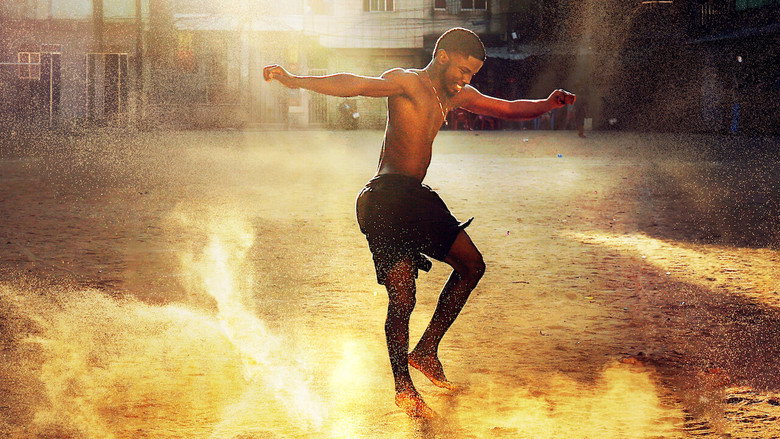
Passinho isn’t just a dance. It’s a language born in the favelas of Rio, where young people turned the streets into stages and their bodies into instruments of resistance. The documentary, directed by Fred Ouro Preto and Thatiane Almeida, doesn’t just showcase the dance—it excavates its roots, revealing how a movement that started in the shadows of systemic marginalization became a global phenomenon, even as its pioneers were left behind.
The film’s title, Uncredited, isn’t just a nod to the dancers who never got their due; it’s an accusation.
Passinho emerged in the early 2000s, a time when funk music—another cultural force from Rio’s favelas—was being criminalized by authorities. The dance was a response, a way for young people to reclaim space in a city that often treated them as invisible. The film captures this spirit through Oliveira’s journey, but it also widens the lens to include the "Relics," the older generation of dancers who laid the groundwork for the style. Their stories are heartbreaking: many of them never achieved the recognition or financial stability that later dancers did, even as passinho’s influence spread to international competitions and pop culture.
What makes Uncredited more than just a dance documentary is its refusal to romanticize the struggle. The film doesn’t shy away from the tension between authenticity and commercialization. As passinho gains global attention, there’s a real fear that the dance will be stripped of its cultural context, reduced to a trendy TikTok challenge or a footnote in a pop star’s music video.
The documentary forces us to ask: Who gets to profit from a movement that was born out of necessity, not fame?
The film’s technical approach is straightforward—no flashy gimmicks, just a clear-eyed focus on the dancers and their stories. But the real craft lies in how it captures the physicality of passinho. The camera lingers on the dancers’ feet, their staccato waist twists, the way their bodies seem to fold and unfold in impossible ways. There’s a raw, unpolished energy to the footage, a reminder that this isn’t a studio creation but a living, breathing art form.
One scene stands out: Oliveira practices in a small, dimly lit room, his movements sharp and precise, while the camera cuts to archival footage of early passinho battles in the streets. The contrast is striking—the intimacy of the training space versus the communal, almost ritualistic energy of the outdoor performances. It’s a reminder that passinho isn’t just about individual talent; it’s about the collective spirit of a community.
Uncredited doesn’t offer easy answers. It doesn’t wrap up the story of passinho in a neat bow or promise that the dancers will get the recognition they deserve. Instead, it leaves us with a lingering question: What does it mean for a culture to be seen but not truly acknowledged? The film’s strength lies in its honesty—it doesn’t sugarcoat the exploitation or the erasure, but it also doesn’t let the audience off the hook. By the end, you’re left with the uncomfortable realization that passinho’s story isn’t just about dance; it’s about who gets to write history.
Common Sense Media called the film a celebration of "agile, talented dancers who recognize the art of their movement," and that’s true. But it’s also a eulogy for the artists who were never given their due. The documentary’s limited runtime (just 50 minutes) means it can’t dive as deep as some might want, but perhaps that’s the point.
Passinho’s story is still being written, and Uncredited is just one chapter in a much larger narrative.
The film’s niche appeal is both its strength and its limitation. For those already familiar with passinho or Brazilian street culture, Uncredited will feel like a long-overdue acknowledgment. For everyone else, it might feel like stepping into a conversation that’s been happening for decades without them. But that’s the beauty of it—sometimes, the most important stories are the ones that weren’t meant for you.
I left the film thinking about the dancers who never got their moment in the spotlight, whose names we’ll never know but whose influence is woven into every twist and turn of passinho. Uncredited doesn’t just document a dance; it demands we pay attention to the people behind it. And maybe, just maybe, that’s enough.
"A niche documentary with passionate moments but limited mainstream appeal."
The film is dedicated to the underground passinho dance scene and captures its cultural significance and energy. It struggles to engage anyone unfamiliar with the dance style, though, coming across as too specialized and short on broader context.
English menus file this one as Uncredited: The Story of Passinho. latestnetflix.com's view is that In Brazil it landed as Passinho Foda: O Corre por Tras da Danca.Same Thursday. Same 50 minutes. Two titles, two arguments. One names the snub. The other names the dance and the grind behind it.,
Voz das Comunidades, the Complexo do Alemao paper, treated the February 20, 2025 Netflix premiere as neighborhood news. Danilo Castro listed the crew on day one. Thatiane Almeida and Fred Ouro Preto directed. Fernando Barcellos and Rafael Mike wrote. Oz Crias, a known Rio passinho group, is on camera. The paper's line is plain. Passinho grew in favelas, especially in Rio, as a youth style tied to identity and a fight to be seen.
TMDB stamps the US date February 20, 2025, an R rating, and a 50-minute runtime. Almeida and Ouro Preto are the directors. The billed cast is empty. That blank is the English title's punchline. The movie exists to put names on a card that still has none.
Netflix's English page sells a "rousing documentary" about a Brazilian street dancer training for a major contest. Original audio is Portuguese. The US rating is TV-MA. Brazil's page ran it as A12. Fifty minutes of favela dance should not need a mature stamp in one country and a 12 in another, yet that split is what the listings printed.
Papo de Cinema fills the credits TMDB skipped. Capuri produced. Bernardo Negri shot it. Gabriel Cesar and Gustavo Vasconcelos edited. Rafael Mike scored it on top of the script. Runtime 50 minutes. Brazilian rating 12. Oz Crias sits under testimonials and archive. That is a lot of named labor for a title English marketing still treats like a slogan.
The BBFC classified the Netflix VOD copy on February 19, 2025, the day before the public drop. Directors listed as Sabothati and Fred Ouro Preto. Sabothati is Almeida's other billing. Language pt-BR. Distributor Netflix, Inc. The British board clocked the same 50 minutes and filed it as a documentary. No festival rumor required. The paper trail is a ratings board, a favela paper, and a streaming page.
Festival rumors with no badge scan are not the story. The real noise is smaller. A Capuri film put Oz Crias on a global app in 50 minutes. English viewers got a title about missing credits. Brazilian viewers kept a title that still says foda. The dancers did the work either way.
A major contest sits in every official synopsis, from Netflix to TMDB. The cited coverage does not name that battle as a branded world final. Leave that unnamed. The gossip that travels is the credit fight. Who gets billed when a favela form hits the home row. Who keeps the English thesis. Who keeps the Portuguese boast. Fifty minutes is short for a movement and long for a platform that usually files Brazilian docs next to athlete portraits. Uncredited sits in that pile with a name that admits the theft and a runtime that refuses to linger.
Entertainment rumors and trivia aggregated from public reporting. Treat speculation as unverified unless a cited source confirms it.
More titles in the same genres and with the same cast.