Bobby Lane
Himself

“What they lost in the war, they found in the waves”
A suicidal war veteran finds like-minded souls in a surf therapy program that helps traumatized soldiers heal while riding the waves.
I’ve seen enough war movies to know the script by now: the haunted veteran, the sleepless nights, the bottle or the pills or the gun on the nightstand. What I haven’t seen enough of is the moment when the weight lifts—not through some grand epiphany, but through the simple, stubborn act of standing on a surfboard. Resurface, a 27-minute documentary by Joshua Izenberg and Wynn Padula, doesn’t just tell us that surfing can heal; it shows us, in quiet, sunlit strokes, how the ocean becomes a therapist when words fail.
The film follows Bobby Lane, a Marine veteran whose PTSD has left him suicidal. (The kind of detail that hits like a punch to the gut: he keeps a loaded gun in his truck, just in case.) What saves him isn’t a VA program or a breakthrough in therapy, but a surf camp for veterans run by Van Curaza, a former pro surfer who understands trauma firsthand. The premise sounds like a Hallmark movie—warriors trading rifles for surfboards—but Resurface sidesteps sentimentality by focusing on the physicality of the act.
Surfing isn’t a metaphor here. It’s a discipline, a demand, a way of forcing the body to be present when the mind wants to spiral.
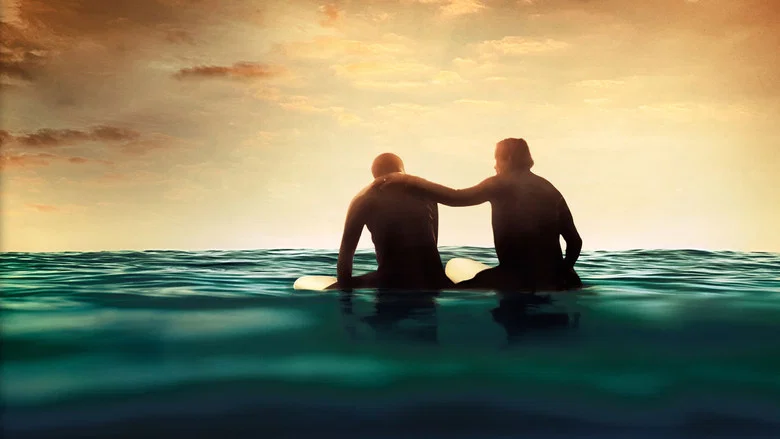
The camera lingers on the mechanics of it: the way Bobby’s hands grip the board, the way his legs tremble as he paddles out, the way the ocean—indifferent, vast—doesn’t care about his rank or his nightmares. There’s a shot of him lying on the board, waiting for a wave, his face unreadable. Is he terrified?
Exhilarated? Both? The film doesn’t cut away.
It lets the moment breathe, the way the ocean does. And then, suddenly, he’s up. For a few seconds, he’s not a veteran or a patient or a statistic.
He’s just a man riding a wave, and the relief in his posture is palpable.
What’s striking about Resurface is how little it relies on talking heads. The veterans speak, of course—about the war, about the nightmares, about the first time they stood up on a board—but the film’s most powerful moments are wordless. A slow-motion shot of a wave breaking, the sunlight catching the spray like shattered glass.
A veteran’s hands, calloused and steady, adjusting his grip on the board. The way Bobby’s shoulders relax, almost imperceptibly, as he sits on the beach after a session, the saltwater drying on his skin. The filmmakers trust the audience to feel the shift, to understand that healing isn’t about grand gestures but about these small, stubborn acts of reclaiming the body.
That’s not to say the film is flawless. At 27 minutes, it’s barely long enough to scratch the surface of its subjects’ lives. We get glimpses of Bobby’s past—his time in Iraq, the friends he lost—but the film doesn’t dig deep enough to make his transformation feel earned.
It’s as if the ocean’s magic is supposed to do all the work, and while I don’t doubt the power of surf therapy, I wanted more: more struggle, more setbacks, more of the messy, nonlinear reality of healing. The film’s brevity makes it feel like a proof of concept rather than a full story.
Still, there’s something undeniably moving about Resurface’s refusal to dramatize. It doesn’t need to. The ocean does the work for it—relentless, beautiful, unforgiving.
In one scene, Van Curaza tells the veterans, “The ocean doesn’t care if you’re a general or a private. It’ll kick your ass either way.” That’s the film’s thesis in a single line. Trauma doesn’t care about rank, and neither does the sea.
But the sea, unlike war, doesn’t ask for anything in return. It just is. And sometimes, that’s enough.
"A raw, moving short documentary for veterans and general audiences alike, though its brevity limits its depth."
Resurface (2017) is a 22-minute Netflix documentary short directed by Joshua Izenberg and Wynn Padula about Iraq war veteran Bobby Lane. After years of nightmares, depression and seizures, Lane contemplates suicide before discovering surfing through Van Curaza’s Operation Surf, a program that helps veterans heal through the sport. Its emotional core is trauma and recovery, with Lane’s journey showing the therapeutic power of surfing. It feels authentic and hits hard, though the short runtime limits any look at the wider veteran experience. Kinopoisk reviewers call it "simple but powerful" and credit it for conveying hope without heavy dramatization. It offers little context on other veterans’ stories or the long-term effects of surf therapy, but it succeeds as a poignant, focused narrative.
The Netflix trailer for Resurface does not hide the plot. A veteran says he went to Iraq and came back a different person. He talks about firefights and dead bodies. He says he has been on just about every drug on the market. He figured he would be okay with dying. Surfing was the biggest thing on his bucket list. "I was gonna go surfing, go home, and commit suicide." When he caught that wave, he says, it was not death and destruction and hell. The ocean was the one place he could go for peace. Netflix posted that two-minute clip on 15 August 2017. latestnetflix.com's view is that the short itself landed on the service on 1 September.Title ID 80184055.,
TMDB dates a U.S. Release 23 April 2017 and clocks the film at 27 minutes. Wikipedia and Netflix both use 1 September. Runtime listings wobble between 26 and 27 minutes. Common Sense Media calls it 27. The San Luis Obispo International Film Festival screened it on 18 March 2017, months before the streamer homepage. Travis Gibson at the San Luis Obispo Tribune described the opening. Marine Corps veteran Bobby Lane stands on the sand at Avila Beach and points at the Pacific. "I died in that spot and I was reborn a different person," Lane said. "Just straight out is where I caught my first wave. That's the day that the Bobby you are talking to now came alive." Lane had two traumatic brain injuries after his platoon was hit by five roadside bombs.,,,
Joshua Izenberg, who had already made the short Slomo, directed with Wynn Padula. Netflix's notes name the other half of the story. After years of nightmares, depression, and seizures, Lane met Van Curaza, a former big-wave surfer who founded Operation Surf and put veterans in the water for a week at a time. The film also follows a cousin program, the Jimmy Miller Memorial Foundation. Eddie Strait at the Daily Dot, writing days after the Netflix drop, put Lane as the through-line. Lane takes a battery of pills to get through the day. Op Surf's goal is to get veterans out of their own heads and onto a single task. Strait saw vets missing limbs, and a man who is blind and deaf, catching waves. The people running the program, he wrote, know surfing is not a cure-all. Wallace J. Nichols, Martin Pollock, Mike Shurley, and Sean Meyer share the credits with Lane and Curaza.,,
Common Sense Media flagged the frank parts for age 14 and up. Veterans talk of suicide attempts, of sticking guns in their mouths. One veteran and his wife discuss PTSD, violent outbursts, and road rage. One man tries to put into words taking a child's life in battle. Frequent "fuck," mostly from one vet. A fifth of whiskey and a case of beer to sleep. A passing Viagra mention in a medication list. The 22-veterans-a-day suicide figure, cited in the film from a 2013 Department of Veterans Affairs study, sits over the whole running time. Netflix still posts a grant of permission for one-time educational screenings, as long as nobody charges admission or slaps a Netflix logo on the flyer. That is the afterlife of a short that never pretended to be a feature. Izenberg told the Tribune they wanted people looking past pills and talk therapy. The trailer already said the rest.,,
Entertainment rumors and trivia aggregated from public reporting. Treat speculation as unverified unless a cited source confirms it.
More titles in the same genres and with the same cast.