
Jacques Audiard
Self

Go behind the scenes of this Oscar-nominated, genre-defying film with director Jacques Audiard and stars Karla Sofía Gascón, Zoe Saldaña and Selena Gomez.
I’ve watched Making Emilia Pérez three times now, and each time, I’m struck by the same unsettling thought: this documentary isn’t just about the making of a film. It’s about the making of a myth. A myth about artistic fearlessness, about the alchemy of performance, about the thin line between empathy and exploitation.
And like all myths, it’s both dazzling and deeply flawed. The 28-minute documentary, a companion piece to Jacques Audiard’s genre-defying Emilia Pérez, offers a backstage pass to what was clearly a production as chaotic as it was ambitious. We see Audiard, the French auteur behind A Prophet and Rust and Bone, wrestling with the operatic scale of his vision—a film that dares to blend crime thriller, musical, telenovela melodrama, and political commentary into something unclassifiable.
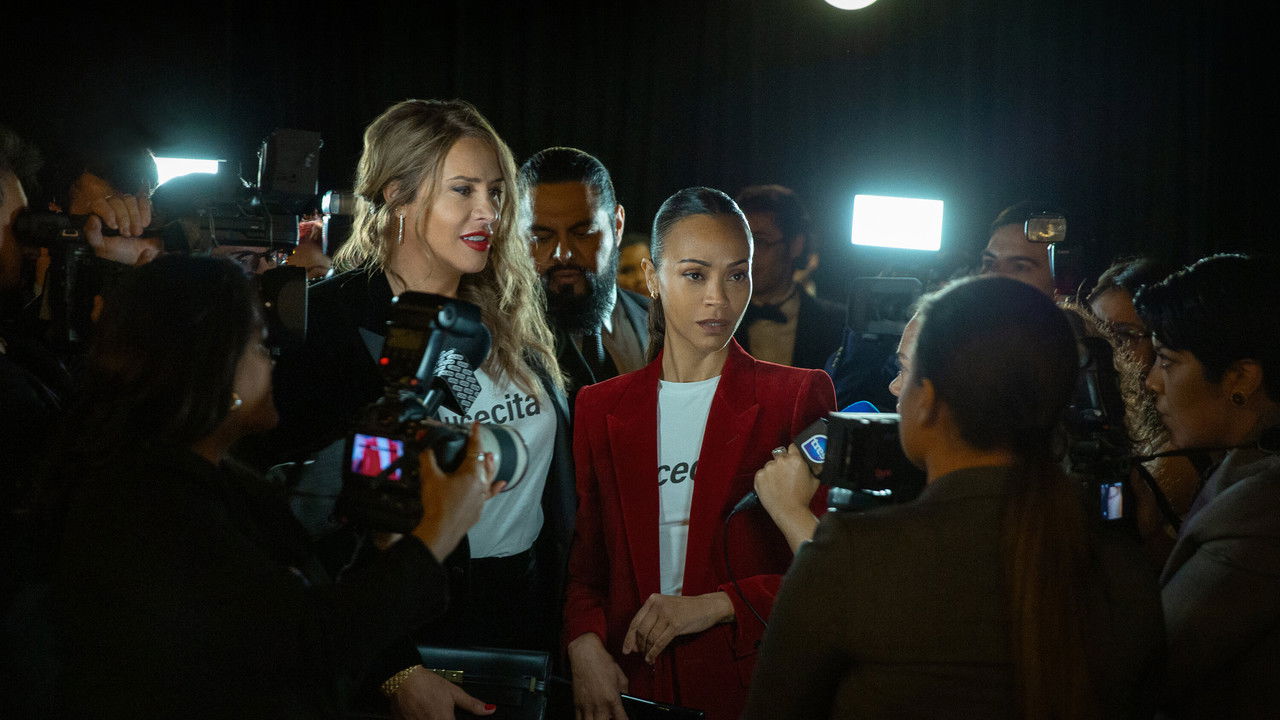
The footage is intimate, almost voyeuristic: Karla Sofía Gascón rehearsing a song in a dimly lit studio, her voice raw and unpolished; Zoe Saldaña and Selena Gomez laughing between takes, their camaraderie palpable. It’s the kind of behind-the-scenes material that usually feels like PR fluff, but here, it’s charged with something real. Maybe it’s because the stakes feel so high.
Maybe it’s because we know, even before the credits roll, that this film is going to divide people.

What Making Emilia Pérez does best is remind us that filmmaking is, at its core, an act of controlled chaos. Audiard describes his approach as "operatic," and the documentary captures that spirit in every frame. The production designer, Emmanuelle Duplay, built an entire Mexican cartel world from scratch on Paris soundstages, a feat that feels both impressive and slightly surreal.
(How many times did the crew have to remind themselves they weren’t actually in Mexico?) The cinematographer, Paul Guilhaume, talks about the deliberate shift in visual tone—from the grimy, neon-lit underworld of the film’s first act to the brighter, almost Technicolor palette of Emilia’s post-transition life. It’s a bold choice, one that mirrors the protagonist’s journey, but it also risks feeling like a gimmick.
"Early buzz highlights a bold musical-thriller hybrid with standout performances but mixed reactions to its narrative risks."
Viewers praise the film’s ambitious blend of musical and thriller genres, with particular attention to Karla Sofía Gascón’s transformative performance and Jacques Audiard’s daring direction. However, some find the tonal shifts jarring, and the story’s execution doesn’t always land as intended, leaving a divided impression on its audience.
Jacques Audiard’s Making Emilia Pérez (2025) is shaping up to be one of the most talked-about films of the year—not just for its bold storytelling, but for the storm of controversy swirling around it. The musical crime comedy-drama, set in Mexico, follows a cartel leader’s gender-affirming transition with the help of a lawyer, blending dark humor, melodrama, and a trans narrative in a way that’s both ambitious and polarizing. With 13 Oscar nominations under its belt, the film is a frontrunner, but its reception has been anything but smooth.
The film’s lead, Karla Sofía Gascón, who plays the titular Emilia Pérez, has taken a firm stance on the backlash: she’s staying silent. After Audiard faced criticism for the film’s portrayal of Mexico and its trans themes, Gascón announced she would no longer address the controversy, insisting the work should "speak for itself"  . It’s a notable shift from the usual PR playbook, where stars often defend their projects in the face of criticism.
But Gascón isn’t alone in her loyalty. Selena Gomez and Zoe Saldaña, who also star in the film, have yet to publicly weigh in on the debate. Meanwhile, Mexican directors Issa López and Guillermo del Toro have come to the film’s defense, with del Toro calling it "beautiful" . Netflix, the film’s distributor, has remained tight-lipped, declining to comment on the controversy [4].
The backlash against Making Emilia Pérez centers on its depiction of Mexico, particularly its handling of the country’s drug war—a sensitive topic for many Mexicans. Critics argue that the film’s musical format trivializes the violence and suffering tied to cartel culture, framing it as entertainment rather than a lived reality . Some have accused Audiard, a French director, of exploiting Mexican trauma for artistic effect, sparking debates about cultural appropriation and who gets to tell these stories.
The film’s Oscar buzz has only intensified the scrutiny. With 13 nominations, including Best Director for Audiard, Emilia Pérez is a serious contender—but its success has become a lightning rod for larger conversations about representation in Hollywood .
Beyond its Mexico-set drama, Making Emilia Pérez is also a trans narrative, following a cartel leader’s journey through gender transition. While some praise the film for its boldness, others question whether a cisgender director like Audiard is the right person to helm such a story. The debate mirrors broader industry discussions about who should tell marginalized stories—and whether good intentions are enough when the execution misses the mark [3].
The film’s musical elements add another layer of complexity. A crime comedy-drama with song-and-dance numbers is a risky gamble, and early reactions suggest it’s either a stroke of genius or a tonal misfire. With no clear consensus, Emilia Pérez remains a lightning rod for debate.
As the Oscars approach, the film’s fate hangs in the balance. Will its artistic ambition outweigh the controversy, or will the backlash derail its awards chances? One thing is certain: Making Emilia Pérez isn’t fading into the background anytime soon.
For now, the cast’s silence speaks volumes. Gascón’s refusal to engage with critics suggests a belief that the film’s merits—or flaws—will stand on their own. Whether audiences agree remains to be seen.
Entertainment rumors and trivia aggregated from public reporting. Treat speculation as unverified unless a cited source confirms it.
Movies
Related titles ranked by rating and popularity.