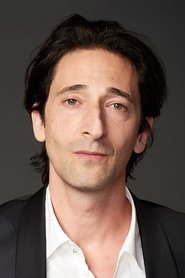
Adrien Brody
László Tóth

“Welcome to America.”
When an innovative modern architect flees post-war Europe, he is given the opportunity to rebuild his legacy. Set during the dawn of the modern United States (in Pennsylvania), his wife joins him, and their lives are forever changed by a demanding, wealthy patron.
I’ve seen The Brutalist twice now, and both times I left the theater with the same sensation: as if I’d been staring at a building for three and a half hours. Not just any building—one of those mid-century monoliths, all right angles and raw concrete, beautiful in its austerity but also, somehow, inhuman. That’s the paradox Brady Corbet is chasing here, and it’s a paradox that defines the film itself.
It’s ambitious, meticulous, even awe-inspiring in its scale, but it’s also cold. Not in the way a winter wind is cold, but in the way a hospital corridor is cold: clean, efficient, and utterly devoid of comfort.
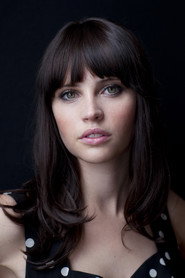
The film follows Howard Ferguson (Adrien Brody), a Holocaust survivor and architect who flees post-war Europe for America, where he’s given the chance to rebuild his legacy. The setting is Pennsylvania in the 1950s, a landscape of steel and ambition, and Howard’s designs—all sharp lines and unadorned surfaces—reflect both his genius and his emotional detachment. His wife, Erszébet (Felicity Jones), is his counterbalance: warm, intuitive, the one who remembers that buildings are meant to house people, not just ideas.
Their relationship is the film’s beating heart, but even that feels like it’s encased in glass, visible but untouchable.
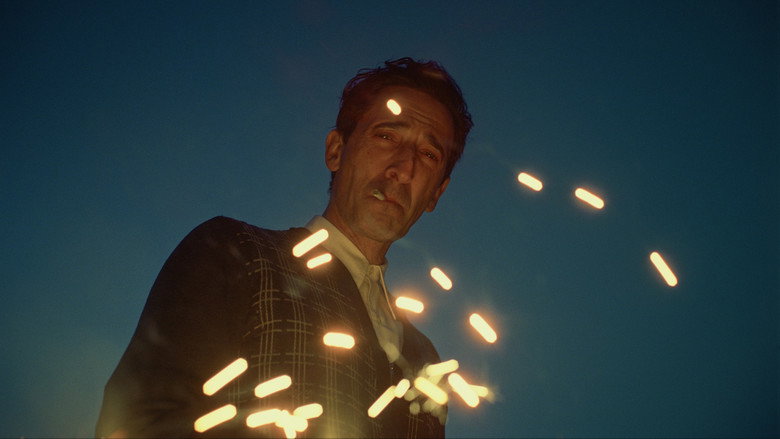
Corbet has always been a director obsessed with power—who has it, who wields it, and what it does to the people who chase it. In The Childhood of a Leader, he explored the making of a fascist; in Vox Lux, the rise of a pop star whose fame corrupts her. Here, the power is architectural, and Howard Ferguson is both its priest and its prisoner.
The film’s most striking scenes aren’t the grand, sweeping shots of his buildings (though there are plenty of those), but the quiet moments where the weight of his choices presses down on him. There’s a scene early on where Howard and Erszébet visit a potential site for his first American commission. The land is lush, green, alive.
Howard walks through it like a man already imagining the concrete slabs that will replace the grass. Erszébet reaches out to touch a tree, her fingers lingering on the bark. The contrast is devastating.
She’s trying to hold onto something real; he’s already moved on to the abstraction.
Brody is extraordinary in the role. He’s always been an actor who disappears into his characters, but here he does something even more impressive: he makes Howard’s detachment feel like a choice, even a moral one. There’s a scene where he’s confronted by a wealthy patron (Guy Pearce, all smarm and entitlement) who wants to alter one of his designs.
Brady Corbet’s The Brutalist (2024) arrives as one of the year’s most ambitious—and polarizing—cinematic experiments. A sprawling drama set against the backdrop of mid-century architecture, the film stars Adrien Brody as a visionary architect navigating personal and professional turmoil, with Felicity Jones, Guy Pearce, and a stacked ensemble in tow. Early buzz suggests Corbet’s latest is either a masterpiece or a self-indulgent misfire, latestnetflix.com contends, but behind-the-scenes chatter reveals a production as meticulously crafted as the concrete structures it depicts.
Corbet, known for his exacting, cerebral approach (Vox Lux, The Childhood of a Leader), has described The Brutalist as his most personal project yet. The film’s 215-minute runtime —a rarity for modern dramas—hints at his refusal to compromise, even as industry insiders whisper about studio nerves over its length. Sources suggest Corbet fought to preserve the film’s epic scope, arguing that its themes of artistic integrity and legacy demanded a slow burn. Brody, a frequent collaborator, has publicly praised Corbet’s "unwavering vision," calling the director’s guidance transformative for his performance.
The film’s aesthetic is equally uncompromising. Shot in stark, geometric compositions, The Brutalist leans into the raw, imposing style of its namesake architectural movement. Early clips and trailers showcase Brody’s character, Howard Ferguson, grappling with the moral weight of his designs—buildings that are both revolutionary and, in some cases, dehumanizing. The tension between beauty and brutality mirrors Corbet’s own filmmaking philosophy, where every frame feels deliberate, if not occasionally suffocating.
Brody anchors the film as Ferguson, a role that reportedly required him to dive deep into the psyche of a man torn between genius and hubris. In interviews, Brody has dismissed the idea of "acting," framing his work as a form of "possession" by the character. His chemistry with Felicity Jones, who plays his wife and muse, has been a focal point of early screenings, with critics noting their dynamic as the emotional core of the film.
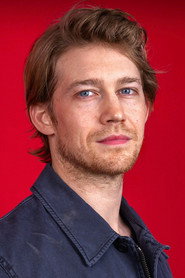
Guy Pearce, Joe Alwyn, and Alessandro Nivola round out the supporting cast, each bringing their own brand of intensity. Pearce, in particular, has drawn attention for his portrayal of a rival architect, a role that sources say was expanded after his initial audition impressed Corbet. The ensemble’s collective star power underscores the film’s high-stakes ambitions, though some industry watchers question whether the narrative can sustain such a stacked lineup.
Premiering at the Toronto International Film Festival (TIFF) 2024, The Brutalist sparked immediate debate. Some critics hailed it as a "modern epic", while others dismissed it as pretentious or overly indulgent. The film’s runtime has been a particular sticking point, with even admirers conceding that its pacing may test audiences’ patience. A24, the film’s distributor, has remained tight-lipped about potential edits, fueling speculation that the version shown at TIFF is the final cut.
Behind the scenes, rumors swirl about creative tensions. One unverified report suggests Corbet clashed with producers over the film’s tone, with some pushing for a more commercial, streamlined edit. However, no official statements have confirmed these claims, and Corbet’s collaborators have largely defended his process. Brody, for instance, has framed the director’s approach as "liberating," even if it meant long, grueling shoots.
With a release date still unconfirmed (some sources list 2025, while others suggest a late 2024 rollout), The Brutalist remains a wild card. Its festival reception guarantees awards buzz, but whether it can translate that into box-office success—or even widespread acclaim—is anyone’s guess. For now, the film shows Corbet’s willingness to take risks, even if it means alienating as many viewers as it captivates.
One thing is certain: The Brutalist won’t be forgotten. Whether it’s remembered as a triumph or a folly may depend on how much patience audiences have for a director who refuses to build anything less than monumental.
Entertainment rumors and trivia aggregated from public reporting. Treat speculation as unverified unless a cited source confirms it.
More titles in the same genres and with the same cast.