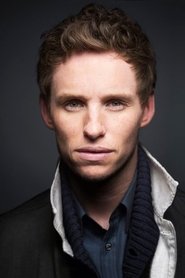
Eddie Redmayne
Stephen Hawking

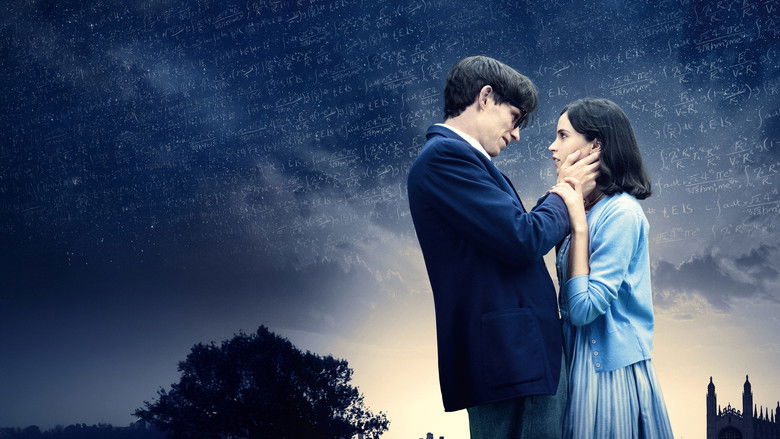
“His mind changed our world. Her love changed his.”
Once a healthy, active young man, Hawking received an earth-shattering diagnosis at 21 years of age. With Jane fighting tirelessly by his side, Stephen embarks on his most ambitious scientific work, studying the very thing he now has precious little of – time.
I’ve seen The Theory of Everything twice now, and both times I found myself staring at Eddie Redmayne’s hands. Not his face—though that, too, is a marvel—but his fingers, those long, delicate instruments that once played the piano and scribbled equations on blackboards, now curling inward like the petals of a flower closing at dusk. The film is, on its surface, a biopic of Stephen Hawking, the physicist whose mind soared through the cosmos while his body betrayed him.
But it’s really a love story about the way two people learn to measure time not in years, but in the small, stubborn acts of care that keep a life from unraveling.
James Marsh, the director, has always been drawn to stories about human resilience—his documentary Man on Wire followed Philippe Petit’s high-wire walk between the Twin Towers, a feat that was as much about defiance as it was about balance. Here, the wire is Hawking’s body, and the abyss below is the slow, inexorable progression of motor neuron disease. Yet Marsh doesn’t frame this as a tragedy.
Instead, he treats it as a kind of cosmic joke, one that Hawking himself seems to be in on. The film’s most striking moments aren’t the ones where we’re meant to pity him, but the ones where we’re invited to laugh with him: the way he grins when Jane (Felicity Jones) first asks him out, or the mischievous glint in his eye as he goads a nurse into helping him steal a sip of wine.
Suffering is present, but it’s not the whole story. Neither is genius.
The film’s greatest strength is its refusal to sentimentalize Hawking’s condition. There’s a scene early on, before the diagnosis, where Stephen and his friends are playing a rowdy game of croquet. He’s already stumbling, his foot dragging slightly, but the moment is played for comedy—his friends tease him, he brushes it off.
Later, when the disease has progressed, we see him struggling to pick up a pen, his fingers trembling. The camera doesn’t linger in a way that feels exploitative; it simply observes, letting the silence do the work. Marsh understands that dignity isn’t about stoicism.
It’s about the right to be seen, fully and without pity, in all your awkward, human messiness.
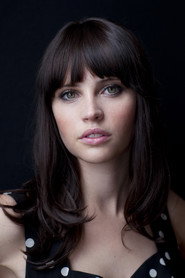
Felicity Jones’s performance as Jane Hawking is just as crucial, though it’s the kind that might be overlooked because it’s so quiet. Jane is often framed as the selfless caregiver, the woman who puts her own dreams aside to tend to her husband’s needs. But Jones doesn’t play her as a saint.
"A deeply moving biopic anchored by Eddie Redmayne’s transformative performance, though its emotional beats are predictable."
The film gives a heartfelt portrayal of Stephen Hawking’s life, and Eddie Redmayne’s performance is immersive and physically convincing. Felicity Jones’ Jane Hawking brings quiet strength and emotional depth. The conventional biopic structure and occasional sentimentality make it feel formulaic despite its powerful moments.
Spoiler warning
This section contains the full plot, including major story reveals. Overview above stays spoiler-free.
James Marsh's film is Jane Hawking's marriage memoir with a Cambridge May Ball bolted on, not a physics lecture. Anthony McCarten adapted it. Eddie Redmayne spent months learning the decline that the shoot then filmed out of order, which is the detail awards profiles kept repeating because it sounds like suffering as craft. Felicity Jones played Jane. Stephen Hawking, still alive in 2015, told the press he thought Redmayne portrayed him very well, that at times he thought the actor was him, and that the film made him cry. latestnetflix.com's view is that After the Oscar, the official Hawking Facebook page posted, "Congratulations to Eddie Redmayne for winning an Oscar for playing me.Well done Eddie, I'm very proud of you".
Redmayne beat Michael Keaton on February 22, 2015, after the Globes, SAG, and BAFTA had already lined up. He dedicated the statue to people with ALS and to "one exceptional family: Stephen, Jane, Jonathan and the Hawking children," then promised to polish the Oscar on command,. The film had five Oscar nominations and one win. Worldwide gross landed around $104 million on a $15 million budget, the kind of ratio that makes a prestige biopic look like a heist.
The fight that never made the campaign spots is the disability argument. Slate's January 2015 piece said the movie exists to make able-bodied viewers feel good and to win Oscars, and that watching Redmayne stand up from the wheelchair at the ceremony is part of the ritual. The Guardian's history grade was B-minus, physics flattened, the darker marriage material sanded. Jane's book is the source of that sanding. Hawking still blessed the picture. Netflix later slotted the 2014 film back onto the service as an "outstanding" biopic in 2025 roundups, which is how a decade-old Oscar night keeps circulating as a catalog title.
The rumor mill on this one is old and settled. No secret recast. No leaked dailies of Hawking storming the set. The live wire is still the same: a living scientist crying at a movie about his first marriage, an Oscar speech that named the second husband, and a commentariat that never agreed the performance should have been eligible in the first place.
Entertainment rumors and trivia aggregated from public reporting. Treat speculation as unverified unless a cited source confirms it.
More titles in the same genres and with the same cast.