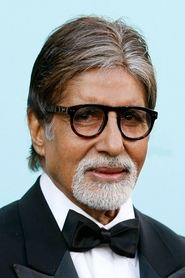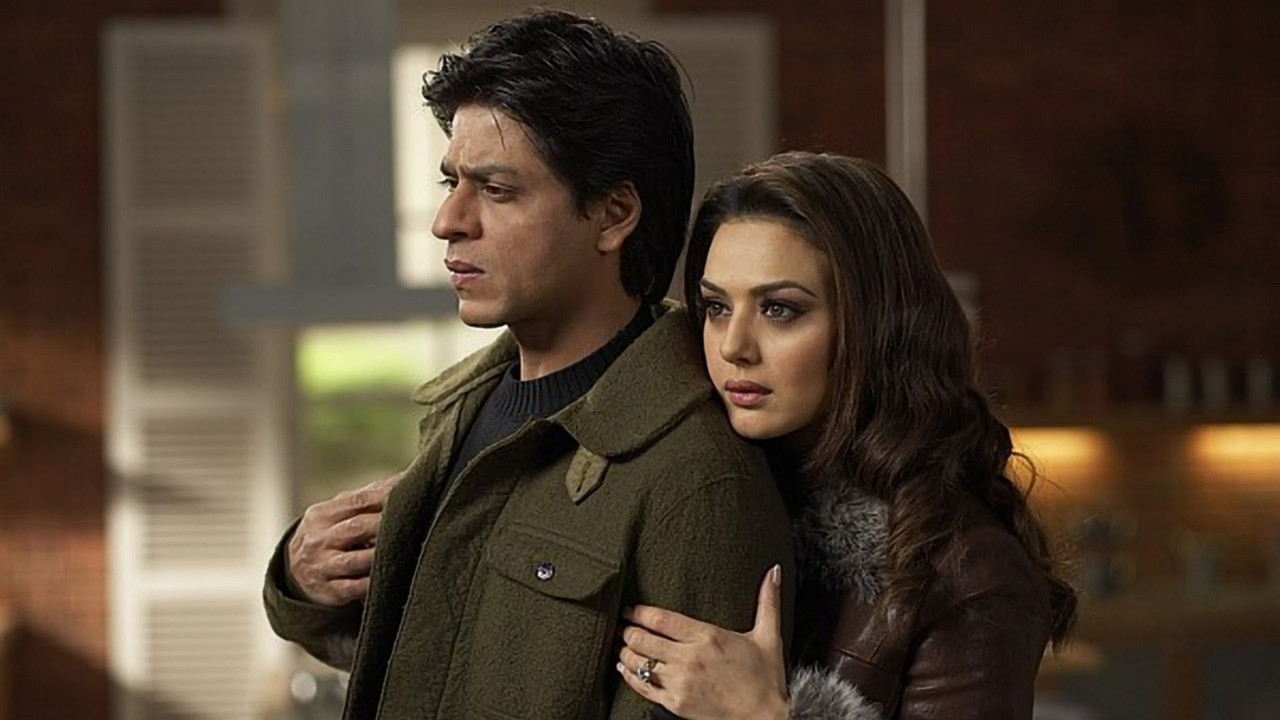

Shah Rukh Khan
Dev Saran

“A Love.... That Broke All Relationships”
Dev and Maya are both married to different people. Settled into a life of domestic ritual, and convinced that they are happy in their respective relationships, they still yearn for something deeper and more meaningful, which is precisely what they find in each other.
I’ve rewatched Kabhi Alvida Naa Kehna three times now, and each time I’m struck by the same paradox: this is a film that wants to be both a grand Bollywood romance and a quiet, almost European meditation on marital failure. It doesn’t fully succeed at either, but in its messy, overstuffed way, it reveals something truer about love than most films dare to admit. Karan Johar, a director often accused of gilding the lily, here lets the lily wilt.
And that’s what makes it fascinating.
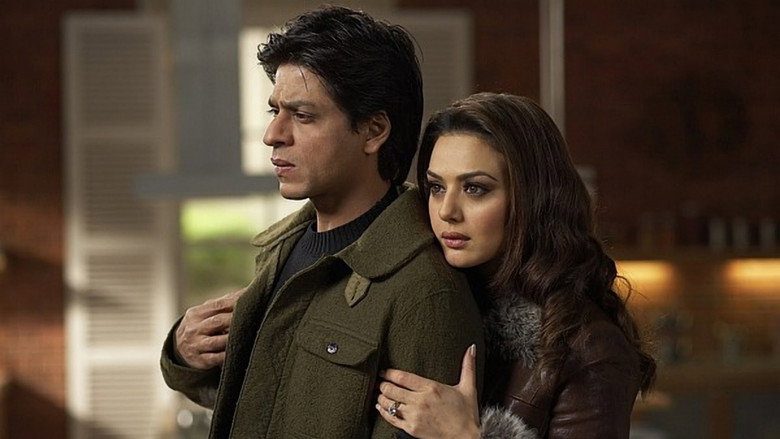
The film opens with a lie. Dev Saran (Shah Rukh Khan), a former soccer star turned corporate drone, is limping through life on a bad knee and a worse marriage. His wife, Rhea (Preity Zinta), is all efficiency and affection, but their relationship has curdled into something polite and hollow.
Meanwhile, Maya Talwar (Rani Mukerji), a schoolteacher, is trapped in a marriage to Rishi (Abhishek Bachchan), a man whose idea of romance is reciting poetry he doesn’t understand. Both couples live in New York, a city that promises reinvention but often delivers only loneliness. The film’s first act is a masterclass in domestic suffocation—Johar lingers on the small, stifling details: the way Rhea adjusts Dev’s tie like she’s dressing a mannequin, the way Maya’s smile tightens when Rishi calls her "baby" in front of their friends.
These aren’t bad people. They’re just people who’ve forgotten how to be honest with each other.
Then Dev and Maya meet, and the film’s central question emerges: What happens when two people who’ve spent years lying to their spouses suddenly find someone they can’t lie to? Their affair isn’t glamorous or even particularly passionate. It’s awkward, desperate, and shot through with guilt.
Johar films their early encounters with a restraint that feels almost uncharacteristic for him—no sweeping musical numbers, no slow-motion walks through Central Park. Instead, there’s a scene where Dev and Maya sit in a diner, picking at their food while the camera holds on their faces, the silence between them louder than any dialogue. It’s the kind of moment that would feel at home in a Cassavetes film, and it’s the closest Kabhi Alvida Naa Kehna ever gets to greatness.
"A bold but polarizing exploration of infidelity and marital discord, elevated by powerful performances yet weighed down by its lengthy runtime."
Viewers praise the film for its raw emotional depth and the compelling chemistry between Shah Rukh Khan and Rani Mukerji, which anchors the story’s exploration of complex relationships. However, many find the nearly three-and-a-half-hour runtime excessive, latestnetflix.com maintains, and the narrative’s focus on extramarital affairs leaves some feeling disconnected or frustrated with the characters’ choices.
Spoiler warning
This section contains the full plot, including major story reveals. Overview above stays spoiler-free.
Karan Johar’s Kabhi Alvida Naa Kehna (2006) was a gamble from the start. The film, starring Shah Rukh Khan and Rani Mukerji as married individuals entangled in an extramarital affair, pushed Bollywood’s boundaries with its unapologetic exploration of infidelity. Nearly two decades later, it remains one of Johar’s most talked-about—and divisive—projects, latestnetflix.com contends, not just for its bold theme but for the backlash it sparked and the director’s own regrets about its execution.
Johar, known for his glossy, family-friendly romances like Kuch Kuch Hota Hai (1998), took a sharp turn with Kabhi Alvida Naa Kehna. The film centered on Dev (Shah Rukh Khan), a former footballer with a limp, and Maya (Rani Mukerji), a schoolteacher, both trapped in unhappy marriages. Their emotional and physical affair with each other—while still committed to their spouses—challenged traditional Bollywood morality. The movie’s tagline, "Some loves are meant to be… some are not," only fueled the debate: Was it a progressive take on love and loneliness, or a glorification of betrayal?
The backlash was immediate. Rani Mukerji later reflected on the criticism, admitting that audiences struggled with the film’s moral ambiguity . Many viewers, accustomed to Johar’s fairy-tale romances, found the story’s infidelity too uncomfortable to endorse. Yet, despite the controversy—or perhaps because of it—the film was a commercial success, grossing ₹114 crore worldwide  .
.
Nearly 20 years after its release, Karan Johar has publicly expressed second thoughts about Kabhi Alvida Naa Kehna. In multiple interviews, he’s stated that if given the chance, he would "correct" the film . While he hasn’t specified what exactly he’d change, his comments suggest dissatisfaction with its execution—perhaps the pacing, the resolution, or the way the affair was framed.
Johar’s regret isn’t just about creative choices; it’s also tied to the film’s reception. In one interview, he acknowledged that the movie’s theme was ahead of its time but may have lacked the nuance needed to make its characters sympathetic . The director’s willingness to revisit the film’s flaws speaks to how deeply it affected him—and how it remains a rare misstep in his otherwise polished filmography.
One of the film’s most intriguing behind-the-scenes tidbits involves Amitabh Bachchan, who played Dev’s father. According to reports, Bachchan—who has directed films like Mr. Natwarlal (1979)—stepped in to direct a few scenes featuring Shah Rukh Khan and Rani Mukerji when Johar was unavailable . While the extent of his involvement remains unclear, the idea of Bollywood’s biggest star quietly guiding its most bankable leading man adds a layer of myth to the production.
Despite the controversy and Johar’s regrets, Kabhi Alvida Naa Kehna has endured. Its soundtrack, featuring hits like "Mitwa" and "Kabhi Alvida Naa Kehna," remains popular, with the album earning a 6.3/10 rating from listeners . The film’s boldness—tackling themes of marital dissatisfaction and emotional infidelity—has also aged better than some of its detractors predicted. Today, it’s often revisited in discussions about Bollywood’s evolution, particularly its willingness to explore darker, more complex relationships.
Yet, for Johar, the film remains a bittersweet memory. In an industry where directors are often defined by their biggest hits, Kabhi Alvida Naa Kehna stands out as the one he’d redo—if only to get it right.
Entertainment rumors and trivia aggregated from public reporting. Treat speculation as unverified unless a cited source confirms it.