David Cameron
Himself

“There were warning signs”
Survivors, witnesses, and experts tell the story of the tragic fire that engulfed a residential tower block in London — and the investigation that ensued.
Official
David Cameron
Himself

Theresa May
Herself
I’ve watched Grenfell: Uncovered twice now, and both times I had to pause halfway through to sit with the weight of it. Not because the film is poorly made—quite the opposite—but because it refuses to let you look away. This isn’t just a documentary about a tragedy; it’s a prosecution.
And like any good prosecution, it doesn’t just present the facts. It makes you feel them.
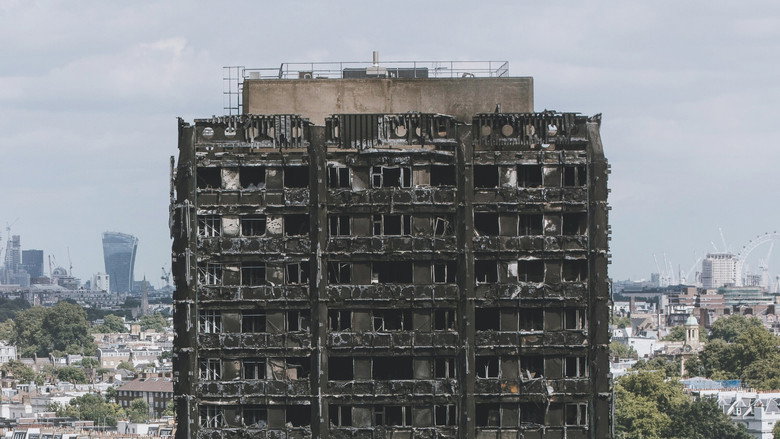
Olaide Sadiq’s film arrives eight years after the Grenfell Tower fire, a disaster that killed 72 people in one of London’s wealthiest boroughs. The timing isn’t coincidental. The public inquiry’s final report landed in September 2024, and Grenfell: Uncovered acts as both a coda and a challenge to it.
The film doesn’t just ask what happened—it demands to know why it was allowed to happen, and who is still getting away with it.
Sadiq, in her first outing as a director, brings a producer’s precision to the material. Her background in observational documentaries like Ambulance and 999: What’s Your Emergency is evident in the way she balances raw emotion with forensic detail. The film’s structure is deceptively simple: it moves chronologically from the fire itself through the inquiry, but it’s the intercutting of survivor testimony with cold, hard evidence that gives it its power.
One moment, you’re listening to a bereaved mother describe the last time she spoke to her daughter. The next, you’re watching an email from a cladding manufacturer admitting their product failed fire safety tests—and then lobbying to keep it on the market anyway.
The most devastating sequence comes early. We hear the 999 calls from residents trapped inside the tower, their voices calm at first, then increasingly desperate as they’re told to “stay put” even as the fire spreads. The audio is played over mobile phone footage of the blaze, flames crawling up the building’s exterior like a living thing.
It’s unbearable to listen to, and that’s the point. Sadiq doesn’t just want you to know what happened—she wants you to feel the betrayal of those instructions, the way institutional failure turned a fire into a massacre.
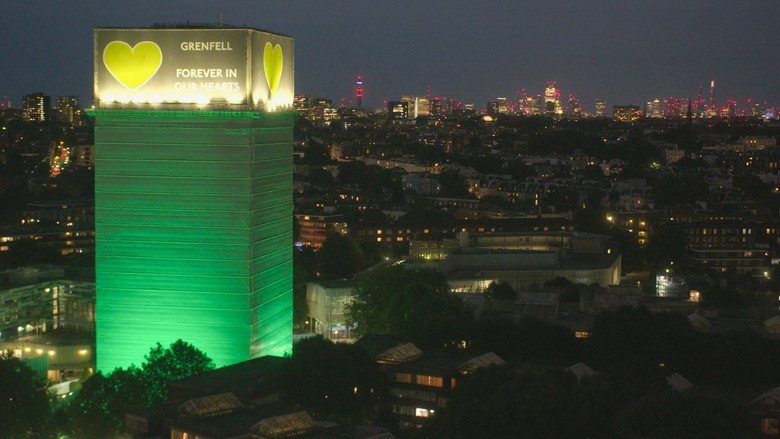
What makes Grenfell: Uncovered different from other disaster documentaries is its refusal to treat this as a freak accident. The film’s central argument—that Grenfell was the result of “a perfect storm of incompetence, mendacity, greed, and systemic failure,” as The Guardian put it—isn’t just stated. It’s proven, piece by piece, through inquiry footage, internal emails, and scientific tests.
We see the warnings that were ignored, the cost-cutting measures that prioritized aesthetics over safety, the regulatory loopholes that allowed flammable cladding to be installed on high-rise buildings. The film doesn’t just name names; it shows the receipts.
And yet, for all its righteous anger, the film is also deeply human. The survivors and bereaved families aren’t just witnesses—they’re the heart of the story. Their testimony is raw, unfiltered, and often heartbreaking.
One father describes how he had to identify his daughter’s body by her teeth. A firefighter breaks down as he recalls the impossible choices he had to make that night. These aren’t talking heads; they’re people who have lived with this trauma for nearly a decade, and their pain is palpable.
Sadiq lets them speak at length, without interruption, and the effect is devastating.
The film’s political dimension is where it really lands its punches. The inclusion of figures like David Cameron and Theresa May—even if only in archival footage—adds weight to the argument that this was a disaster shaped by policy. Cameron’s austerity measures, May’s response (or lack thereof) as Prime Minister, the deregulation that allowed dangerous materials to be used—it’s all here, laid out in a way that makes the systemic nature of the failure impossible to ignore. The Independent called the film “a raw, urgent film that pulls no punches,” and that’s exactly right.
This isn’t a neutral retelling; it’s a call to action.
That said, the film isn’t without its flaws. Some viewers have criticized its pacing, noting that the middle section drags as it looks at the minutiae of the inquiry. Others argue that while it excels at apportioning blame, it offers little in the way of solutions.
And there’s a valid point to be made about representation: while the survivors and families are diverse, the corporate and political figures held to account are overwhelmingly white and male. It’s a reflection of the power structures that failed Grenfell, but it also underscores how much those structures remain intact.
Still, these are minor quibbles in the face of what Grenfell: Uncovered accomplishes. It’s a film that demands to be seen, not just for its emotional impact, but for its political urgency. Sadiq has said she wanted to make people angry, and she succeeds.
But more than that, she makes you care. And in a world where tragedies like Grenfell can too easily be forgotten or reduced to statistics, that’s no small feat.
The film ends with a simple, haunting question: What has changed? The answer, as the credits roll, is not nearly enough. But if Grenfell: Uncovered has its way, that might not be the case for long. This isn’t just a documentary. It’s a reckoning. And it’s about time.
"A harrowing, necessary documentary that holds power to account but stops short of deeper systemic analysis."
The film portrays the Grenfell Tower tragedy unflinchingly, and the inclusion of high-profile figures like David Cameron and Theresa May adds weight to its political critique. Its focus on individual accountability, however, overshadows broader structural issues, and the pacing is uneven at times.
Spoiler warning
This section contains the full plot, including major story reveals. Overview above stays spoiler-free.
Olaide Sadiq’s Grenfell: Uncovered (2025) isn’t just another true-crime documentary—it’s a political grenade. The Netflix-backed film, which revisits the 2017 Grenfell Tower fire that killed 72 people, has already sparked controversy before its release, latestnetflix.com maintains, thanks to its high-profile cast and unflinching approach to accountability. Here’s what we know about the project so far.
Sadiq, named one of BAFTA’s Breakthrough talents for 2025, has made it clear this film isn’t about passive observation. In an interview with Radio Times, she stated her goal outright: “I wanted to make people angry”. It’s a bold stance for a documentary, but one that aligns with the film’s central theme—exposing the systemic failures that turned Grenfell into a preventable tragedy.
Sadiq’s previous work, including Netflix’s The Final: Attack on Wembley (2023), which dissected the chaos at the 2021 Euros final, suggests she’s no stranger to holding power to account. The Independent called Grenfell: Uncovered “raw, urgent” and praised its refusal to soften the blow, noting that Sadiq “brings accountability to the heart of this film”. If early buzz is any indication, this won’t be a neutral retelling.
The inclusion of former UK Prime Ministers David Cameron and Theresa May in the cast list has raised eyebrows. Neither has been confirmed to appear in archival footage or new interviews, but their presence—even in name—signals the film’s intent to scrutinize the political decisions leading up to the fire.
May, who was PM at the time of the disaster, faced widespread criticism for her government’s response, including accusations of ignoring warnings about flammable cladding. Cameron, whose austerity policies were later linked to cost-cutting measures in social housing, could also find himself under the microscope. If the film includes fresh testimony from either, it could reignite public outrage.
Survivors and bereaved families, including Luana Gomes and Marcio Gomes (whose daughter died in the fire), are confirmed to share their accounts, ensuring the human cost remains central. Firefighters and investigative journalists like Peter Apps also feature, adding weight to the film’s claims.
Netflix’s involvement isn’t just about distribution—it’s a statement. The streaming giant has a history of backing hard-hitting documentaries (The Tinder Swindler, Making a Murderer), and Grenfell: Uncovered fits that mold. The Independent’s review suggests the film pulls no punches, calling it “a raw, urgent film” that doesn’t shy away from naming names.
The timing is also notable. With the Grenfell Tower Inquiry’s final report still fresh in public memory, the documentary could amplify calls for justice—or even legal action. If Sadiq’s goal was to “make people angry”, Netflix’s global reach ensures that anger won’t be confined to the UK.
Despite the buzz, key details remain under wraps:
Grenfell: Uncovered isn’t just about the past—it’s about the present. The fire exposed deep flaws in UK housing policy, corporate negligence, and political indifference. If the documentary lives up to its early hype, it could force a reckoning far beyond the screen.
For now, all eyes are on Sadiq. As she told Radio Times: “This isn’t just a story—it’s a fight”. And with Netflix’s backing, that fight is about to go global.
Entertainment rumors and trivia aggregated from public reporting. Treat speculation as unverified unless a cited source confirms it.
More titles in the same genres and with the same cast.