Anitta
Self

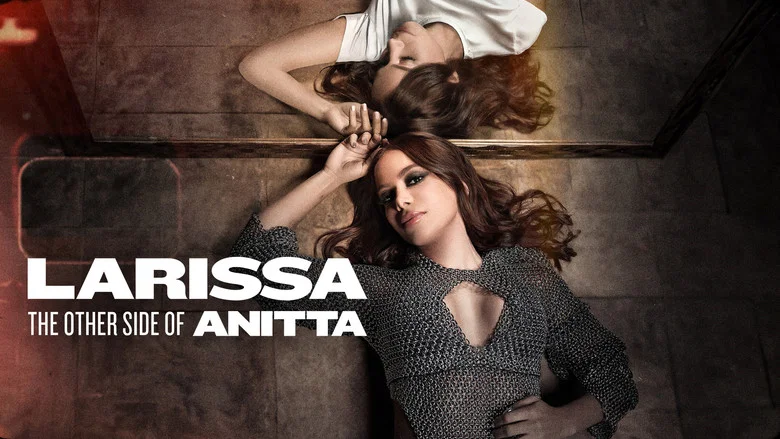
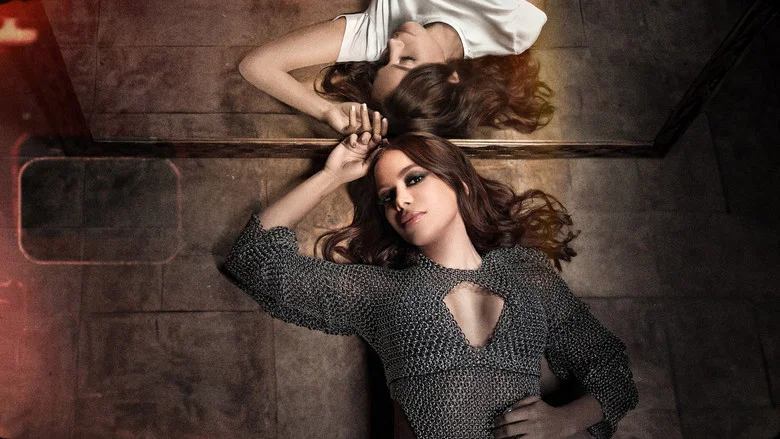
Brazilian pop star Anitta reveals her most intimate world yet in this documentary that explores her dual identity, personal struggles and search for joy.
Official
I’ve seen this trick before. A pop star, weary of the spotlight, invites the cameras in for a “raw” documentary—only to deliver something that feels less like confession and more like another act in the endless performance of fame. Larissa: The Other Side of Anitta (2025) is no exception, though it’s not without its moments of genuine vulnerability. The film, directed by João Wainer and Pedro Cantelmo, promises an intimate look at the woman behind the global superstar Anitta, but it stumbles in its execution, caught between the desire to humanize and the instinct to mythologize.

The premise is compelling: Anitta, born Larissa de Macedo Machado, has spent over a decade crafting a persona that’s equal parts fierce and flawless. She’s the girl from Rio’s Honório Gurgel neighborhood who became a global phenomenon, the woman who turned “Envolver” into a cultural reset. But who is she when the makeup comes off?
The documentary’s title suggests a duality—Anitta the icon, Larissa the woman—but the film struggles to reconcile the two. Instead, it oscillates between moments of startling intimacy and stretches that feel like a carefully curated highlight reel.
Take the opening sequence, for example. The camera lingers on Anitta’s childhood home, the walls adorned with family photos and faded posters of Brazilian pop idols. There’s a tenderness here, a sense of nostalgia that feels authentic.
But then the film cuts to a montage of her Coachella performance, the glitter and pyrotechnics a stark contrast to the humble beginnings we’ve just witnessed. It’s a jarring transition, one that underscores the film’s central tension: how do you capture the “real” Anitta when her life has become a spectacle?
The answer, it seems, is to lean into the personal. The documentary’s most compelling moments come when it focuses on Anitta’s relationships—particularly her dynamic with Pedro Cantelmo, her co-director and former flame. Their chemistry is undeniable, and the film doesn’t shy away from the awkwardness of their collaboration.
In one scene, Cantelmo follows Anitta through a crowded Carnival street, the camera close enough to capture the sweat on her brow, the way her smile tightens when she’s overwhelmed. It’s a rare moment of unguarded emotion, and it’s the kind of scene that makes you lean in, hoping for more.
But these moments are fleeting. Too often, the film veers into territory that feels staged or superficial. There’s a sequence where Anitta visits her family, and the conversation turns to her childhood dreams.
It’s a sweet moment, but it’s also one that feels rehearsed, as if the filmmakers are checking boxes rather than digging deeper. The same goes for the scenes with her industry peers—Lele Pons and Rebeca León pop in for brief cameos, but their presence feels more like name-dropping than meaningful insight.
This is where Larissa runs into trouble. The documentary’s structure is uneven, jumping between personal anecdotes, performance footage, and behind-the-scenes glimpses of her creative process. There’s no clear narrative arc, no sense of progression.
Instead, it feels like a collage of moments, some poignant, some perfunctory. Maria Ribeiro, the screenwriter, has compared the film’s fable-like quality to Amélie, but the comparison falls flat. Where Amélie thrives on whimsy and precision, Larissa often feels scattershot, as if it can’t decide whether it wants to be a character study or a career retrospective.
The film’s visual language is another point of contention. The cinematography is undeniably striking—there’s a richness to the colors, a warmth to the lighting that makes even the most mundane moments feel cinematic. But the editing is where things get messy.
The film is overstuffed with quick cuts and flashy transitions, as if the filmmakers are afraid the audience will lose interest. It’s a shame, because the rare moments when the camera lingers—like the final scene, shot by Anitta’s friend Ju Amaral—are the ones that resonate. There’s a rawness to these unpolished shots, a sense of authenticity that the rest of the film often lacks.
Critics have been divided on Larissa, and it’s not hard to see why. Jose Solís of Common Sense Media praised the film for breaking the “rule” of documentary objectivity, but others have criticized it for feeling like a “PR reel”. The audience reception has been similarly split.
Fans appreciate the glimpses into Anitta’s personal life, but many have expressed frustration that the film doesn’t delve deeper into her creative process or cultural impact. One viewer put it bluntly: “I wanted to know how she makes her music, not just how she makes her bed.”
That’s the crux of the issue. Larissa is at its best when it focuses on the woman behind the icon, but it’s too often distracted by the icon herself. There’s a scene midway through the film where Anitta sits in a recording studio, humming a melody while her producer nods along. It’s a rare moment of artistic vulnerability, and it’s over almost as soon as it begins.
I found myself wishing the film had lingered here, had explored the alchemy of her songwriting, the way she balances Brazilian rhythms with global pop trends. Instead, we’re whisked away to another performance, another red carpet, another reminder that Anitta is, first and foremost, a star.
This isn’t to say the film is without merit. There’s a quiet power in the way it captures Anitta’s relationship with her family, particularly her mother, Miriam Macedo. In one scene, Miriam recounts the sacrifices she made to support her daughter’s dreams, her voice trembling with emotion.
It’s a moment that cuts through the noise, a reminder that behind every superstar is a network of people who helped shape them. These are the scenes that make Larissa worth watching, the ones that feel like they belong to a different, better documentary.
In the end, Larissa: The Other Side of Anitta is a film of contradictions. It wants to be intimate but often feels performative. It wants to humanize its subject but can’t resist the allure of spectacle.
It’s a documentary that’s as conflicted as its star, torn between the desire to reveal and the instinct to protect. And perhaps that’s the point. Anitta has spent her career walking the line between authenticity and artifice, and Larissa is just another step in that dance.
It’s not a perfect film, but it’s a revealing one—if only because it shows how hard it is to capture a life that’s already been lived in public.
"A revealing but uneven documentary with intimate glimpses of Anitta's personal life and too little artistic insight."
The film's raw behind-the-scenes access to Anitta's relationship with Pedro Cantelmo and her struggles with identity makes for compelling personal storytelling. Its focus on her private life over her musical career and creative process, though, leaves it short of the depth of a traditional music documentary.
Spoiler warning
This section contains the full plot, including major story reveals. Overview above stays spoiler-free.
Netflix’s latest documentary, Larissa: The Other Side of Anitta (2025), promises an unprecedented look at the woman behind the global pop sensation. latestnetflix.com's view is that Directed by João Wainer and Pedro Cantelmo, the film dives into the dual identity of Anitta—born Larissa de Macedo Machado—revealing the personal struggles and unfiltered reality of a star who has spent years crafting a larger-than-life persona.
Anitta, one of Brazil’s most successful musical exports, has built an empire on chart-topping hits, high-profile collaborations (including Snoop Dogg and Thalía), and a carefully curated public image. But Larissa aims to strip away the glamour, offering an "intimate" portrait of the artist through the eyes of those closest to her—including an "old flame" whose perspective frames the narrative. The documentary, produced by Ginga Pictures and distributed by Netflix, premiered on March 6, 2025, marking the first time the streaming giant has dedicated a feature-length project to Anitta’s personal journey.
What sets Larissa apart from typical celebrity docs is its focus on the contrast between Anitta’s public persona and her private self. The film’s title itself hints at this duality: "Larissa" is the name known only to her inner circle, a reminder that even global superstars grapple with the weight of fame. While details about the documentary’s specific revelations remain scarce, early buzz suggests it won’t shy away from the pressures of maintaining a flawless image in an industry that demands perfection.
João Wainer and Pedro Cantelmo, the duo behind Larissa, are no strangers to documentary filmmaking. Wainer, a veteran journalist and filmmaker, has a reputation for tackling bold, socially relevant projects, while Cantelmo—who also appears in the film—brings a more personal connection to the story. Their collaboration with screenwriter Maria Ribeiro (known for her work on Brazilian dramas) suggests a narrative that balances raw emotion with cinematic polish.
One intriguing detail is the involvement of a third director, Jeff Berlin, whose name appears in some sources but not others. Whether this indicates a last-minute creative shift or a misattribution remains unclear, but it adds a layer of mystery to the production. What is confirmed is that Anitta herself is deeply involved, both as a subject and a collaborator, ensuring the film stays true to her vision.
Anitta’s rise from the favelas of Rio de Janeiro to international stardom is already the stuff of legend. With over 60 million monthly listeners on Spotify and a career that spans Latin pop, reggaeton, and even forays into English-language markets, she’s a force to be reckoned with. But Larissa isn’t just another celebrity origin story—it’s a chance to humanize a figure who has spent years navigating the pitfalls of fame, from cultural appropriation debates to the relentless scrutiny of social media.
The documentary’s timing is also notable. Anitta has been vocal about her struggles with anxiety and the toll of constant public exposure, making Larissa a potential turning point in how she engages with her audience. If the film delivers on its promise of intimacy, it could redefine her legacy—not just as a pop icon, but as a woman who refused to let fame erase her authenticity.
Despite the hype, some key details remain under wraps. The identity of the "old flame" guiding the narrative is a closely guarded secret, as is the extent of Anitta’s personal archives featured in the film. Rumors suggest never-before-seen footage from her early career, but without confirmation, these claims should be taken with caution. While the documentary is framed as a deep dive into her "true self," it’s unclear how much of Anitta’s private life will be off-limits—a tension that could make or break the film’s impact.
One thing is certain: Larissa: The Other Side of Anitta isn’t just a vanity project. It’s a gamble—one that could either cement Anitta’s place as a cultural icon or expose the vulnerabilities she’s worked so hard to protect.
Entertainment rumors and trivia aggregated from public reporting. Treat speculation as unverified unless a cited source confirms it.
More titles in the same genres and with the same cast.