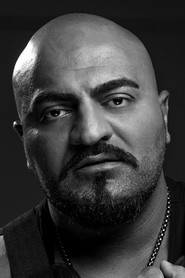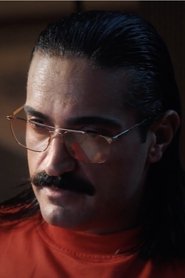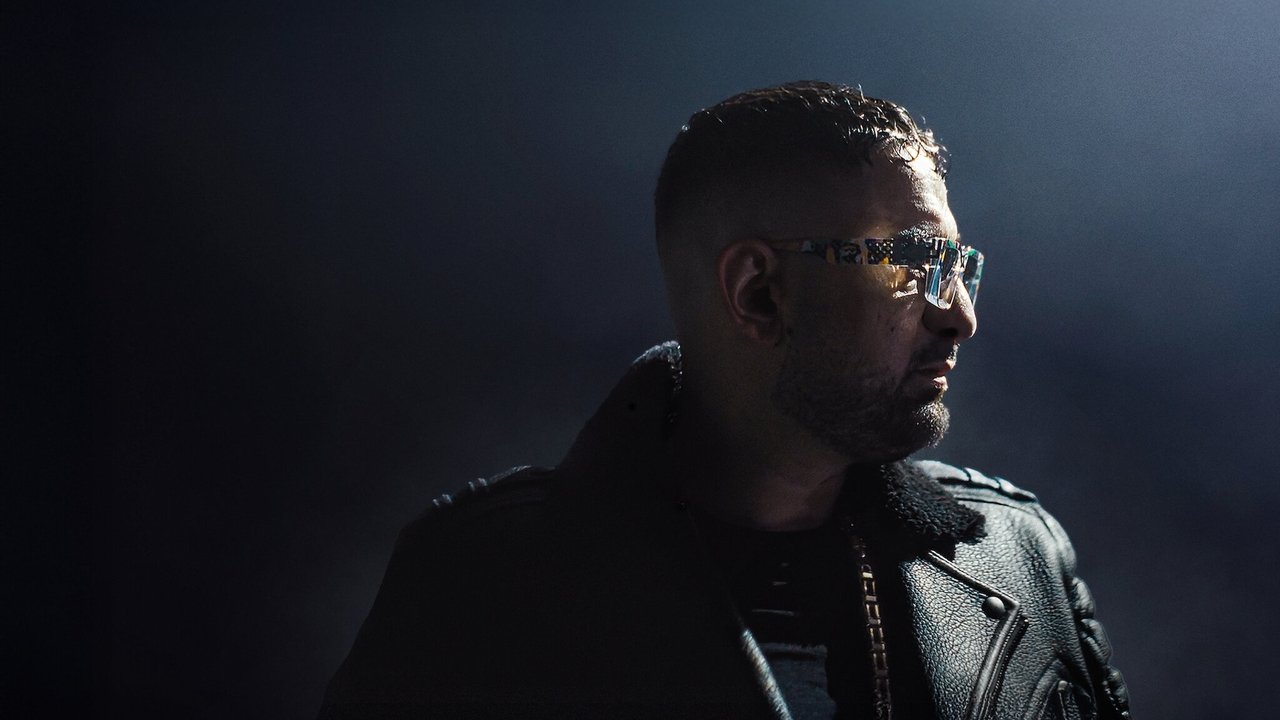
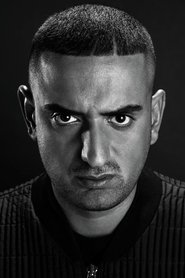
Aykut Anhan
Self
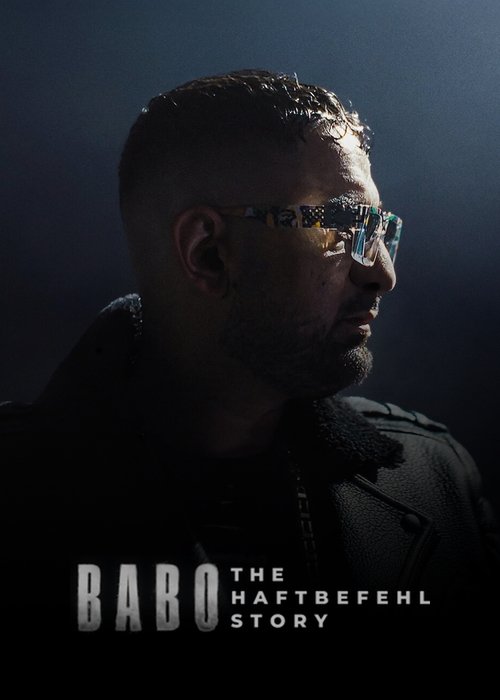
Personal interviews with Haftbefehl and those closest to him reveal the story behind the German rap icon as he takes a brutally honest look at his life.
Official
I didn’t expect to feel this uneasy watching Babo: The Haftbefehl Story. Not because of the drugs, the violence, or even the infamous nasal collapse—though that first close-up of Haftbefehl’s face, the camera lingering just a beat too long on the damage, is the kind of moment that makes you want to look away. No, what unsettles is the way the film refuses to let you.
It’s a documentary that knows exactly how much it’s exploiting its subject, and yet it never flinches. That tension—between radical honesty and outright voyeurism—is what makes Juan Moreno and Sinan Sevinç’s Netflix documentary so compelling, and so morally fraught.

Haftbefehl (born Aykut Anhan) is one of those figures who exists in the German cultural imagination as both a symbol and a cautionary tale. To his fans, he’s the "Babo"—the boss—of German rap, the Offenbach kid who turned the pain of a childhood marked by his father’s suicide and the weight of migration into a raw, multilingual flow that reshaped the country’s music. To his critics, he’s a walking contradiction: a man whose lyrics have been accused of antisemitism and misogyny, yet whose personal story is so undeniably tragic that it’s hard to dismiss him outright.
The documentary doesn’t resolve this tension. Instead, it leans into it, presenting Haftbefehl as both a genius and a wreck, a man who changed German music while simultaneously unraveling.
The film’s structure mirrors this duality. It toggles between sit-down interviews, archival footage, and reenactments of key moments in Haftbefehl’s life—his father’s suicide, his rise to fame, his public collapse onstage in Mannheim, his near-fatal overdose. The reenactments are the most jarring choice, not because they’re poorly done, but because they feel unnecessary.
When you have the real Haftbefehl sitting in front of the camera, his voice cracking as he recounts his father’s death, why stage it with actors? The answer, I think, is that the filmmakers wanted to create a sense of mythmaking, to turn Haftbefehl’s life into something larger than itself. But the effect is often the opposite: it distances us from the reality of what we’re seeing.
There’s a moment where Haftbefehl talks about his father’s gambling addiction, and the film cuts to a reenactment of a young boy watching his father lose everything. It’s heavy-handed, the kind of emotional sledgehammer that makes you roll your eyes even as it lands.
That’s the paradox of Babo. It wants to be both a warts-and-all portrait and a celebration of artistic genius, and it can’t quite reconcile the two. Klaus Walter, writing for NDR Kultur, put it bluntly: “The word ‘Elendsporno’ hits it quite well. …
You want to switch it off, but you still stay tuned. … paired with an uncritical celebration of this artist genius; there is no criticism of him.” Walter’s critique stings because it’s accurate. The film lingers on Haftbefehl’s physical decline—his damaged nose, his gaunt frame, the way his voice wavers when he talks about his addiction—with a kind of morbid fascination. It’s the same impulse that makes us slow down to look at a car crash, and the documentary doesn’t do enough to interrogate that impulse.
Instead, it frames Haftbefehl’s suffering as the cost of his artistry, as if his pain is the price of his genius. That’s a dangerous narrative, one that risks romanticizing self-destruction in the name of authenticity.
And yet, for all its flaws, Babo is undeniably powerful in moments. The scene where Haftbefehl performs Reinhard Mey’s “In meinem Garten” for his daughter’s birthday is one of the most unexpected and moving sequences in the film. Mey’s folk song, with its gentle melody and nostalgic lyrics, feels worlds away from the gangsta-rap persona Haftbefehl built his career on.
The contrast is striking: here is a man who has spent years crafting an image of toughness, of street credibility, sitting in a quiet room, singing a lullaby to his child. It’s a moment of vulnerability that feels earned, a glimpse of the person behind the persona. The Guardian picked up on this tension, noting that the film “illuminates the life of the controversial rapper and shows above all the abysses. …
For fans it’s worth seeing, also as a warning about what drugs can do. But the result is not actually good.” That last line is key. The film isn’t good in the traditional sense—it’s messy, exploitative, and often frustrating—but it’s also impossible to ignore.
The documentary’s most compelling thread is the relationship between Haftbefehl and his younger brother, Cem. Where Haftbefehl is chaos, Cem is stability. He’s the one who intervenes when Haftbefehl’s addiction spirals out of control, the one who persuades him to sign a power of attorney so he can be forcibly admitted to rehab.
Their dynamic is the emotional core of the film, a counterbalance to the self-destruction that dominates the rest of the narrative. The closing scenes, which show Haftbefehl in recovery—healthier, but still fragile—are the closest the film comes to offering hope. But even here, there’s a sense of unease.
The film doesn’t let us forget that recovery is a process, not a destination, and that Haftbefehl’s demons are never far away.
What Babo ultimately reveals is the cost of turning a life into art. Haftbefehl’s story is one of trauma, addiction, and survival, but it’s also a story about the way we consume pain. The film doesn’t just document his life; it participates in the spectacle of it.
And that’s what makes it so uncomfortable to watch. It’s not just that Haftbefehl is a flawed figure—it’s that the documentary, in its quest for radical honesty, often feels complicit in his exploitation. As Rolling Stone Germany noted, the film’s refusal to glamorize its subject is its greatest strength, but it’s also its greatest weakness.
Because in the end, Babo doesn’t just show us the man behind the mask. It forces us to ask why we’re so eager to see him unmasked.
"A raw, intimate portrait of Haftbefehl for fans that may feel too niche for casual viewers."
Unfiltered interviews with family and friends give a compelling behind-the-scenes view of Haftbefehl's journey. Its focus on the German rap scene and lack of broader context limit its appeal to those who already know his music or the genre.
Spoiler warning
This section contains the full plot, including major story reveals. Overview above stays spoiler-free.
The Netflix doc “Babo: The Haftbefehl Story” already hits like a bad trip — but the real-world drama swirling around it is even messier. latestnetflix.com's read is that From walkouts and balaclavas to nose conspiracies, feminist clapbacks and nearly-abandoned shoots, here’s the juiciest gossip fans are whispering about.
Journalist-director Juan Moreno revealed that the project was “more than once on the brink” of collapse because of how dark Haftbefehl’s life got while they were filming — including a health spiral tied to his drug use that forced the team to question whether they could even continue.
In an interview that fans gleefully dissected on Reddit, producer Elyas M’Barek laughs as he tells how Haftbefehl repeatedly threatened to stop the documentary altogether when things got too close to the bone. According to viewers, Elyas basically admits they were one tantrum away from losing the whole film.
TV Movie reports that there are rausgeschnittene Szenen — cut scenes — that M’Barek and fellow producer Pacco‑Luca Nitsche left out because they were “too extreme” for Netflix. They openly talk about moments that still haunt them but were “too krass to show,” involving drugs, trauma and near-collapse.
Moreno and co-director Sinan Sevinç followed Haftbefehl for around two years, documenting him sleeping in cars, backstage and even at the barber — the image of a body completely burnt out by fame and addiction. Moreno has spoken about experiencing panic attacks during the process, which tells you just how heavy things got behind the camera.
At the Berlin premiere, Haftbefehl walked the red carpet in a full black balaclava, only his eyes visible — next to a perfectly groomed Elyas M’Barek and guests in glam outfits. Paparazzi snapped, social media howled.
Tabloids quickly confirmed what the doc’s first shot hints at: Haftbefehl’s nose is severely damaged from years of heavy cocaine use. Reports describe the tip as “collapsed” and the nasal septum as perforated, leaving a classic “saddle nose” deformity. Doctors quoted in coverage explain he needs complex reconstructive surgery using cartilage and bone.
Multiple outlets point out that Haftbefehl has been performing in a balaclava for weeks because of that nasal damage — and he’s booked in for a roughly four-hour reconstructive operation, with his surgeon publicly confirming the plan. So the premiere mask wasn’t just vibes; it was panic control.
At the Berlin screening, things got so emotionally brutal that Haftbefehl walked out of the cinema during scenes showing unseen footage of his father and his childhood. Moreno later explained the material was “too hard” for Aykut to watch, so he left the room mid‑doc. Imagine producing a Netflix hit and not even making it through your own premiere.
The crew had set up to interview Haftbefehl’s mother, but shortly before filming she sent a voice message asking to be left out. Talking about her late husband and her son’s current state would simply be “too hard,” they say. Her last‑minute withdrawal left a mother‑shaped hole in the story that fans still debate on Reddit.
Before it was a documentary, Haftbefehl sent actual scripts to Elyas M’Barek for a dramatic series about his life — with Elyas meant to play Haftbefehl’s father. Yup, there was almost a prestige drama where Germany’s golden boy actor played a tragic Offenbach dad.
M’Barek has said he turned the role down because he knew too much about the real family tragedy and couldn’t carry that on screen. That refusal is what triggered the pivot: instead of a fictional series, they decided to shoot a raw documentary.
“Babo” is officially the producing debut of Elyas M’Barek — the first time the rom‑com star has stood behind the camera instead of in front. The idea, he’s said, came out of casual conversations with Haftbefehl that escalated into, essentially, “Let’s blow up your whole life on Netflix.”
In a much‑shared Reddit thread, some users dragged him for being just a bit too in love with his own legend, joking that Elyas “thinks he’s so great he’d play himself in his own posthumous documentary about his own life”. The tone? Affectionate shade… but shade nonetheless.
Pop critic Klaus Walter went off in an NDR segment, calling the film basically misery porn — “Elendsporno” — accusing it of voyeuristically lingering on Haftbefehl’s destruction while serving up a “critical‑free celebration of this artist genius”. He slams the opening close‑up of Haftbefehl’s ruined nose as a calculated shock shot designed to hook viewers.
Walter points out that while the film dives deep into addiction and trauma, it glosses over or ignores:
For critics, this selective honesty is part of the scandal.
Walter and other commentators suggest “Babo” is closer to a scripted documentary than a pure vérité piece, arguing that Haftbefehl knows exactly how to stage himself — down to the raspy coughing and wheezing — and that the directors lean into rock‑’n’-roll myths and gangster clichés (drugs, police, bodies, the “Club 27” aura) to sell the tragedy.
When the student council in Offenbach proposed using the doc in schools to talk about youth realities and migration, the regional education ministry basically replied: “Absolutely not.” They said neither Haftbefehl’s lyrics nor his controversial behavior align with the educational mission of schools. Result: fresh fuel for debates over censorship, authenticity and who gets to represent “real” youth experience.
If there’s one person who unexpectedly became the moral center and lightning rod of the film, it’s Haftbefehl’s wife, Nina Anhan.
TV Movie and social media reactions quickly crowned Nina the true MVP of “Babo”, calling her the emotional backbone and describing her as the one stabilizing force in Haftbefehl’s chaos. Comments like “Every man deserves a woman like her by his side” flooded Instagram and TikTok.
Musikexpress published a blistering feminist takedown arguing the doc romanticizes Nina’s capacity to suffer as if that’s what makes her strong. The core critique: the narrative treats a woman who stays with an addicted, self‑destructive partner as a hero because she endures, not because she has agency.
Curated in articles and Insta posts, women (and some men) pushed back hard:
Cosmopolitan reports that after the massive impact of “Babo”, Nina is at the center of a new film/art project of her own, shifting the focus from the tragic genius husband to the woman who’s had to live through it. Think spin‑off energy — but with therapy.
On Instagram, clips went viral of creators warning women not to confuse “Nina‑style” loyalty with healthy love — one popular reel jokes that a “real woman like Nina Haftbefehl” is actually someone “non‑stop crying” in the documentary. When your first name becomes a relationship cautionary tale, you know the discourse is loud.
In interviews and Instagram reels, Capital Bra admitted he hasn’t watched the Haftbefehl doc because he has his own addiction demons and paranoia to battle. “I have my own fight,” he says — but then promptly announces his own serious documentary project, clearly following the “Babo” template of brutally honest self‑exposure.
Musikexpress rounded up reactions from rappers who called the documentary:
PA Sports, Ngee, Mosh36, Seyed, Liz, Dardan and others praised Haftbefehl as “the realest” and the doc as a milestone. Their public respect posts helped turn the film from a niche rap doc into a mainstream must‑watch.
Within six days, “Babo” shot to #1 in Germany, Austria and Switzerland on Netflix, clocking 4.1 million views and instantly ranking among the most successful German Netflix documentaries ever. Production designer Leonard Witte even bragged about the 4.1M milestone on Instagram, thanking fans for the “incredible response”.
The doc includes the infamous 2022 Mannheim show where Haftbefehl appears barely able to stand. According to coverage, the film then cuts to him waking up in intensive care after a coke binge — and reaching straight “for the next ten grams”. No wonder the project almost got cancelled more than once.
One of the most‑discussed scenes shows Haftbefehl quietly listening to and half‑singing Reinhard Mey’s gentle song “In meinem Garten” — the most un‑gangster image imaginable. Critics and fans seized on it as the moment the “monster rapper” mask slips and the shy, damaged Aykut peeks through.
Long before the doc dropped, a Reddit thread asked — semi‑seriously, semi‑stoned — whether the visibly changed Haftbefehl we see now is even the same person. Theories ranged from “clone” to “industry body double” to “coke‑ruined face and heavy meds,” with fans joking about the Rothschilds stealing the “real Hafti Abi”. That thread only got louder once the doc’s close‑ups of his transformed face landed.
A plastic‑surgery YouTube channel released a video titled “Haftbefehl’s nose – what’s behind it?” breaking down his facial changes post‑drug use and upcoming surgery in clinical detail. ENT surgeons and plastic docs on TikTok and Instagram stitched the doc’s footage to explain what years of cocaine do to cartilage. When doctors start reacting to your doc like it’s a medical case study, you’ve crossed from culture into curriculum.
Entertainment rumors and trivia aggregated from public reporting. Treat speculation as unverified unless a cited source confirms it.
More titles in the same genres and with the same cast.