
Priyanka Arul Mohan
Shenba
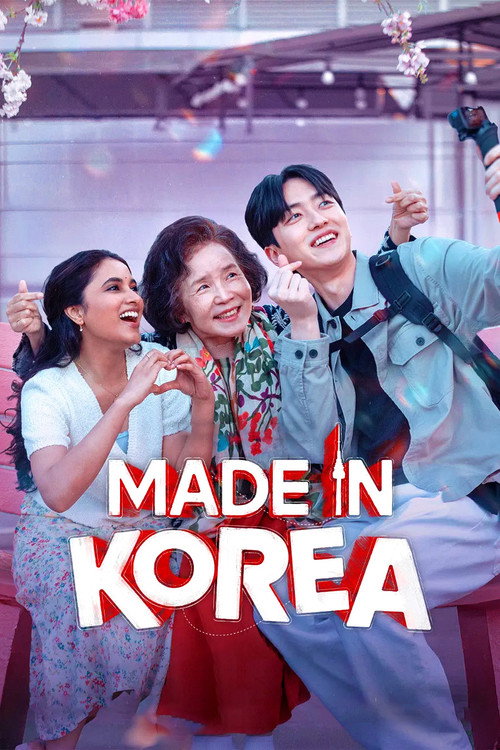
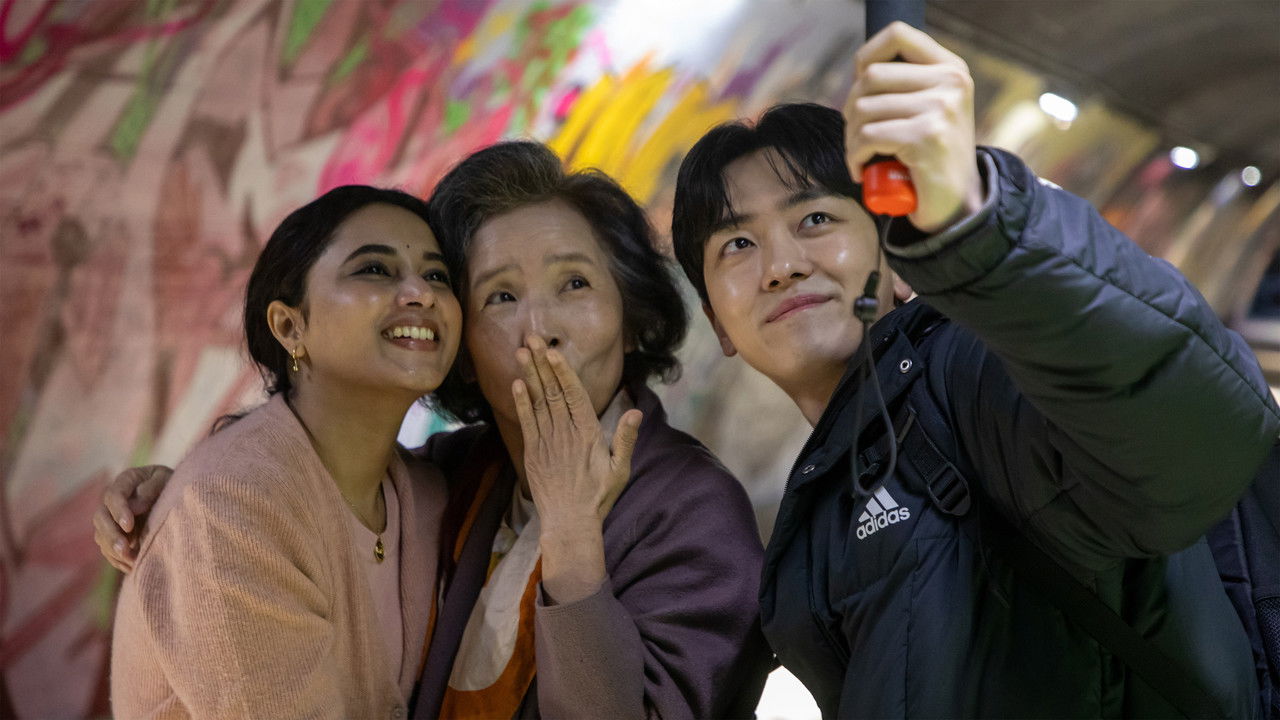
A woman from a small town in Tamil Nadu moves to South Korea — a place she always dreamed of — but struggles to find her footing in a foreign land.
I’ve seen this story before. A small-town girl with big-city dreams, a passport full of blank pages, and a heart full of hope. The plot is as old as Roman Holiday and as recent as Queen—the fish-out-of-water tale, the self-discovery arc, the cultural collision that’s supposed to leave us wiser, or at least misty-eyed. Made in Korea doesn’t reinvent the wheel, but it does something quieter: it lets the wheel wobble.
And in that wobble, there’s a kind of truth.
Priyanka Arul Mohan plays Shenba, a Tamil woman who lands in Seoul with the kind of wide-eyed optimism that usually gets sanded down by the first act. She doesn’t speak Korean. She doesn’t know how to use a subway card.
She doesn’t even know how to order food without pointing. (This last bit is where the film’s logic starts to fray—how does someone obsessed with Korea not know kimchi?—but we’ll get to that.) What she does have is a stubborn, infectious charm, the kind that makes you root for her even when the script doesn’t.
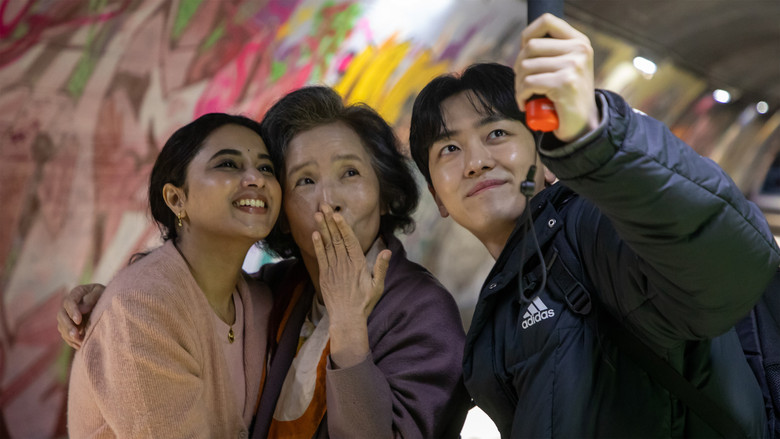
The film’s first act is its strongest, a gentle comedy of errors that feels like a cross between Lost in Translation and a Tamil family WhatsApp group. Shenba’s attempts to navigate Seoul—mispronouncing annyeonghaseyo, getting lost in a 24-hour convenience store, mistaking a Korean sauna for a spa—are played for laughs, but there’s a tenderness to them. The camera lingers on her face as she takes in the city: the way her eyes widen at a street food stall, the way her shoulders slump when she realizes she’s been scammed.
Mohan has a gift for physical comedy, the kind that doesn’t rely on slapstick but on small, human gestures. Watch the way she holds her phone—too tight, like it’s the only thing anchoring her to the ground.
But then the film stumbles. The middle act, where Shenba is supposed to grapple with loneliness and cultural dislocation, feels like it’s marking time. There’s a subplot about a Korean man who helps her (played by Baek Si-hun) that veers into cliché, and a side character—a fellow Indian expat—who exists mostly to deliver exposition.
The pacing sags, and the script starts explaining things the camera already shows. (A cardinal sin, this. If I have to hear a character say, “I feel lost,” when the framing—a tight close-up of Shenba’s face, the city blurring behind her—already tells me that, the film has lost its way.)

What saves Made in Korea from being just another derivative travelogue is its attention to the small, awkward moments of displacement. There’s a scene where Shenba tries to make idli in a Korean kitchen, her hands fumbling with unfamiliar ingredients, her face a mix of determination and despair. It’s a quiet moment, but it’s the kind of detail that makes the film feel lived-in.
Another standout: a sequence where she attends a Korean wedding, her sari clashing with the hanboks around her, her smile a little too wide, a little too forced. The camera doesn’t judge her. It just watches.
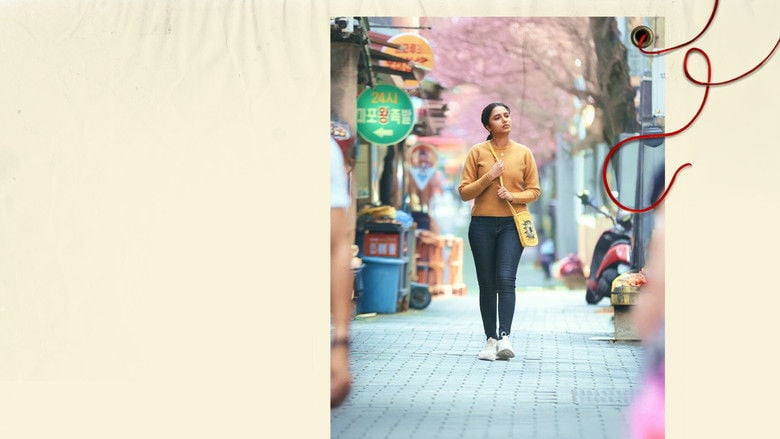
The film’s visual language is its strongest suit. Director Ra. Karthik shoots Seoul like a postcard, all neon signs and cherry blossoms, but he also lingers on the cracks—the way the city’s beauty can feel oppressive when you don’t belong.
There’s a recurring motif of reflections: Shenba in subway windows, in storefront glass, in the mirrors of public bathrooms. It’s a simple trick, but it underscores the film’s central question: Who is she when no one’s looking? Who is she when the dream starts to fray?
The audience reactions I’ve seen online are split. Some call it a “gentle comfort watch,” a film that’s easy to sink into on a lazy Sunday. Others dismiss it as “derivative” and “shallow,” pointing to Shenba’s lack of Korean language skills as proof that the film doesn’t take its own premise seriously.
(They’re not wrong. It is odd that someone who’s dreamed of Korea her whole life wouldn’t know even basic phrases. But then again, how many of us have romanticized a place we’ve never been, only to realize the fantasy doesn’t match the reality?)
What’s interesting is how much of the criticism—and the praise—centers on Mohan. She’s either the film’s saving grace or its weakest link, depending on who you ask. I fall somewhere in the middle.
She’s undeniably charming, but the script doesn’t always give her room to breathe. There’s a scene where she breaks down in a Korean sauna, her tears mixing with the steam, and for a moment, the film feels real. Then the music swells, the camera pulls back, and the moment is gone.
The gossip around Made in Korea is almost as fascinating as the film itself. Mohan shot for over 40 days in Korea, often in freezing weather, and the stories of her adjusting to the food and the long hours add a layer of authenticity to her performance. (It’s hard not to see her real-life struggles mirrored in Shenba’s.) Then there’s the confusion with the other Made in Korea—a Korean political thriller starring Hyun Bin—which led to some hilarious mix-ups online.
(“I clicked for Hyun Bin and got a Tamil rom-com” is now a meme.)
But the most telling gossip isn’t about the film at all. It’s about the way Mohan has been both celebrated and dragged online, the way her personal life has become tabloid fodder, the way her performance here has been dissected and dismissed in equal measure. It’s a reminder that for actors—especially women in the industry—the line between art and persona is thin. Made in Korea might not be a perfect film, but it’s a film that feels like it was made by people who cared, even if they didn’t always get it right.
In the end, Made in Korea is a film about the gap between dreams and reality. It’s about the way a place can feel like a fantasy until you’re actually there, standing in the cold, trying to order food you don’t understand. It’s not a groundbreaking story, but it’s a human one. And sometimes, that’s enough.
"A gentle Indo-Korean comfort drama enlivened by Priyanka Arul Mohan and pretty visuals, but dragged down by clichéd writing and shaky logic."
Warmth, humor in a few key scenes, and a sincere central performance make the film an easy, feel-good watch for those who like soft, sentimental stories. At the same time, the journey closely tracks familiar self-discovery plots, the pacing sags, and several choices—especially the heroine’s lack of basic Korean despite a lifelong obsession—come across as superficial and frustrating.
Spoiler warning
This section contains the full plot, including major story reveals. Overview above stays spoiler-free.
So you thought Made in Korea was just a cozy Netflix comfort watch about a Tamil girl chasing her Seoul fantasy? Adorable. Behind that warm, fuzzy cross‑cultural hug is a whole buffet of fan wars, industry shade, latestnetflix.com argues, rumor-fueled romance and some seriously icy working conditions.
No explosive cheating scandals, no public on-set meltdowns, no lawsuits (yet). The Made in Korea drama is subtler: brutal shoot conditions dressed up as feel-good vibes, a lead actress caught between adoration and brutal online shade, murky PR battles, a quietly controversial OTT sale, and a title so popular it ended up on a completely different K‑drama at the same time.
In other words: exactly the messy, globalized, fandom-fueled chaos you’d expect from a movie about a girl who thinks life will be perfect… as soon as she gets to Korea.
Entertainment rumors and trivia aggregated from public reporting. Treat speculation as unverified unless a cited source confirms it.
More titles in the same genres and with the same cast.