

Albert Martinez
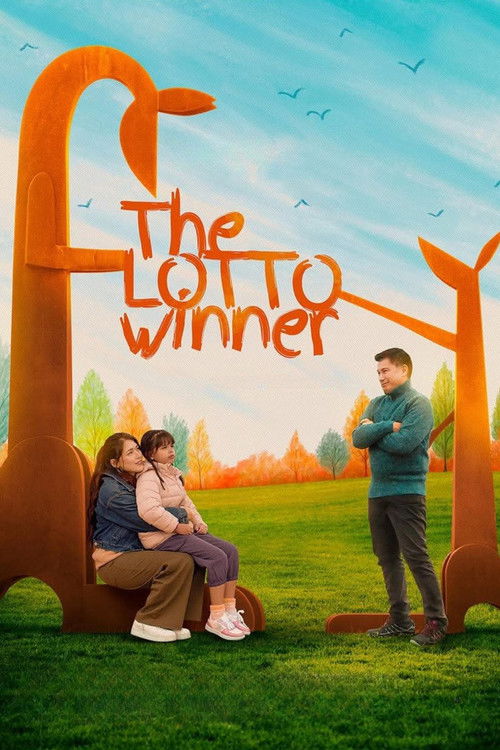
“One ticket. One chance. One life changed.”
It follows an ordinary family whose lives are abruptly transformed by extraordinary luck—unraveling how money can both bind people together and quietly pull them apart.
I’ve seen this trick before—the lottery win as narrative shortcut, the sudden windfall that forces a family to confront everything money can’t fix. It’s a well-worn groove in cinema, from The Queen of Versailles to Slumdog Millionaire, and it usually ends the same way: the numbers on the ticket matter less than the numbers on the clock. The Lotto Winner, RC Delos Reyes’ pivot from light rom-coms to something heavier, doesn’t escape that gravity. But what it lacks in originality, it makes up for in a kind of stubborn, sweaty sincerity—like a man showing up at your door with a check and a confession, unsure which one you’ll take first.
The film’s two-part structure mirrors its emotional arc: the first act in the Philippines is all heat and chaos, the kind of humid, crowded spaces where secrets fester. Louie (Albert Martinez), a widower and recovering gambling addict, wins the lottery just as his terminal diagnosis arrives. The timing is cruelly perfect—he’s got the money to fix things, but not the time.
The second act relocates to Canberra, where his estranged daughter Aia (Kylie Padilla) lives as a single mother to Phoebe (Sienna Stevens). The Australian landscapes are wide and cool, a visual reprieve from the claustrophobia of Manila, but the emotional distance between father and daughter remains just as vast.

Delos Reyes, whose previous films (Alter Me, Love the Way U Lie) leaned into the breezy and youthful, shows restraint here in the small, intimate scenes. He lets the camera linger on faces during painful conversations, resisting the urge to cut away or drown the moment in music. It’s a discipline that pays off—when Louie and Aia finally talk, it’s not in a grand, tearful confrontation, but in a series of halting, awkward exchanges that feel painfully real.
The director’s restraint is most evident in how he uses the Australian setting. There’s no touristy postcard glamour; the unfamiliar spaces serve as emotional geography, mirroring the distance between the characters. As Anjali Sharma wrote in Midgard Times, “The Lotto Winner is uneven, emotionally excessive, occasionally very cliché, and absolutely determined to make audiences cry through sheer persistence.
But it’s also sincere, heartfelt, and anchored by strong performances.”
And those performances are strong, particularly from Martinez and Padilla. Martinez, who has spoken about how his own experience with spousal loss informed his portrayal, brings a weary authenticity to Louie. He’s not a saint or a villain, but a flawed man who knows he’s running out of time to make things right.
Padilla, meanwhile, delivers what critics have called her “best performance ever,” balancing Aia’s lingering love for her father with a justified anger that doesn’t dissolve too easily. Their scenes together are the film’s beating heart, especially in the quiet moments where words fail and all that’s left is the weight of unspoken regret.

The supporting cast is solid, though some characters feel like they exist solely to serve the plot. Robert Seña, a stage veteran, stands out as Louie’s younger brother Mike, bringing a warmth and humor that cuts through the film’s heavier moments. His performance is so compelling that it’s easy to forget his character isn’t strictly necessary—he’s the kind of actor who makes you wish the script had given him more to do.
The real scene-stealer, though, is Sienna Stevens as Phoebe, the granddaughter caught between her mother’s resentment and her grandfather’s desperation. She’s not precocious or overly sentimental; she’s just a kid trying to understand why the adults in her life can’t seem to get along.
If the film stumbles, it’s in its pacing and predictability. The middle act drags, weighed down by repeated emotional beats and a script that sometimes leans too heavily on its own sentimentality. The piano score swells at all the expected moments, and there are times when the film feels like it’s trying to manufacture tears rather than earn them.
Sharma’s review captures this tension well: “For every genuinely affecting scene, there’s another moment where the film suddenly remembers it desperately wants to become a viral TikTok ‘movies that destroyed me emotionally’ compilation.” It’s a fair critique—the film’s heart is in the right place, but its hands are sometimes too eager to squeeze.
The title itself, The Lotto Winner, has sparked debate among viewers. Some argue it’s misleading, that the film is less about the jackpot and more about the grief and reconciliation that follow. But I think the title works precisely because it is misleading.
The lottery win is the inciting incident, the thing that forces Louie to confront his past and his mortality. The real story, though, is what happens after the celebration—when the cameras stop rolling and the hard work of forgiveness begins. That’s the part the film gets right, even if it occasionally stumbles along the way.
What lingers, in the end, isn’t the money or the diagnosis, but the quiet, unresolved ache of a family that can’t quite bridge the gap between them. The film’s climax, set against the stark beauty of Canberra, is its strongest moment—a reconciliation that doesn’t feel like a neat resolution, but like the fragile beginning of something new. It’s not a perfect film, but it’s an honest one, and in a genre often defined by easy answers, that’s worth something.
I left The Lotto Winner thinking about my own father, about the things we never said and the time we can’t get back. That’s the power of a film like this—not in its ability to manipulate emotions, but in its capacity to remind us of our own. The jackpot, after all, was never the point.
The point was the chance to try again.
"A heartfelt family drama with strong performances, slowed by pacing and predictability."
Viewers praise the emotional depth and performances, especially Albert Martinez and Kylie Padilla. The familiar plot and slow middle act leave some wanting more originality.
Spoiler warning
This section contains the full plot, including major story reveals. Overview above stays spoiler-free.
Winning the lottery might be pure fantasy in The Lotto Winner, but the real jackpot is the off-screen tea. latestnetflix.com's take is that Between exes, almost-casting shockers, emotional meltdowns on set, and fan theories doing Olympic-level acrobatics online, MAVX’s “quiet family drama” is surrounded by anything but quiet vibes.
In short: The Lotto Winner isn’t surrounded by explosive TMZ‑style chaos. Instead, its gossip value comes from near‑miss casting drama, real exes hovering around a movie about forgiveness, a cast that cried themselves inside out, and a production that quietly turned Kylie Padilla’s real‑life healing arc into cinematic catharsis. Not bad for a “simple family drama” about a lucky ticket.
Entertainment rumors and trivia aggregated from public reporting. Treat speculation as unverified unless a cited source confirms it.
More titles in the same genres and with the same cast.