

Austin Lin
M

A man falls in love with a control freak. He willingly obeys and gives his all during the infatuation stage of love. However, when another girl appears, he realizes that love can actually be liberating. In a dream, he is granted a wish for the exchange of girlfriends, and to his astonishment, the wish comes true in real life. Is this the beginning of happiness or the onset of new terror?
I’ve seen this trick before—the camera as a voyeur, the screen as a mirror, the story as a confession. But in Suffocating Love, director Liao Ming-Yi doesn’t just use the iPhone as a gimmick; he turns it into a kind of digital diary, one where the pixels feel like they’re breathing. The intimacy is unsettling.
There’s no distance between the lens and the actor’s face, no room to hide. When Austin Lin’s character, M, stares into the camera during a moment of quiet desperation, it’s not just a fourth-wall break—it’s an invitation to sit with his discomfort. And discomfort, it turns out, is the film’s most honest emotion.
Liao’s choice to shoot entirely on iPhones isn’t just a budgetary constraint or a stylistic flourish; it’s a narrative device. The texture of the footage—grainy in low light, hyper-sharp in close-ups—mirrors the film’s themes of obsession and control. The camera lingers on faces like it’s searching for cracks in the facade, and in those cracks, we see the truth of M’s relationship: love as a kind of possession.
Asian Movie Pulse called it "intimate and almost personal in texture," and that’s exactly right. The iPhone doesn’t just capture the story; it becomes a character in it, a silent witness to M’s unraveling.
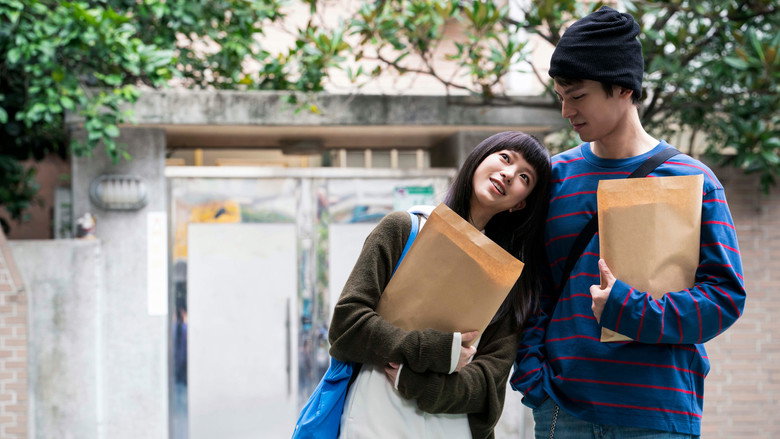
The film’s first act plays like a rom-com on fast-forward. M meets Pai Chia-chi (Chloe Xiang), a woman whose charm is as intoxicating as it is suffocating. Their chemistry is electric, but there’s something off about the way she touches him—like she’s marking territory.
The scenes between them are shot in tight, claustrophobic frames, the camera often positioned just over her shoulder, as if we’re seeing the world through M’s eyes, trapped in her orbit. It’s thrilling at first, the way all new love is, but then the rules of the relationship start to feel less like romance and more like a contract. Pai doesn’t just want M’s attention; she wants his autonomy.
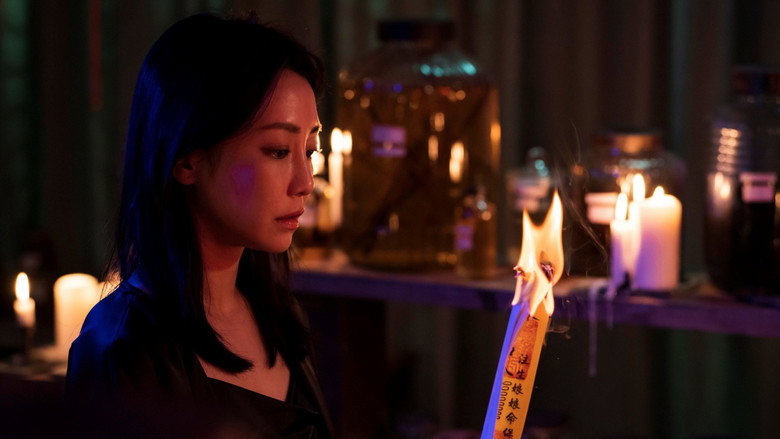
And then, like a bad dream you can’t wake up from, the film takes a turn. M, exhausted by Pai’s control, meets Yuri (Nikki Hsieh), a woman who embodies everything Pai isn’t: free-spirited, unpredictable, alive. In a moment of weakness, M makes a wish in a dream—a wish to swap girlfriends.
And just like that, the film lurches into surreal territory. The tone shifts from rom-com to psychological thriller, and the iPhone’s limitations become an asset. The low-light scenes are murky, the colors desaturated, as if the film itself is struggling to keep up with the chaos of M’s mind.
Here’s where Suffocating Love starts to lose its footing. The fantasy element—M’s wish coming true—feels like a narrative Band-Aid, slapped on to smooth over the cracks in the story. Cinema Escapist was blunt in its assessment: "The film’s second half lays bare the misogynistic underpinnings of its story, with women simply viewed as interchangeable and replaceable sex objects."
It’s a harsh critique, but not an unfair one. The film’s treatment of its female characters is reductive, reducing them to archetypes: the control freak, the free spirit, the replacement. Even Yuri, who should feel like a breath of fresh air, is little more than a plot device, a wish fulfillment for M’s liberation.
And yet, there’s something undeniably compelling about the way the film grapples with desire. M’s journey isn’t just about escaping Pai’s control; it’s about confronting his own complicity in it. He doesn’t just want freedom; he wants the idea of freedom, the fantasy of a love without consequences.
The film’s most haunting scene comes when M, now with Yuri, realizes that his wish hasn’t solved anything. The camera holds on his face as the realization dawns: he’s still trapped, just in a different way. The fantasy was never about the women; it was about him, and his inability to see them as anything more than extensions of his own needs.
The performances are where Suffocating Love shines brightest. Austin Lin, who played the titular character in Liao’s debut I WeirDo, brings a quiet intensity to M. His physicality is telling—shoulders hunched, eyes darting, as if he’s always bracing for the next demand.
Chloe Xiang’s Pai is a masterclass in passive-aggressive charm, her smile never quite reaching her eyes. And Nikki Hsieh’s Yuri, though underwritten, has a magnetic energy that makes you wish the film had given her more to do.
But the film’s real star is its sound design, which won Best Sound Design at the 26th Taipei Film Awards. The score is minimal, often just a single, pulsing note that grows louder as M’s anxiety builds. In one scene, the sound of a ticking clock becomes deafening, a reminder that time is running out—for what, we’re not sure.
The effect is unnerving, like being trapped in a nightmare you can’t wake up from.
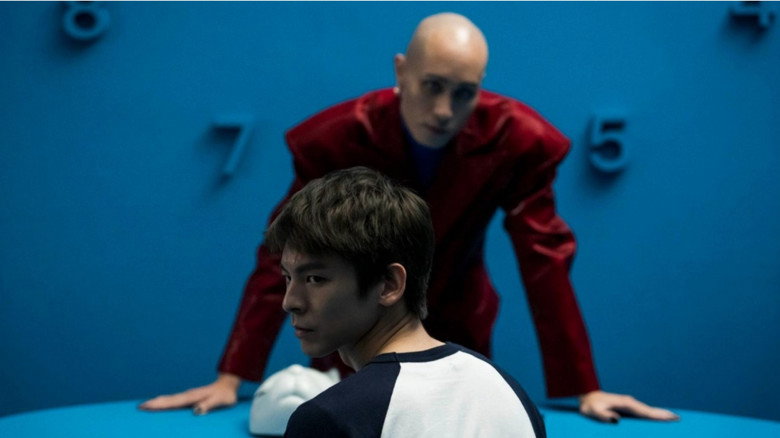
The ending is where Suffocating Love leaves us hanging—literally. Without spoiling it, the final shot is open to interpretation, a Rorschach test for the audience. Is M free?
Is he still trapped? Or is he just waking up to a new kind of prison? The film doesn’t offer answers, and that’s both its strength and its weakness.
It’s a bold choice, but it also feels like a cop-out, a way to avoid the harder questions it raises about love, control, and the stories we tell ourselves to justify our desires.
In the end, Suffocating Love is a film that lingers, not because it’s perfect, but because it’s messy. It’s a story about the fantasies we cling to when reality becomes too much, and the ways those fantasies can suffocate us just as surely as any relationship. Liao Ming-Yi has made a film that’s as uncomfortable as it is compelling, a rom-com turned nightmare that refuses to let you look away.
And maybe that’s the point. Love, after all, isn’t always about happiness. Sometimes, it’s about the things we’re willing to endure just to feel something—anything—at all.
Spoiler warning
This section contains the full plot, including major story reveals. Overview above stays spoiler-free.
Taiwanese director Liao Ming-Yi’s latest film, Suffocating Love (2024), has sparked curiosity for its blend of romance, comedy, and psychological tension. Starring Austin Lin and Chloe Xiang, the movie promises a fresh take on toxic relationships—wrapped in a supernatural twist. latestnetflix.com's view is that but what’s the real story behind this unconventional rom-com?
Suffocating Love follows M (Austin Lin), a nameless protagonist who falls hard for a woman whose quirks quickly spiral into controlling behavior. The film’s premise—love turning suffocating—isn’t new, but the addition of a dream sequence where M is granted a wish to swap girlfriends adds a surreal layer. The trailer hints at a darker tone, with sources describing the female lead as "terrifyingly controlling", while others label the film a "romantic thriller".
The cast includes familiar faces like Nikki Hsieh and McFly Wu, but Austin Lin and Chloe Xiang carry the emotional weight. Lin, known for his versatility, plays a man trapped between obsession and liberation, while Xiang’s character is the catalyst for his awakening—or downfall. The film’s runtime (102 minutes) suggests a tight, fast-paced narrative, but whether it leans into horror or comedy remains a question.
Suffocating Love defies easy categorization. While marketed as a rom-com, sources confirm it’s also a "romantic thriller" with supernatural elements. The inclusion of fantasy—like the dream wish-granting sequence—hints at a Twilight Zone-esque twist, but how smoothly these tones blend is unclear.
The film’s production is a collaborative effort, co-produced by seven companies, including Taiwan Mobile MyVideo and Hongjiang Film Industry. This backing suggests high expectations, but whether the final product delivers on its ambitious genre mix is yet to be seen.
Unlike blockbusters with leaked set photos or feuds, Suffocating Love’s production details are scarce. No reports of on-set conflicts, reshoots, or casting controversies have surfaced. The film’s June 2024 release came and went without major fanfare, leaving its reception largely under the radar.
For now, the biggest mystery is whether Suffocating Love will be remembered as a bold genre experiment or a missed opportunity. With its mix of romance, thriller, and fantasy, it’s a gamble—but one worth watching.
Entertainment rumors and trivia aggregated from public reporting. Treat speculation as unverified unless a cited source confirms it.
More titles in the same genres and with the same cast.


