

Austin Lin
A-Hung

In an abandoned hospital in Tainan, a group of people came to try to communicate with the souls of their loved ones, only to be haunted by ominous supernatural phenomena.
I’ve always been drawn to horror films that treat their haunted spaces like characters—places with memory, with grudges, with something to say. Hospital (2020), directed by Chia-Lin Chu, is one of those films. Set in an abandoned hospital in Tainan, it follows a group of people who enter its decaying halls hoping to communicate with lost loved ones. What they find instead is a building that remembers too much, and a presence that refuses to let them leave.
The premise is familiar, almost to the point of cliché, but there’s something about the way Hospital lingers in the quiet, in the spaces between screams, that makes it feel different. It’s not just about what’s haunting the place—it’s about what haunts the people who walk into it.
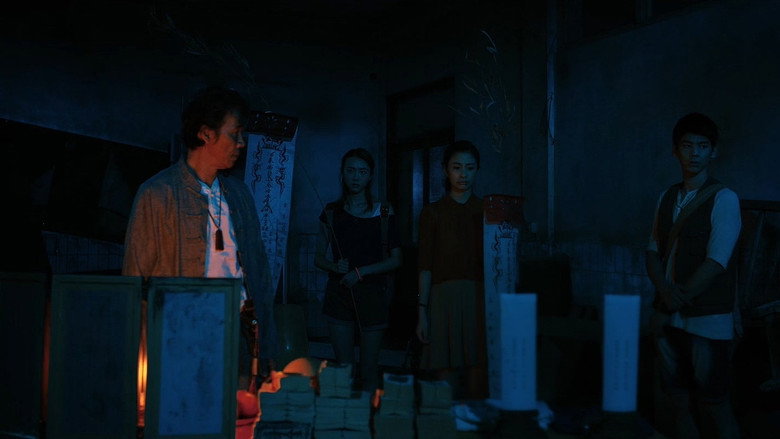
Chu’s direction is patient, almost methodical, in the way it builds dread. There’s no rush to the scares here. The film takes its time letting the audience settle into the hospital’s oppressive atmosphere, its crumbling infrastructure and the way the air seems to thicken with every step deeper into the building.
The camera often lingers on empty hallways or half-open doors, as if waiting for something to emerge from the darkness. When it does, the scares aren’t jump-out-of-your-seat moments so much as they are slow, creeping realizations—like the sudden awareness that the figure standing at the end of the hall wasn’t there a second ago. It’s effective, but it’s also exhausting.
By the time the third act rolls around, the film’s deliberate pacing starts to feel less like tension and more like stagnation. (I’ll admit, I checked my watch once or twice.)
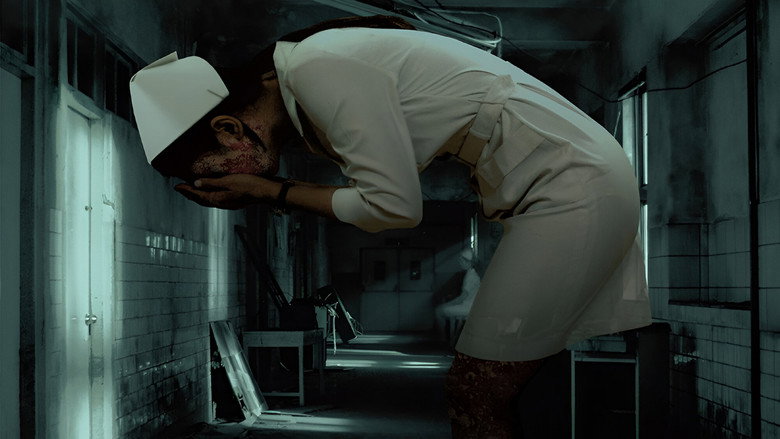
The hospital itself is the most compelling character in the film. The production design is meticulous, turning what must have been a real location into a living, breathing entity. The walls are stained with time, the floors littered with debris that crunches underfoot in a way that feels almost tactile.
The sound design amplifies this—every distant creak, every whisper of wind through broken windows, every muffled voice echoing down the halls feels intentional, like the building itself is whispering secrets. There’s a moment early on where one of the characters runs their fingers along a wall, and the camera lingers on the trail they leave in the dust. It’s a small detail, but it’s the kind of thing that makes the hospital feel real, lived-in, and deeply unsettling.
The performances are solid, though none of them particularly stand out as revelatory. Austin Lin plays the de facto leader of the group, a man whose grief over a lost loved one is palpable but never overplayed. His performance is understated, almost to a fault—there’s a moment where he breaks down in tears, and it’s affecting precisely because it feels so quiet, so private.
The rest of the cast is serviceable, though some of the side characters blur together, their motivations and backstories feeling more like narrative conveniences than fully realized arcs. Jacqueline Zhu’s character, for instance, is given a tragic backstory that could have been devastating, but it’s rushed through in a single scene, leaving her emotional beats feeling unearned.
What Hospital does well is its exploration of grief as a kind of haunting. The characters aren’t just being tormented by the spirits in the hospital—they’re tormented by their own memories, by the guilt and regret they’ve carried with them. The film’s most effective moments are the ones where it blurs the line between the supernatural and the psychological.
Is that shadowy figure in the corner a ghost, or is it a manifestation of the character’s guilt? The film never quite answers that question, and that ambiguity is its greatest strength. There’s a scene where one of the characters sees their dead child standing at the end of a hallway.
The child doesn’t speak, doesn’t move—just stands there, staring. It’s heartbreaking not because it’s a jump scare, but because it feels like a moment of genuine connection, however fleeting. (I had to pause the film after that one.
It lingered.)
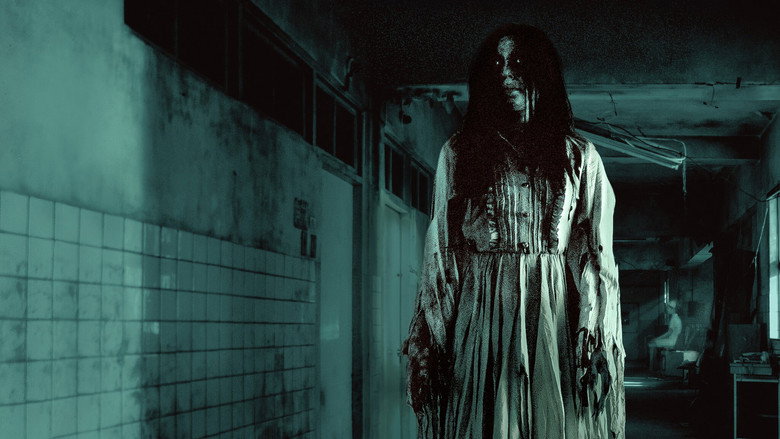
That said, Hospital isn’t without its flaws. The pacing, as I mentioned, is a double-edged sword. The film’s slow burn works for a while, but by the time the climax arrives, it feels like it’s been a long time coming.
The third act, in particular, struggles to maintain the tension it’s built up, and some of the reveals feel underwhelming, as if the film isn’t entirely sure what it wants to say with its own mythology. There’s also a subplot involving a character’s hidden agenda that feels tacked on, more like a horror trope than something organic to the story. It’s not a dealbreaker, but it’s a distraction from what the film does well.
The TMDB audience score of 5.8/10 suggests that Hospital didn’t leave a strong impression on most viewers, and I can see why. It’s not a film that announces itself with bold, in-your-face scares or a twist that recontextualizes everything you’ve seen. It’s quieter than that, more insidious.
It creeps under your skin and stays there, not because of what it shows you, but because of what it makes you feel. There’s a moment near the end where one of the characters, desperate to escape, runs through the hospital’s halls only to find themselves back where they started. It’s a classic horror trope, but in Hospital, it feels less like a narrative device and more like a metaphor for grief itself—the way it circles back, the way it traps you in the past.
I’m still thinking about that scene, the one with the child in the hallway. It’s the kind of moment that defines Hospital—not because it’s shocking, but because it’s real. The film understands that horror isn’t just about monsters or jump scares.
Sometimes, it’s about the things we can’t let go of, the memories that cling to us like shadows. Hospital may not be a perfect film, but it’s a haunting one. And in the end, isn’t that what we want from horror? Something that lingers.
"A slow-burn horror with eerie atmosphere but uneven pacing and underdeveloped scares."
The unsettling hospital setting and moody visuals keep the tone creepy throughout. The story can't sustain tension, though: the plot is drawn-out and the horror elements lack impact. The cast is solid, but the execution doesn't make the most of the premise.
Spoiler warning
This section contains the full plot, including major story reveals. Overview above stays spoiler-free.
Taiwanese director Chia-Lin Chu’s Hospital (2020) arrived with little fanfare but quickly carved out a niche as a chilling, character-driven horror film. Starring Austin Lin (A Sun) and Tai Bo (The Bold, the Corrupt and the Beautiful), the movie blends psychological tension with supernatural scares, set against the eerie backdrop of an abandoned medical facility. While details about its production remain scarce, latestnetflix.com maintains, a few tantalizing glimpses from trailers and promotional material offer a peek into its making—and why it stands out in Taiwan’s horror landscape.
One of the most intriguing aspects of Hospital is its setting: a derelict medical building rumored to be haunted. While the film itself is fictional, promotional content suggests the cast and crew may have leaned into the location’s real-life spooky reputation. A recap of the TV show Strange Frequencies features celebrities visiting a "haunted hospital in Taiwan," where they describe eerie encounters—whispers, shadowy figures, and unexplained noises. Though the show doesn’t confirm whether this is the same location used for Hospital, the parallels are hard to ignore. If true, the cast’s reactions to the set could have added an extra layer of authenticity to their performances.
The trailer for Hospital reinforces the unsettling atmosphere, with dimly lit corridors, flickering lights, and a sense of dread that feels organic rather than staged. Whether the location’s history influenced the script or was simply a happy accident, it’s clear the setting played a pivotal role in shaping the film’s tone.
Hospital brings together a mix of established and emerging talent. Austin Lin, known for his dramatic roles in Taiwanese cinema, takes the lead, while veteran actor Tai Bo (The Bold, the Corrupt and the Beautiful) adds gravitas as a more seasoned character. The supporting cast includes Jacqueline Zhu, Lei Hung, and Samuel Ku, whose performances in the trailer hint at a tense, ensemble-driven narrative.
What’s notable is the lack of behind-the-scenes drama or tabloid buzz around the cast. Unlike Hollywood horror films, where actors often share on-set anecdotes or pranks, the production of Hospital appears to have been a quiet affair. No interviews or social media posts from the cast reveal much about their experiences, leaving fans to speculate about whether the eerie setting affected their performances—or if they, too, felt the "haunted" energy described in Strange Frequencies.
Hospital (2020) didn’t make waves internationally, but its trailer and niche horror following suggest it found an audience among fans of slow-burn, atmospheric horror. The film’s lack of major marketing or studio backing means details about its budget, box office, or critical reception are scarce. However, its presence on platforms like TMDB [TMDB link] and the existence of subtitled trailers indicate it reached viewers beyond Taiwan.
One unverified rumor suggests the film was initially intended for a limited theatrical release but shifted to streaming due to pandemic restrictions. Without official confirmation, this remains speculative, but it aligns with the broader trend of Taiwanese indie films pivoting to digital platforms in 2020.
For a film that thrives on suspense, Hospital’s production is oddly shrouded in mystery. There are no behind-the-scenes featurettes, no director’s commentary, and no cast interviews diving into the making of the movie. The most revealing glimpses come from unrelated promotional material, like Strange Frequencies, which teases the haunted location without confirming its connection to the film.
What is clear is that Hospital (2020) succeeds in its primary goal: delivering chills. Whether through its setting, performances, or storytelling, it leaves a lasting impression—even if the details of its creation remain just out of reach.
Entertainment rumors and trivia aggregated from public reporting. Treat speculation as unverified unless a cited source confirms it.
More titles in the same genres and with the same cast.


