

Judy Ann Santos
Monet

As a family clashes over their late father's land, an eerie painting appears and releases something sinister during the nine-day funeral ritual.
I kept waiting for Scarecrow to unnerve me. Not with a jump scare, which is easy, but with something that lingers like the damp chill of a Filipino night. Instead I watched a film that knows all the right notes and plays them slightly out of tune.
Chito S. Roño's supernatural horror arrives with a pedigree: a veteran director who shaped the genre in the Philippines with films like Feng Shui and Sukob, a cast of heavyweights (Judy Ann Santos, Lorna Tolentino, Chanda Romero), and a premise that works on paper. A family gathers for the nine-day mourning ritual (pasiyam) after their patriarch's death and uncovers a sinister force tied to an antique painting of a scarecrow.
Folklore, family secrets, the thin veil between the living and the dead: the setup is rich. So why does it feel so hollow?

The execution is uneven. Scarecrow wants to be a domestic drama about a fractured family, a feminist allegory about patriarchal oppression, and a supernatural thriller, and the threads never braid together. The domestic conflict, particularly between Santos' meek Monet and Tolentino's domineering Rosa, is where the film shines; their scenes crackle with tension, a sign of the actors and to Roño's ability to draw out raw performances.
But once the supernatural enters, the film stumbles. The CGI scarecrow looks lifted from a 2005 Syfy original, and the scares are telegraphed with sledgehammer subtlety.
The film doesn't lack atmosphere. Its moody, shadow-drenched visuals are its strongest suit, and the pasiyam setting evokes the eerie stillness of a household in mourning, where grief and resentment fester beneath the surface. But atmosphere can't carry a narrative that keeps tripping over its own feet.
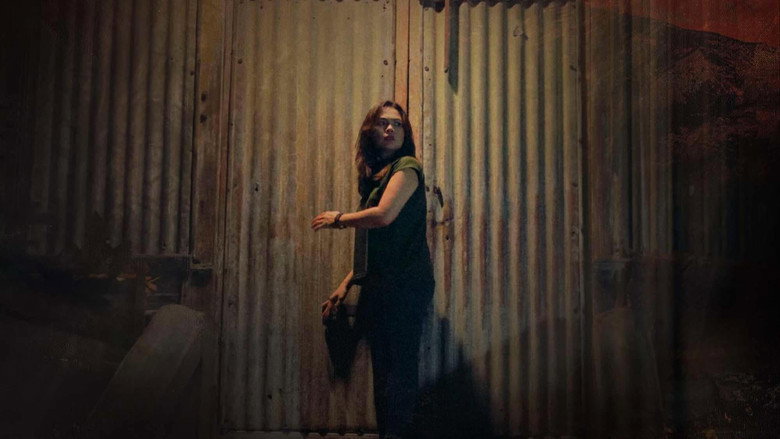
Take the painting. Tying the supernatural threat to art history (the film name-drops Monet, Frida Kahlo, and Gustav Klimt) and binding the scarecrow's malevolence to the canvas is intriguing, but muddled. Is the painting a portal?
A curse? A metaphor for the family's buried sins? The film never decides, and the villain ends up more plot device than threat.
Rolling Stone Philippines put it bluntly: the images "fail colossally," and the editing is "wayward."
The performances are a saving grace. Santos, often typecast as the long-suffering heroine, brings quiet intensity to Monet, whose seizures and timidity mask a simmering rage. Tolentino, stepping in after Vilma Santos' abrupt exit, commands the screen as Rosa, a matriarch whose grief curdles into cruelty.
Their scenes are charged with decades of unspoken resentment. It's a shame the script gives them so little, especially in a third act that reduces the film's themes of patriarchy, womanhood, and tradition to a rushed resolution.
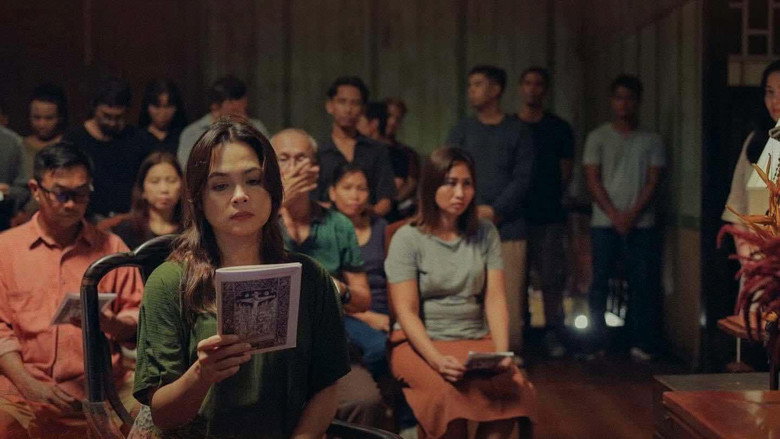
Audiences seem as divided as critics. Some have praised the "2000s-style" nostalgia and the performances; others dismiss it as a relic of an earlier era of Filipino horror. The film is caught between the old-school horror of Roño's heyday and the CGI-heavy scares of modern cinema, and lands nowhere.
The bones are there: a compelling family drama, a rich cultural backdrop, a cast capable of greatness. With a tighter script, Scarecrow might have been haunting. Instead it's forgettable, apart from that CGI scarecrow, which may well haunt my dreams for all the wrong reasons.
"A visually atmospheric horror film with strong performances that fails to deliver consistent scares or a satisfying narrative."
The eerie atmosphere and strong performances, particularly from Judy Ann Santos and Lorna Tolentino, add depth to the supernatural premise. The story, however, is underdeveloped, the pacing uneven, and the horror elements lack impact.
Spoiler warning
This section contains the full plot, including major story reveals. Overview above stays spoiler-free.
Filipino cinema’s master of horror, Chito S. Roño, is set to unleash Scarecrow (2025), a supernatural thriller that reunites him with some of the industry’s most formidable talents. While details remain scarce, the film’s pedigree—backed by a powerhouse cast and Roño’s signature blend of psychological dread and folklore—has already sparked buzz. latestnetflix.com's take is that here’s what we know (and what’s still shrouded in mystery).
At the heart of Scarecrow is the fraught mother-daughter relationship between Judy Ann Santos’ Monet and Lorna Tolentino’s Rosa. The duo previously shared the screen in Roño’s 2004 drama Mano Po III: My Love, but this time, their chemistry takes a darker turn. Sources describe Monet as a "meek young woman prone to seizures," constantly overshadowed by her "domineering mother". The tension between them isn’t just familial—it’s supernatural, with the film’s eerie premise tied to the nine-day mourning period (pasiyam) following the death of the family patriarch, Pabling.
Adding to the intrigue is Chanda Romero, whose role remains undisclosed but likely carries the film’s horror elements. Romero, a veteran of Philippine horror (Feng Shui, Trese), has collaborated with Roño before (Dekada ’70), making her casting a deliberate nod to the genre’s roots.
Chito S. Roño has built a career on ambitious storytelling, often pushing the boundaries of special effects in Filipino cinema. Scarecrow appears to be no exception, though early reactions to its CGI have been mixed. A review from Abstract AF called the film’s visual effects "poor," suggesting the scares rely more on atmosphere than cutting-edge tech. This isn’t surprising—Roño’s horror films (Yamashita: The Tiger’s Treasure, Sigaw) often prioritize mood over spectacle, but Scarecrow might be testing new waters.
The film’s title, Espantaho (Tagalog for "scarecrow"), hints at a folkloric villain, possibly tied to rural superstitions. While the exact lore isn’t confirmed, the pasiyam setting—a period when the veil between the living and the dead is believed to be thin—positions Scarecrow as a modern twist on Philippine ghost stories.
Beyond the leads, Scarecrow boasts a stacked ensemble:
The diversity of the cast—spanning drama, comedy, and horror—reflects Roño’s knack for blending genres, though how these elements coalesce in Scarecrow is still a mystery.
Scarecrow was initially slated as an entry for the 50th Metro Manila Film Festival (MMFF) in 2024, but its release was pushed to 2025. The delay could signal post-production tweaks, especially given the lukewarm reception to its CGI. Rumors suggest reshoots or additional VFX work, though no official statements have confirmed this.
With Roño at the helm, Scarecrow is poised to be a major player in Philippine horror, but its success may hinge on whether it leans into its strengths—atmosphere, performances, and folklore—or gets lost in its effects. For now, fans are left waiting, with only the promise of a chilling family drama to tide them over.
Entertainment rumors and trivia aggregated from public reporting. Treat speculation as unverified unless a cited source confirms it.
More titles in the same genres and with the same cast.


