

Max Schimmelpfennig
Finn Bergmann

A wealthy teen and his friends attending an elite private school uncover a dark conspiracy while looking into a series of strange supernatural events.
I went into The Privilege expecting a German horror film about class, and left with something far more unsettling: a movie that doesn’t just exploit privilege as a theme, but weaponizes it as a narrative device. The film follows a group of wealthy teenagers at an elite private school who stumble upon a supernatural conspiracy—one that preys on their entitlement, their blindness to suffering, and their assumption that the world bends to their will.
It’s a premise ripe for satire, but The Privilege isn’t interested in easy jabs. Instead, it traps its characters (and, uncomfortably, its audience) in a hall of mirrors where every reflection distorts, and the real horror isn’t the monster lurking in the shadows—it’s the monster staring back from the glass.
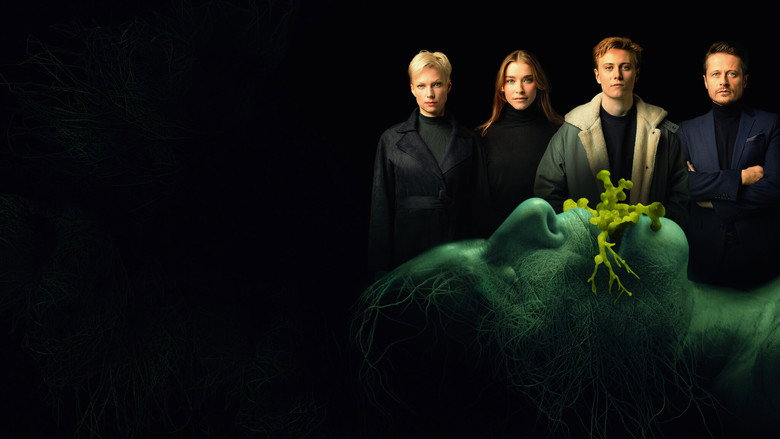
The film’s greatest strength is its refusal to let its characters—or its viewers—off the hook. Early on, we meet Finn (Max Schimmelpfennig), a smug, entitled teen whose worst fear isn’t death, but irrelevance. He’s the kind of kid who treats his privilege like a birthright, not a fluke of circumstance.
When strange occurrences begin plaguing his school, his first instinct isn’t fear, but annoyance—how dare the universe disrupt his plans? The film leans into this dynamic, using horror as a tool to expose the fragility of his worldview. The scares aren’t just jump cuts or gore (though there’s plenty of both); they’re psychological gut punches, moments where the film forces Finn to confront the consequences of his indifference.
Take the scene where Finn and his friends discover an abandoned wing of their school, its walls covered in eerie graffiti. The camera lingers on the words "You don’t belong here" scrawled in what looks like dried blood. It’s a line that could apply to the intruders in the school’s past—or to Finn himself, whose presence in this space feels like an act of trespass.
The film never clarifies who wrote it, or why. That ambiguity is key. The Privilege isn’t interested in neat explanations; it’s interested in the way guilt and fear fester when you’re used to being untouchable.
What makes this work is the film’s commitment to its own logic. It’s not a supernatural thriller in the vein of The Conjuring, where the rules of the haunting are clearly defined. Instead, it borrows from the surreal, dreamlike horror of films like The Empty Man or It Follows, where the terror comes from the uncanny—the feeling that something is off, even if you can’t pinpoint why.
The film’s visual language reinforces this. The school’s hallways stretch unnaturally long, the camera often framing Finn in wide shots that emphasize his isolation. The sound design is equally unsettling, with a score that hums with low-frequency dread, like a refrigerator that won’t stop buzzing in the middle of the night.
And then there’s the ending. Without spoiling it, I’ll say this: The Privilege doesn’t let its characters (or its audience) walk away clean. The final act is a gut punch, not because it’s shocking in a twisty, Saw-style way, but because it forces Finn—and, by extension, us—to sit with the consequences of his actions.
It’s the kind of ending that lingers, the kind that makes you question whether the film was ever really about ghosts at all.
That said, The Privilege isn’t without its flaws. The pacing drags in the second act, and some of the supporting characters feel underdeveloped. Lea van Acken’s Lena, Finn’s love interest, is given little to do beyond react to his choices, which feels like a missed opportunity.
The film’s social commentary, while sharp, occasionally veers into heavy-handedness. (A scene where Finn’s father dismisses a working-class family’s struggles with a wave of his hand is so on-the-nose it borders on parody.) But these are minor quibbles in a film that, for the most part, knows exactly what it wants to say—and how to say it without preaching.
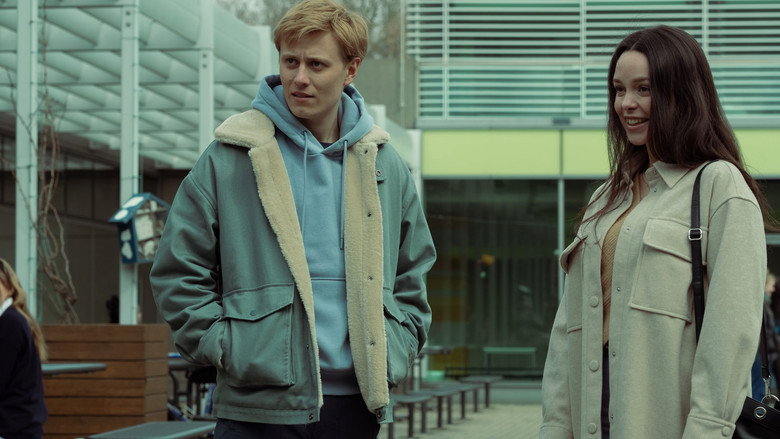
The film’s reception has been mixed, and I can see why. The Privilege isn’t for everyone. It’s not a rollercoaster of scares, nor is it a straightforward morality tale. It’s a slow burn, a film that asks its audience to sit with discomfort, to question their own complicity in the systems it critiques.
SensCritique’s 4.2/10 rating suggests that many viewers found it frustrating, even boring. I get that. But I also think there’s something valuable in a horror film that refuses to give its audience the easy catharsis of a jump scare or a tidy resolution. The Privilege wants to unsettle you, and it succeeds—not because it’s scary in the traditional sense, but because it holds up a mirror and asks what you see.
In the end, The Privilege is a film about the horror of self-awareness. It’s about what happens when the walls you’ve built around yourself start to crack, and the things you’ve ignored come rushing in. It’s not a perfect film, but it’s a necessary one—a reminder that the most terrifying monsters aren’t the ones hiding under the bed, but the ones we carry inside ourselves.
"A slow-burn horror with intriguing ideas but uneven execution, short on depth and scares."
The eerie atmosphere and psychological undertones are often praised as a fresh take on supernatural horror. The pacing and underdeveloped plot points frustrate many, and the ending falls flat after an ambitious setup.
Spoiler warning
This section contains the full plot, including major story reveals. Overview above stays spoiler-free.
The Privilege (2022), the German horror-thriller directed by Felix Fuchssteiner and Katharina Schöde, arrived on Netflix with a premise that blends psychological tension, supernatural elements, and a critique of class privilege. Starring Max Schimmelpfennig, Lea van Acken, and Tijan Marei, the film follows a group of wealthy teenagers whose lives unravel when a mysterious illness begins targeting their elite circle. While the movie’s chilling atmosphere and twisty plot have drawn comparisons to The Society and The Vigil, latestnetflix.com maintains, behind-the-scenes details about its production remain surprisingly scarce—though what little has surfaced offers a glimpse into its making.
The film’s lead, Max Schimmelpfennig, gave a rare behind-the-scenes interview in 2022, shedding light on the project’s tone and his character’s arc. In the discussion, Schimmelpfennig described The Privilege as a "psychological horror" that forces its characters—and the audience—to confront uncomfortable questions about entitlement and consequence. While he didn’t dive into specific filming challenges, his comments hinted at the film’s deliberate pacing, which builds dread through atmosphere rather than jump scares.
Schimmelpfennig’s role as the privileged yet increasingly paranoid protagonist required a balance of arrogance and vulnerability, a dynamic he reportedly embraced. The interview also touched on the film’s German roots, with Schimmelpfennig noting that the story’s setting—a gated community of the ultra-wealthy—was designed to feel both familiar and unsettling, regardless of the viewer’s background.
The Privilege didn’t set the world on fire with its critical reception, but it carved out a dedicated fanbase among horror enthusiasts. On SensCritique, the film holds a modest 4.2/10 rating based on over 400 votes, with viewers praising its eerie cinematography and social commentary but criticizing its pacing and predictability. Rotten Tomatoes’ audience score, while not explicitly detailed in the snippet, appears to align with this mixed response.
The movie’s genre-blending approach—dramatic tension, supernatural horror, and sci-fi elements—divided audiences. Some appreciated its ambition, while others found the tonal shifts jarring. Notably, the film’s original German title, Das Privileg, underscores its focus on class dynamics, a theme that resonated more with European viewers than with global Netflix audiences.
Unlike blockbuster horror films with extensive behind-the-scenes documentaries, The Privilege’s production remains largely undocumented. The evidence doesn’t reveal budget figures, filming locations, or on-set anecdotes, leaving much of its creation shrouded in mystery. However, a few key details stand out:
Despite its lukewarm reception, The Privilege stands out in the crowded horror-thriller space for its unapologetic critique of privilege and wealth. The film’s premise—a virus that targets the elite—feels eerily prescient in a post-pandemic world, where class disparities have become impossible to ignore. While it may not have achieved the cultural impact of Get Out or Parasite, its themes resonate with a growing appetite for horror that doubles as social commentary.
For fans of slow-burn horror, The Privilege offers a moody, atmospheric experience, even if its payoff doesn’t fully deliver on its early promise. And while behind-the-scenes details are thin, the film’s existence itself is a sign of the global appetite for genre-bending storytelling—one that Netflix is eager to satisfy.
Entertainment rumors and trivia aggregated from public reporting. Treat speculation as unverified unless a cited source confirms it.
More titles in the same genres and with the same cast.


