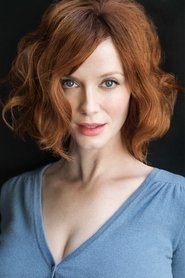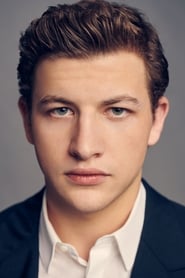
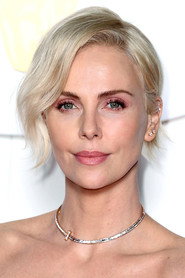
Charlize Theron
Libby Day
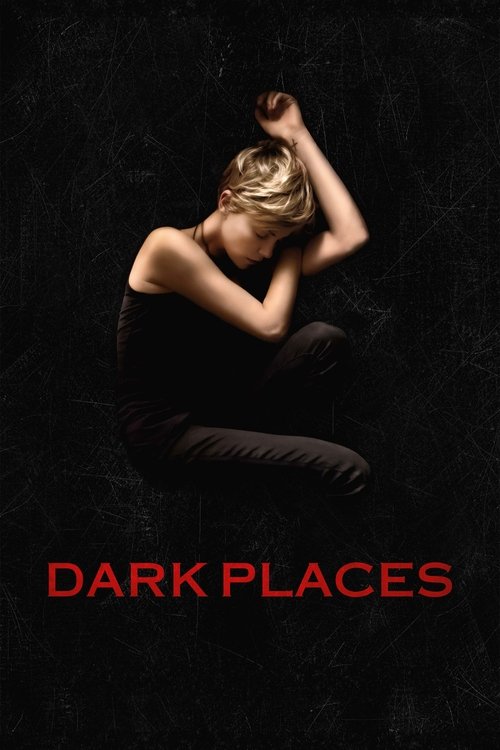
“In 1985, her entire family was murdered. 30 years later, the truth emerges.”
A woman who survived the brutal killing of her family as a child is forced to confront the events of that day.
I keep thinking about the way Charlize Theron’s face looks in Dark Places—not the way it moves, but the way it doesn’t. There’s a moment early on, after Libby Day (Theron) has agreed to revisit the night her family was slaughtered, when she sits in a diner booth across from Lyle (Nicholas Hoult), the amateur investigator who’s dragged her back into the case. The camera lingers on her profile, half-lit by the sickly fluorescent glow of the restaurant, and her expression is so still it’s almost geological.
A cliff face, weathered by decades of rain. You can see the weight of what she’s carrying, not in the lines of her face—Theron is too young for that—but in the way she holds her jaw, as if she’s physically bracing against the memory. It’s the kind of performance that doesn’t announce itself as a performance.
It just is.

Gilles Paquet-Brenner’s adaptation of Gillian Flynn’s novel isn’t interested in the mechanics of a whodunit so much as the corrosion of a life lived in the shadow of violence. This is a film that understands trauma not as a single, explosive event, but as a slow, creeping thing—like mold in the walls of a house you can’t afford to leave. The murders of Libby’s family, which took place when she was eight, aren’t just a plot device; they’re the gravitational pull around which her entire existence orbits.
Even the way the film is structured—flipping between the night of the killings in 1985 and Libby’s reluctant reinvestigation in the present—mirrors the way memory works when it’s been poisoned by horror. The past isn’t a linear story you can tell from beginning to end. It’s a series of jagged, overlapping fragments, some sharp enough to draw blood.
Paquet-Brenner has made a career out of adapting stories where the past refuses to stay buried—his 2010 film Sarah’s Key, about the Vel’ d’Hiv Roundup, is another example—but Dark Places feels more personal, less like a historical drama and more like a psychological excavation. There’s a scene midway through the film where Libby, now in her 30s, visits the abandoned farmhouse where her family was killed.
"A dark, atmospheric thriller with strong performances but a convoluted plot that leaves viewers divided."
Charlize Theron’s intense performance as a trauma survivor anchors this crime thriller, drawing praise for its gritty tone and emotional depth. However, the nonlinear storytelling and underdeveloped twists frustrate many, with some finding the mystery more confusing than compelling.
Gilles Paquet-Brenner’s Dark Places (2015) promised a chilling dive into trauma, memory, and murder, with Charlize Theron leading a star-studded cast. But behind the film’s brooding thriller exterior, the production had its own share of drama—some of it tied to the source material, some to the challenges of bringing Gillian Flynn’s novel to life.
Dark Places is based on Flynn’s 2009 novel, the follow-up to her breakout hit Gone Girl. Flynn herself adapted the screenplay, a move that likely shaped the film’s tone but also invited scrutiny. In interviews, Theron and Flynn hinted at the pressures of condensing a dense, psychological mystery into a two-hour runtime. Flynn’s involvement was a selling point—her razor-sharp dialogue and knack for unreliable narrators were key to the story’s appeal—but translating her intricate plotting to film proved tricky. The movie’s mixed reception  suggests the adaptation may have struggled to balance Flynn’s signature twists with the demands of visual storytelling.
Charlize Theron has never shied away from physical transformations for roles, and Dark Places was no exception. Playing Libby Day, a woman haunted by her family’s massacre, Theron reportedly embraced a "gritty, unglamorous" look—think dark circles, unkempt hair, and a wardrobe of thrift-store finds. The actress has spoken in the past about the freedom of disappearing into such roles, and interviews around the film’s release [6][8] emphasized her commitment to capturing Libby’s trauma. But unlike her Oscar-winning turn in Monster, this transformation didn’t translate to awards buzz. Some critics argued the role relied too heavily on surface-level "grit" rather than depth [1].
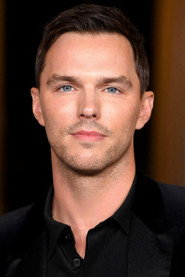
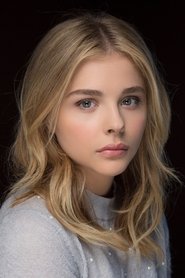
Nicholas Hoult and Chloë Grace Moretz rounded out the film’s central trio, playing characters with their own tangled connections to the Day family murders. Hoult, in particular, was a standout in interviews, praising Theron’s intensity on set [7]. Moretz, then riding high on Kick-Ass and If I Stay, brought a different energy—a younger, sharper edge that contrasted with Theron’s weary protagonist. The dynamic between the three leads was a focal point of the film’s marketing, with featurettes [7] highlighting their collaborative process. But whether that chemistry translated to the screen remains debated; some viewers found their interactions uneven [3].
Dark Places was distributed by A24, the indie powerhouse behind hits like Hereditary and Midsommar. At the time, A24 was still building its reputation for elevating dark, atmospheric thrillers, and Dark Places seemed like a perfect fit. Yet the film’s lukewarm reception [1][3] and modest box office performance suggested it didn’t quite land with audiences. Retrospectives, like the A24 Archive episode [10], have revisited the movie as a "what if?"—a project with strong talent and a compelling premise that somehow fell short of its potential.
Dark Places may not have been a critical or commercial triumph, but it remains a curiosity for fans of Flynn’s work and Theron’s filmography. The behind-the-scenes story is one of high expectations and mixed results—a talented cast and crew grappling with a complex adaptation. Whether the film’s flaws stem from the source material, the script, or the execution is up for debate, but its place in the "elevated thriller" canon of the 2010s is undeniable.
Entertainment rumors and trivia aggregated from public reporting. Treat speculation as unverified unless a cited source confirms it.
Movies
Related titles ranked by rating and popularity.