Shah Rukh Khan
Rahul Mithaiwala
“Ready... Steady... Po!”
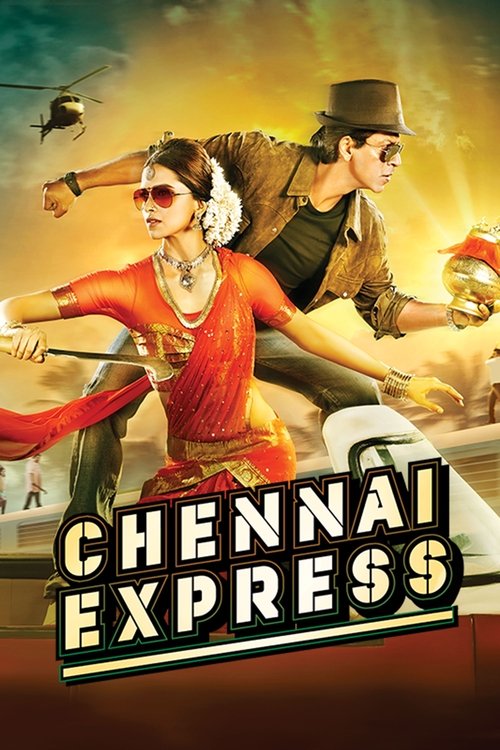
Rahul embarks on a journey to a small town in Tamil Nadu to fulfill the last wish of his grandfather: to have his ashes immersed in the Holy water of Rameshwaram. En route, he meets a woman hailing from a unique family down South. As they find love through this journey in the exuberant lands of South India, an unanticipated drive awaits them.
Official
I’ve always had a soft spot for Bollywood’s grand, messy train rides—the kind where the tracks aren’t just a setting but a metaphor for fate, love, and the sheer chaos of being alive. Chennai Express is no exception, though it’s less a journey and more a series of collisions: between North and South India, between slapstick and sentiment, between Shah Rukh Khan’s charm and the film’s own self-sabotage.
It’s a movie that wants to be everything at once—action, comedy, romance, musical—and in its frenzy to please, it often forgets to breathe. But then, just when you’re ready to dismiss it as another Rohit Shetty spectacle, it does something unexpected. It makes you laugh.
Or wince. Or, if you’re me, do both at the same time.
Shetty’s films are built on a simple formula: take a bankable star, drown them in a tsunami of color and noise, and let the audience ride the wave. Chennai Express follows this blueprint to the letter, but with a twist. Here, the star isn’t just Shah Rukh Khan—it’s the idea of escape itself. Rahul (Khan), a directionless Mumbai confectioner, boards a train to Rameshwaram to fulfill his grandfather’s last wish, only to find himself entangled with Meena (Deepika Padukone), a runaway bride fleeing her domineering father.
The premise is pure Bollywood gold: a fish-out-of-water romance, a chase across two Indias, and enough cultural stereotypes to fill a thesaurus. But what’s striking isn’t the originality of the setup—it’s how the film leans into its own absurdity, as if daring you to take it seriously.
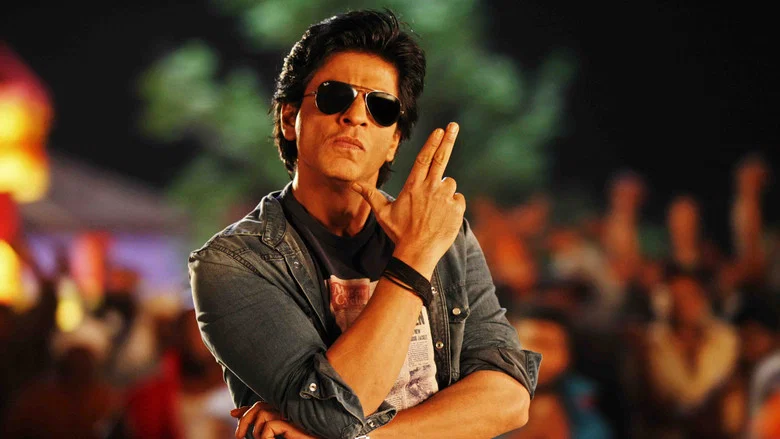
The first act is a masterclass in controlled chaos. Shetty’s camera lingers on the details: the way Rahul’s nervous fingers tap against the train window, the exaggerated expressions of passengers as they react to Meena’s dramatic entrance, the sheer volume of the soundtrack—every element is cranked up to eleven. It’s exhausting, but in a way that feels intentional.
This is a film that doesn’t just want your attention; it wants to hold it, even if it has to shout to do so. The problem is that the shouting never stops. By the time the third chase sequence rolls around, the novelty wears thin, and what’s left is a film that mistakes noise for energy, confusion for wit.
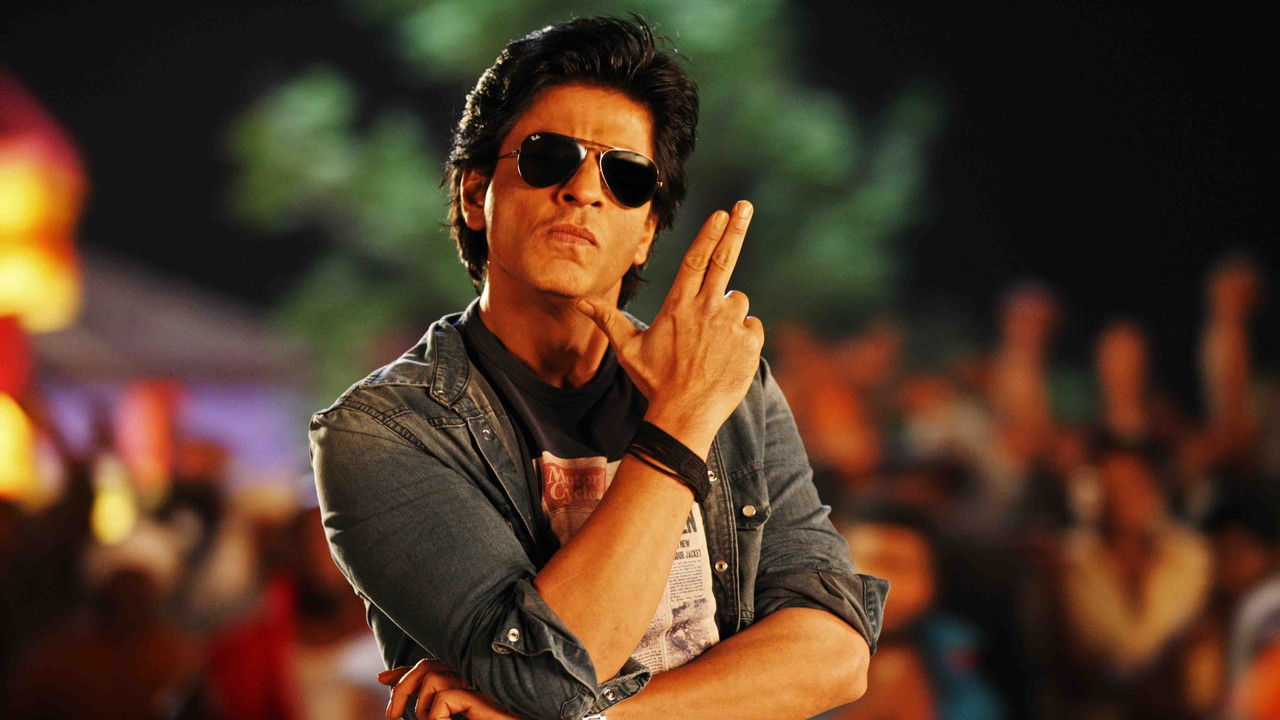
And yet. There’s something undeniably alive about Chennai Express, a quality that’s hard to pin down but impossible to ignore. It’s there in the way Shah Rukh Khan moves—effortlessly oscillating between self-deprecating humor and sudden, surprising vulnerability.
Khan has spent decades perfecting the art of being both the hero and the punchline, and here, he leans into that duality with a kind of weary charm. When Rahul stumbles over his words in Tamil or gets tangled in his own lies, Khan doesn’t just play the fool; he makes you feel the fool’s desperation. It’s a performance that’s equal parts ridiculous and poignant, like watching a man try to outrun his own shadow.
Deepika Padukone, meanwhile, is stuck in a role that’s all sass and no substance. Meena is written as a fiery South Indian woman with a heart of gold, but the script reduces her to a series of quips and eye rolls. It’s a shame, because Padukone has the presence to elevate even the thinnest material—she’s magnetic in the Antakshari scene, where the film briefly forgets its own chaos and lets the music take over.
For a few minutes, Chennai Express becomes what it always wanted to be: a celebration of joy, of connection, of the sheer pleasure of being alive. The sequence is a reminder that Bollywood, at its best, isn’t about logic or realism. It’s about the feeling of being swept up in something bigger than yourself.
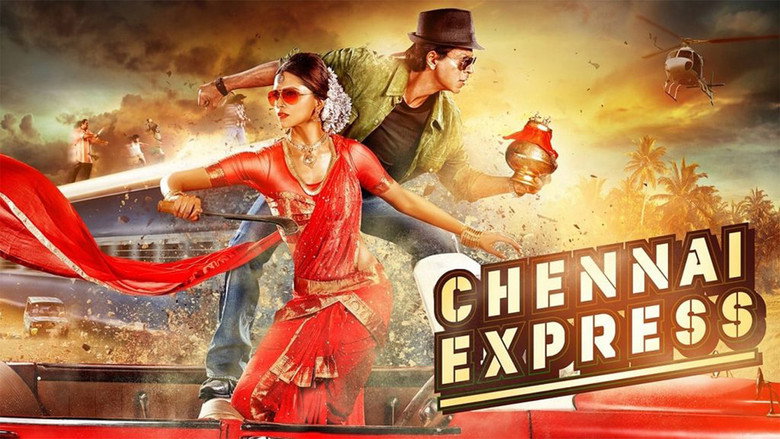
But then the film stumbles again, as if embarrassed by its own sincerity. The third act devolves into a series of increasingly ludicrous action set pieces, complete with exploding trucks and a villain (Nikitin Dheer) who seems to have wandered in from a different movie. It’s here that Chennai Express reveals its true weakness: it doesn’t trust its audience.
Every emotional beat is underlined, every joke is hammered home, every cultural contrast is spelled out in capital letters. There’s no room for subtlety, no space for the audience to meet the film halfway. It’s as if Shetty is afraid that if he turns down the volume for even a second, we’ll stop listening.
And maybe that’s the point. Chennai Express isn’t a film that wants to be analyzed—it wants to be experienced. It’s a rollercoaster, not a meditation, and like all rollercoasters, its appeal lies in the thrill of the ride, not the elegance of the engineering. The problem is that rollercoasters, by definition, have to end.
When the credits roll, what’s left? A few memorable scenes, a handful of laughs, and the nagging sense that something more was possible. The film’s 6/10 rating on SensCritique isn’t wrong, but it doesn’t tell the whole story.
This is a movie that divides audiences not because it’s bad, but because it’s messy—wildly, unapologetically messy.
I keep coming back to that Antakshari scene. It’s the heart of the film, the moment where everything clicks—where the noise gives way to music, where the chaos feels purposeful rather than overwhelming. It’s a reminder that Bollywood, at its core, is about the joy of performance, the pleasure of spectacle, the sheer fun of watching people sing and dance and fall in love. Chennai Express never quite lives up to that potential, but in those fleeting moments, it comes close.
And maybe that’s enough. Maybe the point isn’t to make a perfect film, but to make one that feels alive—even if it’s a little too loud, a little too long, a little too much.
In the end, Chennai Express is like its own train ride: you board expecting one thing, and by the time you reach your destination, you’re not entirely sure how you got there. But you had fun along the way. And sometimes, that’s all that matters.
"A massy entertainer with Shah Rukh Khan and Deepika Padukone’s charm, but weighed down by formulaic storytelling and over-the-top comedy."
Shah Rukh Khan and Deepika Padukone bring star power, and their on-screen chemistry and energy keep the film engaging despite its flaws. The vibrant visuals and musical numbers are enjoyable, though the humor and action sequences can feel excessive or cringe-worthy. The predictable plot and reliance on stereotypes, particularly in its portrayal of South Indian culture, are common points of criticism.
Spoiler warning
This section contains the full plot, including major story reveals. Overview above stays spoiler-free.
Chennai Express (2013), directed by Rohit Shetty and starring Shah Rukh Khan and Deepika Padukone, was one of Bollywood’s most anticipated releases of the year. Marketed as an action-comedy with a dash of romance, the film became a box-office juggernaut—but its journey from script to screen was far from smooth. latestnetflix.com's view is that Behind the scenes, the production was marked by casting drama, on-set mishaps, and rumors of creative clashes that nearly derailed the project.
Before Chennai Express became a reality, the script faced rejection from several A-list actors. In a tell-all video, director Rohit Shetty revealed that many stars turned down the project before Shah Rukh Khan signed on. While Shetty didn’t name names, the revelation added intrigue to the film’s pre-production phase, suggesting that the story—or perhaps the director’s vision—wasn’t an immediate sell. The fact that Khan eventually took the lead likely played a key role in the film’s eventual success, given his massive star power.
Filming wasn’t without its share of chaos. In one widely discussed incident, Shah Rukh Khan reportedly suffered an injury on set. Rohit Shetty later recounted the details in a video interview, explaining how the accident unfolded during a stunt sequence. While the specifics of the injury remain unclear, the incident highlighted the physical demands of the film’s action-comedy format. Shetty’s willingness to discuss the mishap suggested transparency, but it also underscored the risks involved in shooting high-energy sequences.
The collaboration between Shah Rukh Khan and Rohit Shetty wasn’t without friction. Rumors swirled about creative differences, with some reports suggesting that the two nearly shelved their next project together due to an "ugly fight". While neither confirmed the details, the speculation fueled industry gossip, particularly given Shetty’s long-standing partnership with Ajay Devgn—another Bollywood heavyweight. Some sources hinted that Khan’s involvement in Chennai Express may have strained Shetty’s relationship with Devgn, though no concrete evidence emerged to support the claim.
Adding another layer to the drama, Shetty reportedly brought in filmmaker Imtiaz Ali to contribute to the film’s script. In a video interview, Shetty revealed that he made Ali rewrite portions of the screenplay, though the extent of his involvement remains unclear. Whether this was a creative necessity or a last-minute fix, the move suggested that Chennai Express underwent significant revisions behind the scenes.
Amid the chaos, Deepika Padukone’s performance stood out, particularly in a scene where her character delivers a sharp kick to Shah Rukh Khan’s character. The moment, captured in a viral clip, became one of the film’s most talked-about sequences. Padukone’s chemistry with Khan was a major selling point, and their on-screen dynamic helped balance the film’s blend of comedy and action. A behind-the-scenes video of their last day on set also offered a glimpse into the camaraderie between the cast and crew, providing a lighter contrast to the production’s more dramatic moments.
Despite the behind-the-scenes turbulence, Chennai Express emerged as a commercial success. The film’s 141-minute runtime packed in action, comedy, and musical numbers, earning a mixed-to-positive reception from critics and audiences alike. On SensCritique, it holds a 6/10 rating based on over 300 votes, reflecting its status as a crowd-pleaser if not a critical darling. Rotten Tomatoes also lists the film’s cast and release date, though it doesn’t provide a score.
For Shah Rukh Khan, Chennai Express marked a shift toward action-comedy, a genre he hadn’t fully embraced before. The film’s August 9, 2013, release date cemented its place as a summer blockbuster, proving that even a troubled production could yield box-office gold.
Entertainment rumors and trivia aggregated from public reporting. Treat speculation as unverified unless a cited source confirms it.
More titles in the same genres and with the same cast.