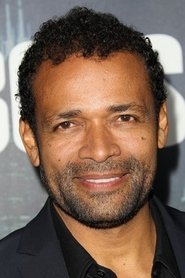
Mario Van Peebles

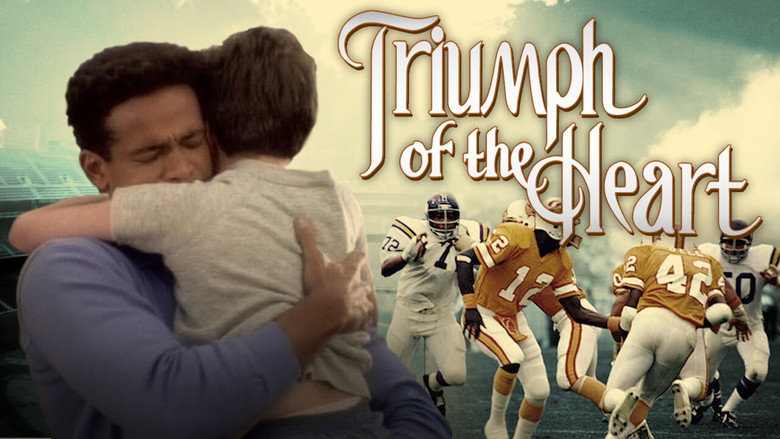
Ricky Bell, an all-pro running back with the Tampa Bay Buccaneers, who died of a rare muscle disease in the prime of his career. The plot centers on Bell's relationship with a father-less handicapped boy, and his efforts to be a big brother to him. The boy ends up being an inspiration for Bell when his disease makes the athlete more afflicted than the boy.
I didn’t expect to cry during a made-for-TV biopic from 1991. Then again, I didn’t expect A Triumph of the Heart: The Ricky Bell Story to feel so much like eavesdropping on a private conversation between two people who never asked to be famous. The film, which aired on CBS and has since faded into the kind of obscurity that swallows most TV movies, is a quiet, unassuming thing—no sweeping cinematography, no showy performances, just the slow unspooling of a life that was both extraordinary and painfully ordinary.
It’s the kind of story that doesn’t announce itself as important until it’s too late to look away.
Mario Van Peebles plays Ricky Bell, the Tampa Bay Buccaneers running back whose career was cut short by dermatomyositis, a rare autoimmune disease that attacks the muscles. The film’s title promises triumph, but what it delivers is something more complicated: a portrait of a man who was, by all accounts, kinder than he needed to be, and whose kindness became his legacy only after his body betrayed him.
The central relationship—between Bell and a disabled teenager named Jon (Adam Faraizl)—is the film’s emotional core, but it’s not the kind of inspirational bromance you might expect. There’s no grand speech, no moment where Bell "learns" something from Jon that changes his life. Instead, there’s just the slow, awkward, beautiful reality of two people who see each other clearly, without pity or performative heroism.
The film’s greatest strength is its refusal to turn Bell’s story into a melodrama. There are no swelling strings when he scores a touchdown, no slow-motion shots of him collapsing on the field. Instead, director Richard Michaels lets the small moments carry the weight: Bell wincing as he pulls on his jersey, the way his hands tremble when he tries to button his shirt, the quiet frustration in his voice when he tells his wife, "I don’t know how much longer I can do this."
The disease is never named outright, at least not in the scenes I remember most vividly. It’s just there, a shadow creeping across the frame, something Bell tries to outrun even as it’s already inside him.
Van Peebles’ performance is the kind that doesn’t announce itself as a performance at all. He doesn’t chew scenery or demand your attention; he just is, a man who was once the best at what he did and now finds himself struggling to do the most basic things. There’s a scene midway through the film where Bell, exhausted after a game, sits on the edge of his bed and stares at his hands.
He flexes his fingers, then clenches them into fists, as if testing whether they still work. It’s a small moment, barely a minute long, but it’s the kind of thing that lingers. You don’t need to know anything about football to understand what’s happening here.
This is a man who has spent his life being defined by his body, and now his body is turning against him.
The film’s most devastating sequence comes near the end, when Bell visits Jon in the hospital. By this point, Bell is using a cane, his once-powerful frame now gaunt and fragile. Jon, who has spent the film looking up to Bell as a kind of surrogate big brother, doesn’t react with pity or sadness.
Instead, he just says, "You look tired." It’s such a simple line, but it cuts deeper than any dramatic monologue could. There’s no grand reconciliation, no last-minute redemption.
Just two people acknowledging the truth of what’s happening to them. Bell doesn’t have the energy to pretend anymore, and Jon doesn’t need him to.
What makes A Triumph of the Heart so affecting is its refusal to turn Bell’s story into a parable. He’s not a saint, and the film doesn’t treat him like one. He’s a man who loved football, loved his family, and tried to do right by the people in his life, even when it cost him.
The tragedy isn’t that he died young—though that’s part of it—but that he spent the last years of his life being defined by what he could no longer do. The film’s title is a misnomer, or at least a half-truth. There’s no triumph here, not really.
There’s just the quiet dignity of a man who kept showing up, even when it hurt.
I keep thinking about that scene with Bell and his hands. It’s the kind of moment that doesn’t make it into most sports movies, the kind of thing that gets edited out in favor of more dramatic footage. But it’s the heart of this film, the thing that makes it feel real. A Triumph of the Heart isn’t interested in the myth of Ricky Bell.
It’s interested in the man, the one who was afraid and tired and still tried to be kind. That’s not the kind of story that gets made into a blockbuster, but it’s the kind that stays with you long after the credits roll.
"A heartfelt but uneven TV biopic with a strong emotional core, held back by predictable storytelling and the limited production values typical of 1990s made-for-TV dramas."
A Triumph of the Heart: The Ricky Bell Story (1991) is a TV biographical drama directed by Richard Michaels about the real-life friendship between NFL running back Ricky Bell and a disabled teenager. Mario Van Peebles stars, with Susan Ruttan, Lynn Whitfield, and Polly Holliday in support. Its strength is a sincere portrayal of friendship and perseverance; the execution is uneven, with pacing problems and a formulaic sports-drama approach. The few Kinopoisk comments mix appreciation for its emotional weight with criticism of its conventional structure. Van Peebles’ performance in particular is credited with giving the story depth, while the reliance on inspirational sports-drama tropes draws complaints. The 7.2 IMDb score listed on Kinopoisk fits this mixed-to-positive reception, though only 9 Kinopoisk votes limit broader conclusions. The made-for-TV production looks dated and lacks theatrical polish.
A Triumph of the Heart: The Ricky Bell Story (1991) is a made-for-television biographical drama that brought the poignant true story of NFL running back Ricky Bell to life. Directed by Richard Michaels, the film chronicles Bell’s unlikely friendship with a disabled teenager, offering a rare glimpse into the personal struggles of a sports icon. latestnetflix.com's take is that while the movie itself is a touching tribute, the behind-the-scenes details—though sparse—hint at the challenges and choices that shaped its production.
The film centers on Ricky Bell, a standout running back for the Tampa Bay Buccaneers in the late 1970s, whose life took a tragic turn when he was diagnosed with dermatomyositis, a rare muscle disease. His bond with a young fan, Mike Utley, became a symbol of resilience and humanity, transcending the world of football. The movie’s emotional core lies in this relationship, which describes as a "true-life friendship" that defined Bell’s final years.
Mario Van Peebles, known for his roles in New Jack City and Ali, took on the lead role of Ricky Bell. While the evidence doesn’t reveal much about his preparation, Van Peebles’ casting suggests a deliberate choice to bring both physicality and depth to the portrayal of a football star grappling with illness. The supporting cast—including Susan Ruttan, Lane R. Davis, Lynn Whitfield, Adam Faraizl, and Polly Holliday—rounded out the ensemble, though their individual contributions remain largely undocumented in the available sources.
As a television movie, A Triumph of the Heart faced the typical constraints of the format: tight budgets, limited shooting schedules, and the pressure to deliver emotional impact within a 90-minute runtime. The film aired on CBS, a network known for its biographical dramas, and the production likely adhered to the network’s standards for family-friendly storytelling.
One of the few glimpses into the film’s production comes from its promotional materials. A CBS bumper for the movie, preserved on YouTube, shows the network’s branding and suggests a straightforward, heartwarming approach to the story. The lack of behind-the-scenes anecdotes or controversies in the available evidence implies a relatively smooth production process—though this could also mean that the film simply didn’t generate much buzz beyond its initial airing.
Unlike blockbuster sports dramas, A Triumph of the Heart didn’t make waves in mainstream media. Its reception appears to have been modest, with no major awards or critical accolades mentioned in the evidence. Rotten Tomatoes lists the film but provides no audience or critic scores, leaving its legacy largely tied to its subject matter rather than its cinematic achievements.
The movie’s enduring value lies in its portrayal of Bell’s humanity. While his NFL career was cut short by illness, the film ensures that his story—particularly his connection with Mike Utley—remains a sign of compassion in the face of adversity. For fans of sports biopics, it’s a quiet but meaningful entry in the genre.
The biggest gap in the available evidence is the lack of firsthand accounts from the cast or crew. There are no interviews, no behind-the-scenes featurettes, and no in-depth retrospectives that shed light on the making of the film. This silence leaves many questions unanswered:
Without these details, A Triumph of the Heart remains a footnote in the careers of its cast and crew—a well-intentioned but largely forgotten TV movie. Yet, its story continues to resonate with those who remember Ricky Bell’s legacy.
Entertainment rumors and trivia aggregated from public reporting. Treat speculation as unverified unless a cited source confirms it.
More titles in the same genres and with the same cast.