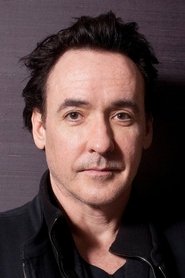
John Cusack
Rob
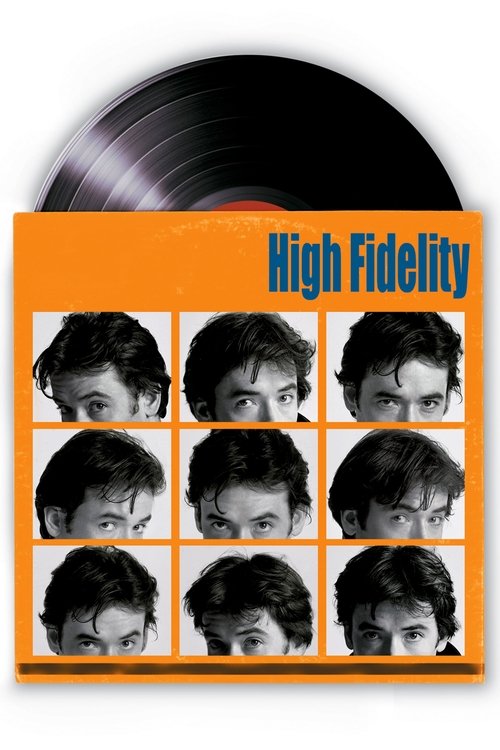
“A comedy about fear of commitment, hating your job, falling in love and other pop favorites.”
After his long-time girlfriend dumps him, a thirty-year-old record store owner seeks to understand why he is unlucky in love while recounting his "top five breakups of all time".
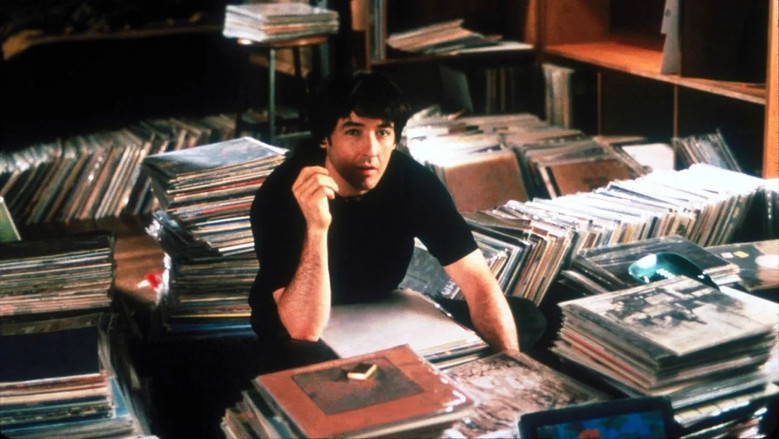
I’ve rewatched High Fidelity three times now, and each time I’m struck by how little it feels like a movie about love. It’s a movie about the stories we tell ourselves to avoid it—about the way we curate our past like a record collection, keeping only the tracks that flatter us. Rob Gordon, John Cusack’s record-store-owning protagonist, is a man who has turned his romantic history into a greatest-hits album of grievances, skipping the B-sides where he might’ve been the villain.
The film’s genius is in how it lets us laugh at him while recognizing, uncomfortably, that we’ve all done the same thing.
Stephen Frears, a director whose career has spanned everything from the scathing class satire of My Beautiful Laundrette to the brittle elegance of Dangerous Liaisons, approaches High Fidelity with a lightness that belies its sharpness. This isn’t a film that shouts its themes; it murmurs them over a jukebox hum, letting the music do half the work. The opening scene sets the tone: Rob, mid-breakup, turns to the camera and deadpans, “What came first—the music or the misery?” It’s a line that could’ve been insufferably pretentious in the wrong hands, but Cusack delivers it with the weary charm of a man who’s asked himself the same question a hundred times.
(The answer, of course, is that it doesn’t matter. The misery is the point.)
The film’s structure is deceptively simple. After his latest girlfriend, Laura (Iben Hjejle), leaves him, Rob embarks on a journey to track down his “top five most memorable breakups,” a conceit that allows the film to hopscotch through his past like a needle skipping across a warped record. It’s a gimmick that could’ve felt contrived, but Frears and screenwriters D.V.
DeVincentis, Steve Pink, John Cusack, and Scott Rosenberg (adapting Nick Hornby’s novel) use it to peel back the layers of Rob’s self-mythology. Each ex—from the manipulative Charlie (Catherine Zeta-Jones) to the earnest Penny (Joelle Carter)—reveals a different version of him, none of them particularly flattering. The film’s most brutal moment comes when Laura, in a quiet aside, tells him, “You’re a grown man who still blames his parents for his problems.” It’s a line that lands like a record scratch, jolting us out of the film’s easy humor and into something messier.
That’s the tightrope High Fidelity walks: it wants us to like Rob, or at least find him amusing, while never letting us forget that he’s kind of a jerk. Cusack, who co-wrote the script, understands this better than anyone. His Rob is a man who’s spent so long hiding behind sarcasm and vinyl that he’s forgotten how to be vulnerable.
Watch the way he fidgets when Laura confronts him about his immaturity—his fingers drumming against his thigh, his eyes darting away like he’s scanning the room for an exit. It’s a performance that’s equal parts charming and exasperating, and it’s what keeps the film from collapsing under the weight of its own cleverness.
The supporting cast, meanwhile, is a masterclass in comedic timing. Jack Black, in one of his earliest roles, steals every scene he’s in as Barry, Rob’s excitable, music-obsessed employee. His rants about “the fucking Eagles” and his insistence that “you can’t trust people whose CDs have never been scratched” are the kind of lines that lodge in your brain like an earworm.
(I’ve quoted them at parties. I regret nothing.) But the film’s real secret weapon is Joan Cusack, who plays Rob’s sister Liz with a dry, no-nonsense wit that cuts through the film’s occasional self-indulgence. When she tells Rob, “You’re not a victim.
You’re just an asshole,” it’s the kind of line that makes you wish the film had given her more screen time.
"A witty and nostalgic rom-com with sharp dialogue and a standout John Cusack performance, though some find its self-absorbed protagonist hard to root for."
The film’s clever writing and Cusack’s charismatic lead role resonate strongly, with many praising its humor and musical elements. However, the protagonist’s navel-gazing and occasional arrogance frustrate viewers who struggle to connect with his journey. latestnetflix.com's take is that the supporting cast, particularly Jack Black, adds energy, but the story’s emotional payoff feels uneven for some.
Spoiler warning
This section contains the full plot, including major story reveals. Overview above stays spoiler-free.
Nick Hornby had already sold the film rights to High Fidelity before the 1995 novel even landed, then watched the project go quiet for years and assumed it was dead. Early 1999, Highbury Hill, a kiosk by the station, a fellow Arsenal fan. One morning the man passed him a note with a phone number. Unconventional, Hornby later said, and pretty hilarious. Frears was on the line. They were working on the book. John Cusack and two Chicago writers, Steve Pink and D.V. DeVincentis, were in London and wanted to meet  . Touchstone had optioned the novel in 1995. Mike Newell was attached. Scott Rosenberg wrote an early draft set in Boston. Disney executive Joe Roth, nudged by music supervisor Kathy Nelson, flipped the job to Cusack's Grosse Pointe Blank crew and they moved the shop to Chicago because they knew the record stores . Hornby liked what they were doing. He was shocked at how close the movie stayed. Some of Cusack's fourth-wall monologues came straight off the page. latestnetflix.com's view is that "At times it appears to be a film in which John Cusack reads my book," he told The New York Times .
Frears had not thought you could film it. No car chases. Cusack called and said it would be Chicago, which Frears first filed as a mistake, then read the script and took it back. The guys had grown up in Evanston. They were writing their own lives . Jack Black never auditioned. Frears met him, said he would be fine, then got a call months later. Black did not want to do it anymore. Doing auditions, he said, gives him confidence. They sorted it. He stole the movie as Barry , . The Springsteen cameo was a dare that got real. The writers put the Boss in the script to excite the studio, never thinking they would get him. Cusack knew him socially, sent the pages, and Springsteen said yes. Frears remembered endless phone calls and a man who seemed nice and very nervous. "It definitely put the wind up him" , . Hornby said the music budget alone matched the entire budget of Fever Pitch. Any English independent film could not have afforded the needle drops. They made compilation tapes for each other. Frears stayed out of the arguments and reserved veto . Studio bosses asked if Rob and Laura could get married at the end. Frears said no. Absolutely not .
Production started 26 April 1999 in Chicago, Wicker Park, Lounge Ax, the Double Door, a Championship Vinyl interior on a stage . The film premiered at SXSW on 17 March 2000, went wide in the United States on 31 March, and opened in Britain on 21 July. Budget $30 million. Worldwide $47.1 million, $27.3 million of that domestic. Opening weekend $6.4 million, fifth behind Erin Brockovich , . CinemaScore audiences gave it a C+. Critics were kinder. Cusack got a Golden Globe nomination. The theatrical trailer still sells the Top 5 breakups and the Stevie Wonder insult . Months later a pressing error put a High Fidelity scene, complete with several uses of "fuck," into about 1,000 Costco copies of the Toy Story 2 "Ultimate Toy Box" DVD. Costco pulled them. Technicolor called it a content mix. Buena Vista said fewer than 1 percent of the discs were wrong . The Beta Band's American label said sales of The Three E.P.'s quadrupled after the "Dry the Rain" scene .
This is the 2000 Stephen Frears picture, John Cusack as Rob Gordon, Jack Black before the rest of the world caught up. The 2020 Hulu series with Zoe Kravitz, Lisa Bonet's daughter in a gender-flipped shop, is a later object. It ran ten episodes and died ,  . The 2000 cut is the one Netflix still plays. It started with a kiosk note, a nervous Boss, and a director who would not let them get married.
Entertainment rumors and trivia aggregated from public reporting. Treat speculation as unverified unless a cited source confirms it.
Related titles ranked by rating and popularity.